

Heavy on the meat and as hearty as ever, Hungarian food is the real deal. Slow-cooked stews, aromatic spices, and seasonal produce- this is what it’s all about. Here’s your introduction to the dishes and traditions that make it stand out.
What Makes Hungarian Food Distinct?
Hungarian food is one of the outliers in Europe that never seems to make it onto the classic ‘best cuisine’ lists. Shaped by Ottoman, Austrian, and Central European culinary traditions, it’s one of those cuisines that has been heavily influenced by the country’s varied terrain, particularly the Great Plain and lakeside regions.
At the heart of Hungarian cuisine are the ingredients that make up the dishes. Between staples like pork and paprika, seasonal ingredients like cherries, and the specific slow-cooking methods used in homes, a lot goes into crafting the best Hungarian recipes.
Throughout my travels scouting destinations for our coverage at Eating Europe, I’ve always found that the best foodie destinations are the ones where family dining and shared meals take center stage and where big portions are the way to most people’s hearts. Hungarian food ticks all those boxes.
Anyone who wants to experience Hungary through its food will find that the dishes we discover on our Budapest food tours offer a tasty introduction to the country’s gastronomic scene. Here’s a sneak peek of what to expect.
The Role of Paprika in Hungarian Cooking
Paprika is an integral aspect of Hungarian cooking. This red spice is a key ingredient in numerous dishes and sauces enjoyed in households, restaurants, and kitchens across the country. But why?
Well, the different varieties of sweet, hot, and smoked paprika give even the simplest recipes a more varied flavor profile, without the need for many additional ingredients. And our Europe food travel survey shows that’s exactly what foodies are looking for. Great taste comes first, and paprika delivers it.
At a Hungarian restaurant, some common paprika-infused dishes you’re likely to encounter include stews such as gulyás (goulash) and pörkölt, as well as creamy chicken paprikás (we’ll come back to these later). The moment you walk into the main Central Market Hall, you’re met by the strong smell of it as well.
Paprika in Hungary goes beyond its flavor. It was brought to Hungary by the Ottomans in the 16th century, but it wasn’t until after their departure that paprika production grew rapidly in the 18th and 19th centuries.
Two regions in particular, Kalocsa and Szeged, became major centers of paprika production thanks to their sunny climates and ideal growing conditions. Today, both remain among the largest centers of paprika production in Hungary.
The Most Iconic Hungarian Dishes
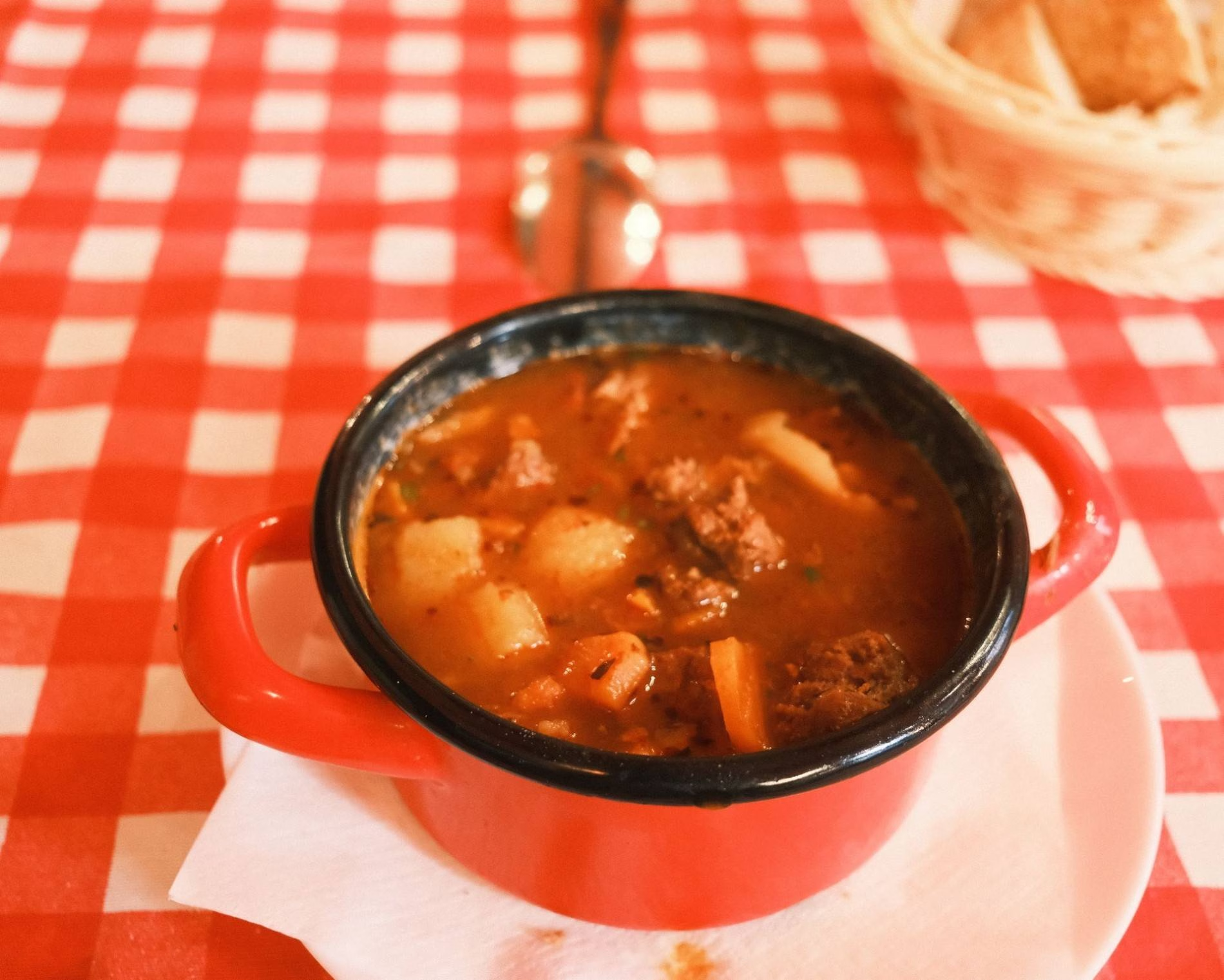
Ask a Hungarian what you should eat when you are in their country, and they will almost certainly mention gulyás, pörkölt, paprikás csirke, halászlé and lángos.
Gulyás, which you may know as goulash, is a famous soup-stew made with paprika, beef, potatoes, and vegetables that Hungarian herders have enjoyed throughout generations. The name gulyás literally means ‘herdsman.’ Nothing beats a steaming bowl of it on a cold winter’s night.
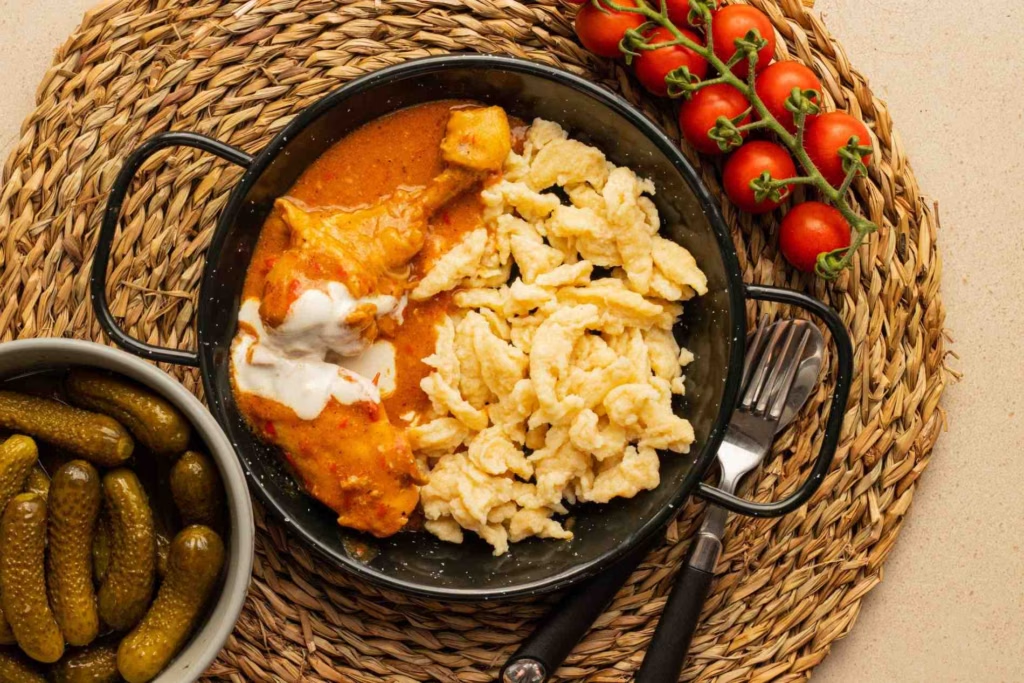
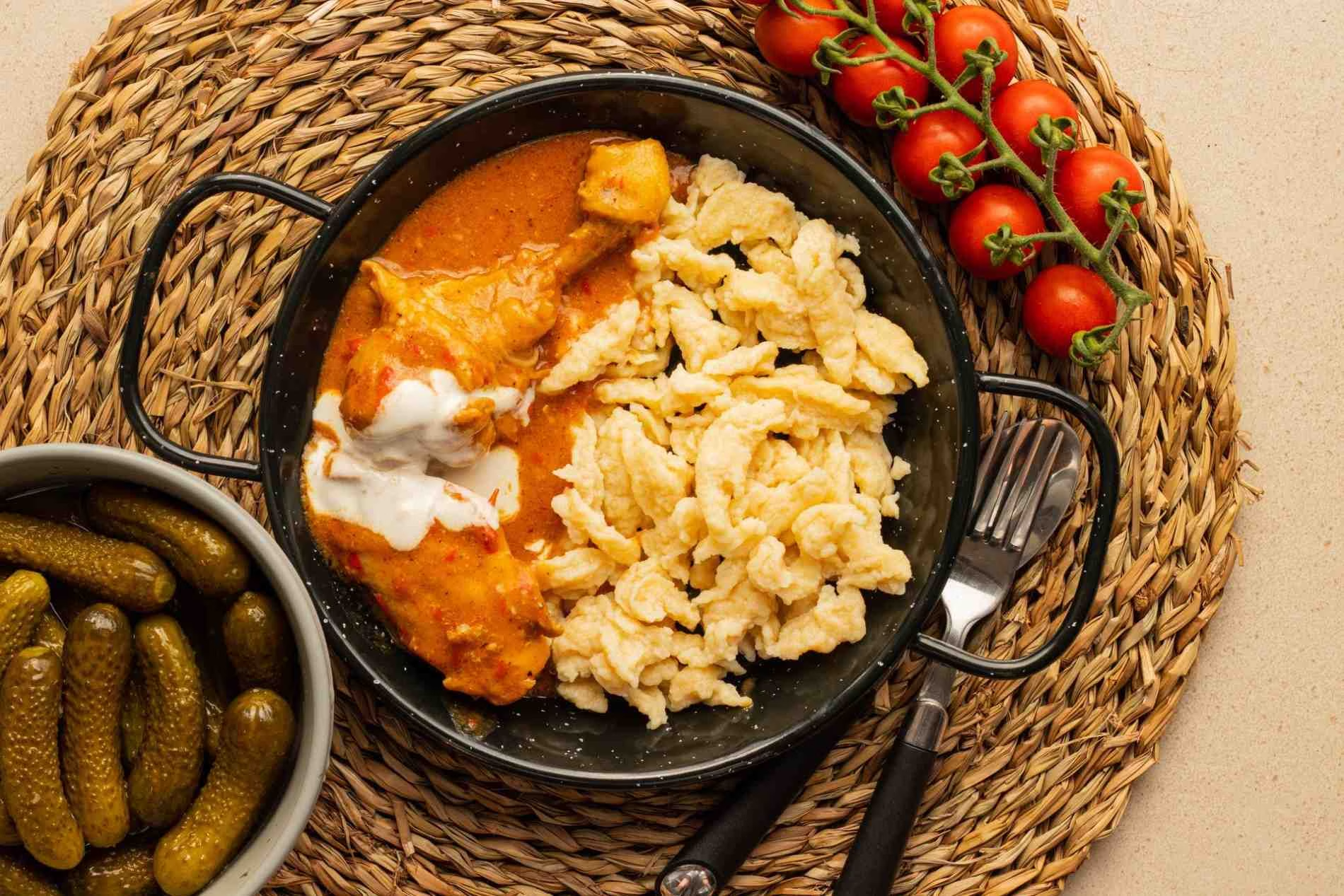
Pörkölt and paprikás csirke are two other popular Hungarian dishes that we’re big fans of. Pörkölt is a thick stew made with beef, onions, and paprika. Paprikás csirke is chicken cooked in a rich paprika sauce and usually served with egg noodles or dumplings.
If you like fish, you should try halászlé. This spicy freshwater fish soup has deep roots in Hungary’s fishing regions, particularly around Lake Balaton. Traditionally, fishermen would prepare it as a one-pot meal and cook it over an open fire.
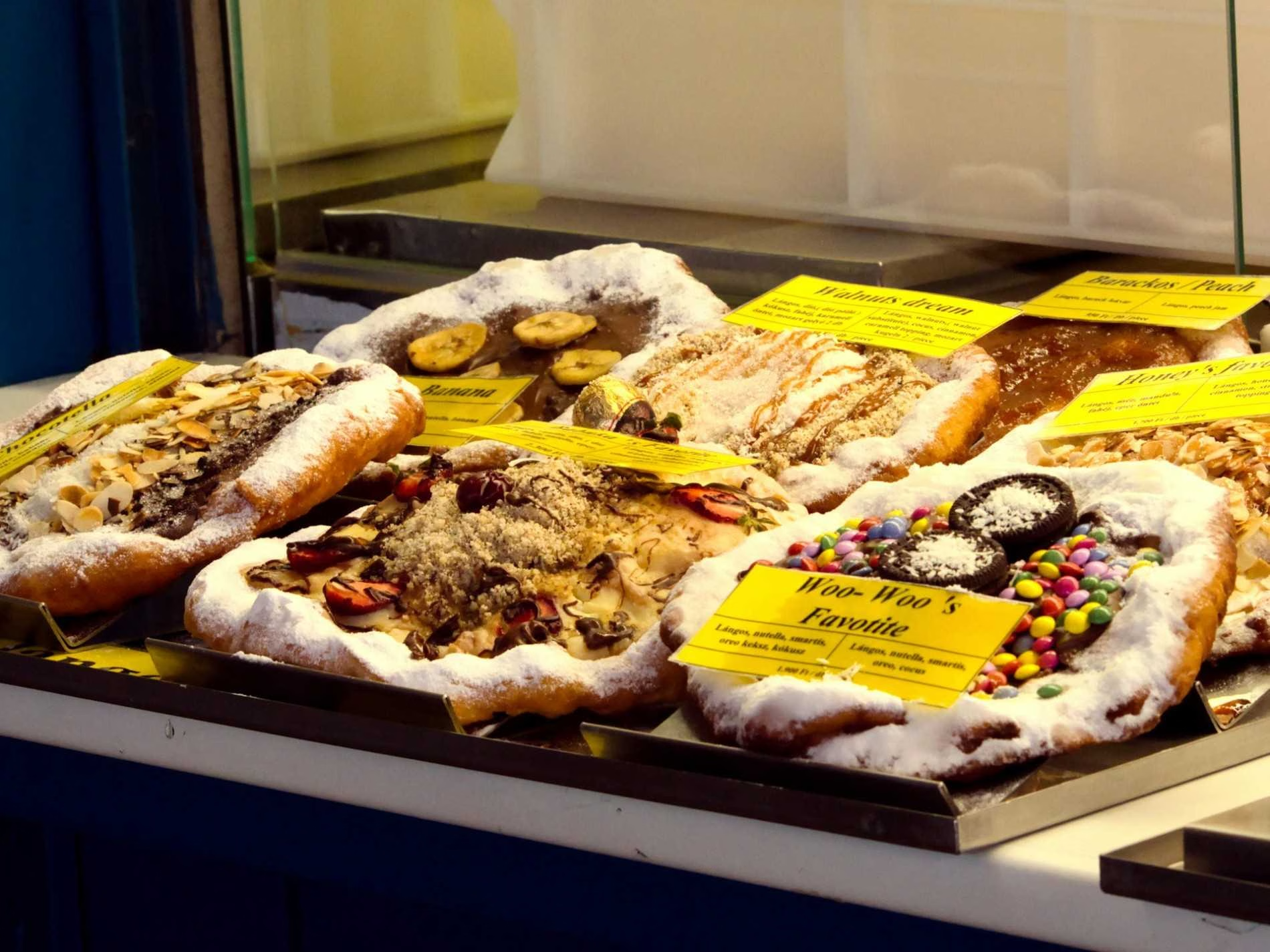
You’ll also be able to try plenty of delicious Hungarian street foods during your visit. One popular example is lángos, a fried dough dish with a crisp crust and a soft inside, topped with savory ingredients such as cheese.
Hungarian Food Beyond the Main Course
Main courses are one thing, but some Hungarian snacks and lighter dishes are just as good.
In summer, you will often see menus featuring meggyleves, a type of cold sour cherry soup made with sour cream, cherries, and sugar. Its bright pink color makes it stand out.
Whenever you pick up a fresh loaf of bread from a corner store, you should be eating it with körözött. Spread this paprika-seasoned cheese across a freshly cut slice, and it won’t be long before you reach for another.
Túrós csusza is a classic Hungarian comfort food, made with pasta, cottage cheese, and bacon pieces sprinkled to give it a final smoky kick. For something sweet, the Hungarian strudel known as rétes is a delicious treat often filled with fruit, cheese, or other fillings.
Hungarian Desserts and Sweet Traditions
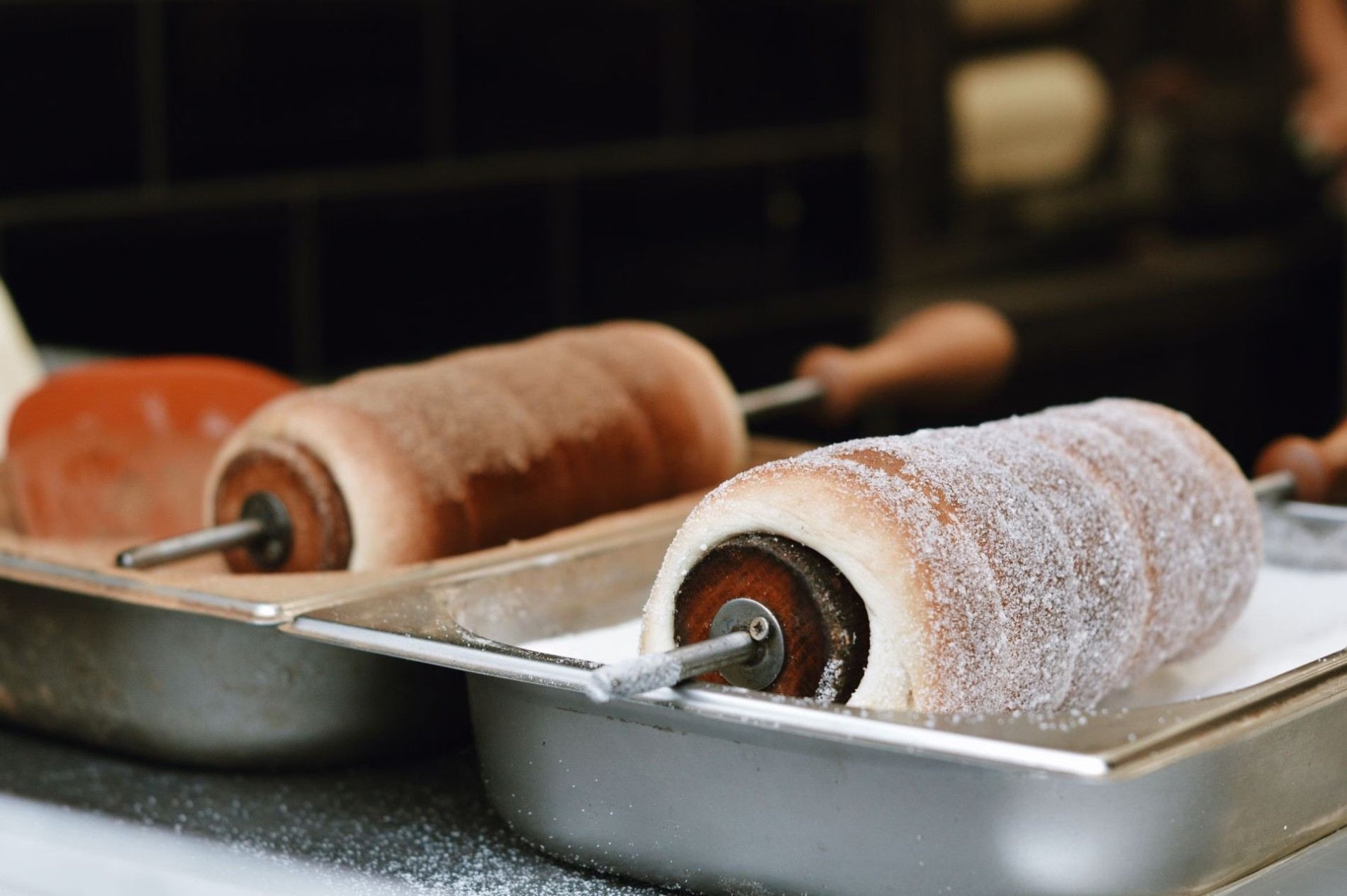
Got some space left for something sweet? The dessert scene is easily one of the best aspects of Hungarian food culture. From layered sponge cakes like dobos torte, with its buttery caramel topping, to somlói galuska, another type of sponge cake served with cream and chocolate, anyone with a sweet tooth will be well looked after.
You should also try chimney cakes, like kürtőskalács, which are a regular feature at the Christmas markets.
Desserts in Hungary are mainly sold at cukrászda. These are traditional pastry shops that have been ingrained in society since Austro-Hungarian times. They were popular places for people to socialize over coffee and something sweet. Still to this day, many of them can be found across cities like Budapest, but try to restrain yourself. It’s easy to get carried away!
Where to Eat Hungarian Food in Budapest
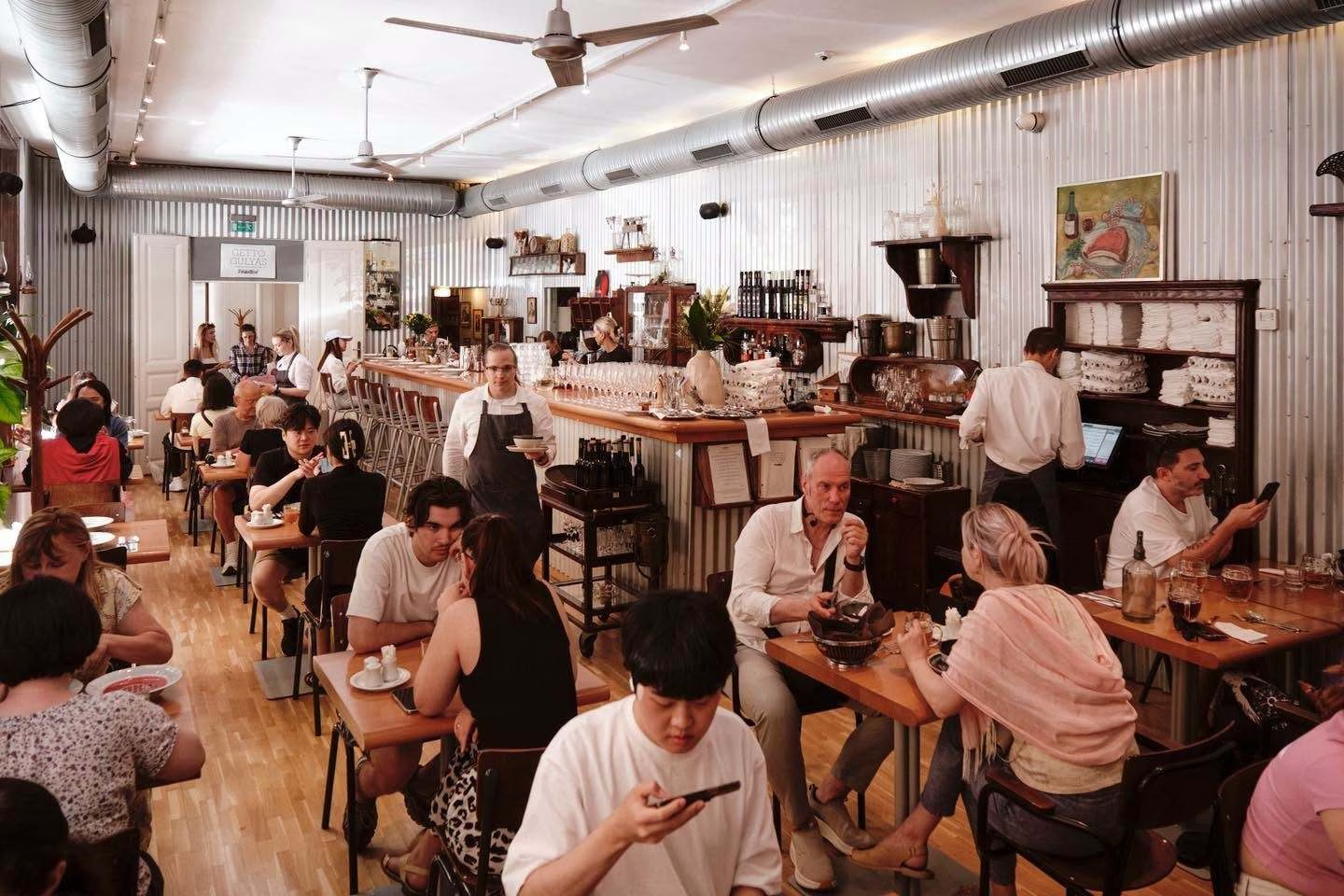
Photo credit: Gettó Gulyás
Now for the fun part: where to try some traditional Hungarian dishes for yourself.
Traditional restaurants like Gettó Gulyás are all about homemade-style dishes, right by popular Wesselényi Street. Pop in and sample some local flavors for yourself, whether it’s goulash with sourdough or farmhouse chicken cooked in paprika and served with a side of egg noodles.
For a more grab-and-go experience, the Central Market Hall never disappoints. Here, you’ll find a range of small stalls selling all kinds of local produce and plates as well as affordable street snacks such as lángos.
After taking a Hungary food tour with Eating Europe, make sure to save at least one evening of your trip for a csárda restaurant, where you can experience regional recipes and the atmosphere is as local as it gets. Csalánosi Csárda Óbuda fits the bill, with its extensive menu, cozy dining room, and selection of delicious Hungarian wines.
Traditional Cooking Methods
It took me a while to figure out why Hungarian food is so satisfying. I eventually realized it’s all about how the meals are cooked. Slow simmering gives the soups and stews their deep flavor, while adding paprika after the onions helps preserve each dish’s aroma and color.
Several simple ingredients form the base of many Hungarian classics. Onions, lard, and stock are key staples. Even today, baking, roasting, and cooking over an open fire still have their place, especially in rural areas around the country. These methods aren’t going anywhere anytime soon.
Sources:
Eating Europe. (n.d.). Budapest food tours. https://www.eatingeurope.com/budapest/
Eating Europe. (2026). Europe food travel survey. https://www.eatingeurope.com/blog/europe-food-travel-survey/
Gettó Gulyás. (n.d.). Gettó Gulyás. https://gettogulyas.hu/
Budapest.com. (n.d.). Central Market Hall. https://www.budapest.com/en/locations/central-market-hall
Eating Europe. (n.d.). Hungary. https://www.eatingeurope.com/hungary/
Csalánosi Csárda Óbuda. (n.d.). Csalánosi Csárda Óbuda. https://csalanosi-obuda.hu/


Budapest Food Tour: Local Tastings & Drinks
See Street Art & Visit a Local Ruin Bar
- Daily
- 3 Hours
- Small Group

Eating Europe Budapest Gift Card
Give them a taste of Budapest they'll remember!
- Small Group