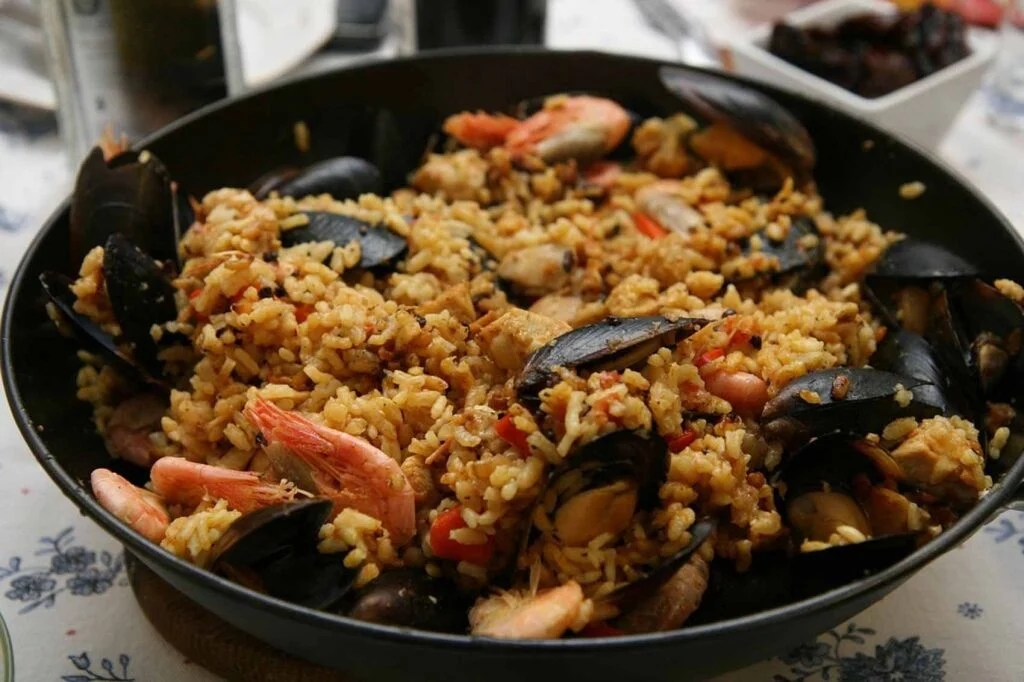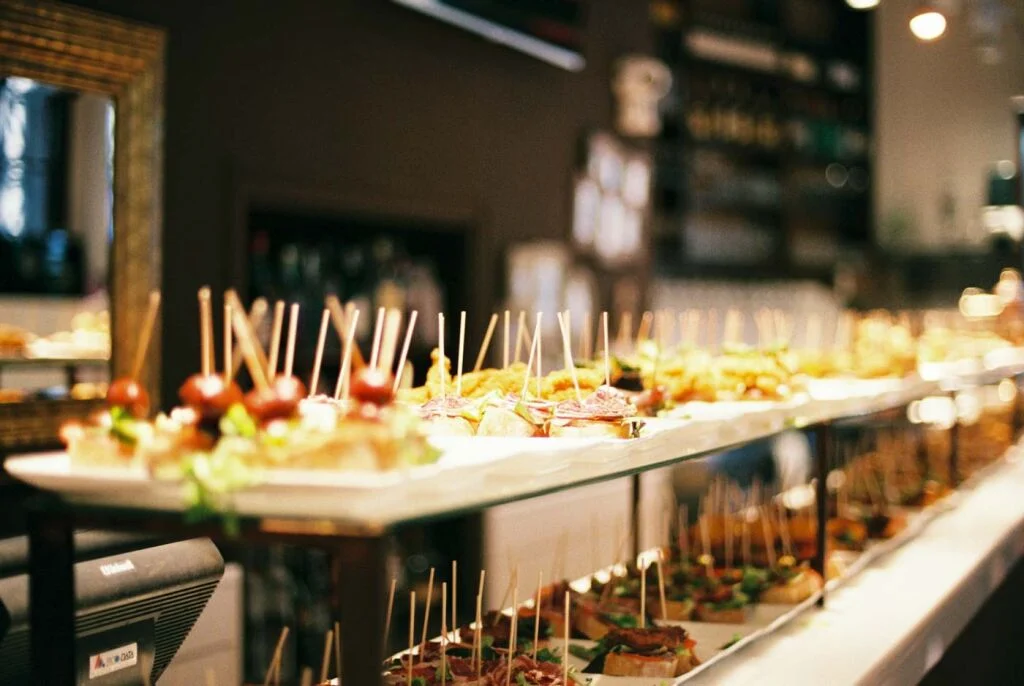
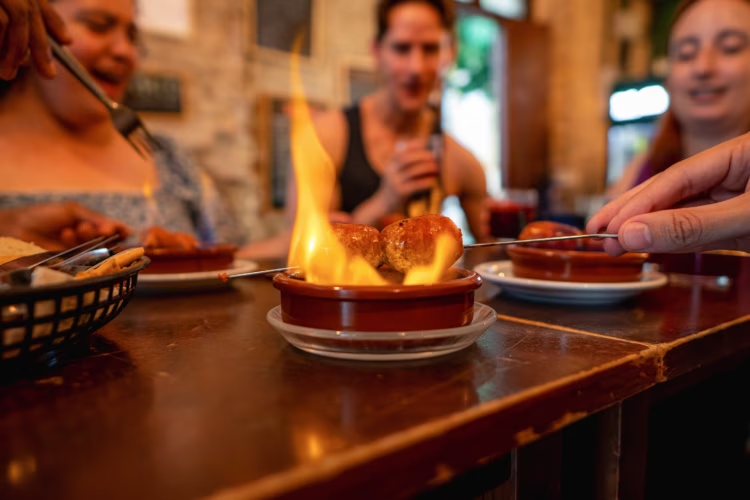
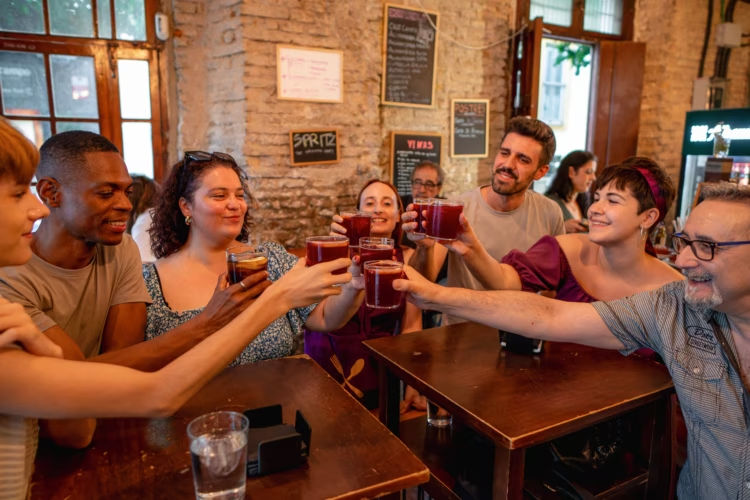
Even if you’re well acquainted with Spanish cuisine, there’s a good chance you’ve yet to encounter some of the beloved Easter foods in Spain! I try to immerse myself in the local fare whenever I visit, but I was exposed to another world of culinary delight when I arrived during ‘Semana Santa,’ otherwise known as Holy Week.
My Madrid food tours will give you great insights into regional flavors and ingredients, but with Easter bookings to Spain increasing this year, I felt it was the right time to put together this guide to Semana Santa foods!
The Role of Food in Semana Santa
Although Spain is still a predominantly Catholic country, the church’s influence on society has dwindled over the years. Yet, the cultural and gastronomic traditions associated with Holy Week continue to stand the test of time.
Food-focused gatherings and shared dining experiences are very much hallmarks of Spanish culture, but they’re more important than ever during times of celebration.
Sweet treats feature heavily in the culinary scene throughout Lent. However, many traditional Spanish Easter desserts are reserved for Semana Santa, the final week of the 40-day Lenten period.
Additionally, many people abstain from meat to commemorate the fasting and suffering of Jesus, meaning that Easter soups and stews tend to be vegetable or fish-based.
Semana Santa Processions and Food Culture
It’s impossible to talk about Easter in Spain without mentioning the procesiones — the dramatic processions that transform cities across the country during Holy Week. In Seville, Málaga, Valladolid, and Zamora, hooded nazarenos carry elaborate pasos (floats depicting biblical scenes) through candlelit streets, accompanied by hauntingly beautiful saetas (devotional songs).
These processions shape the rhythm of daily life — and eating — during Semana Santa. In Seville, where processions run from March 27 through April 5 in 2026, streets fill with the smell of incense, orange blossom, and frying torrijas from pop-up stalls. Locals eat at odd hours, grabbing tapas between processions and sitting down for long family meals on Easter Sunday.
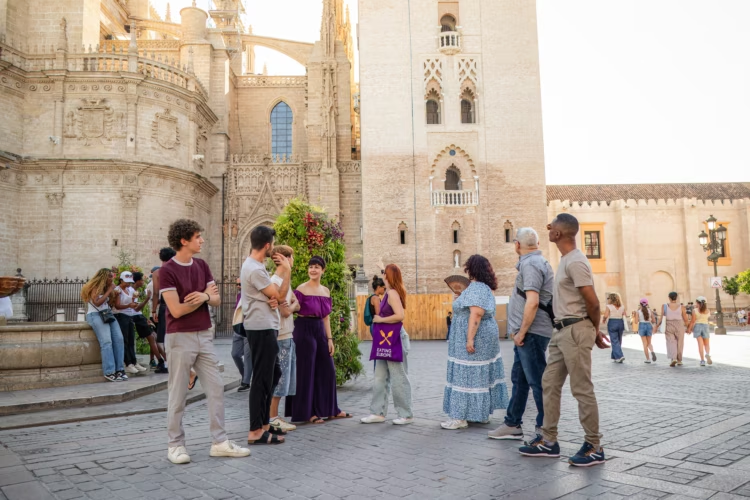
If you’re visiting Seville during Semana Santa, my Seville food tours are a wonderful way to discover the city’s culinary traditions — from flamenco-filled tapas bars to market stalls overflowing with seasonal specialties.
Top Traditional Spanish Easter Foods
Potaje de Vigilia
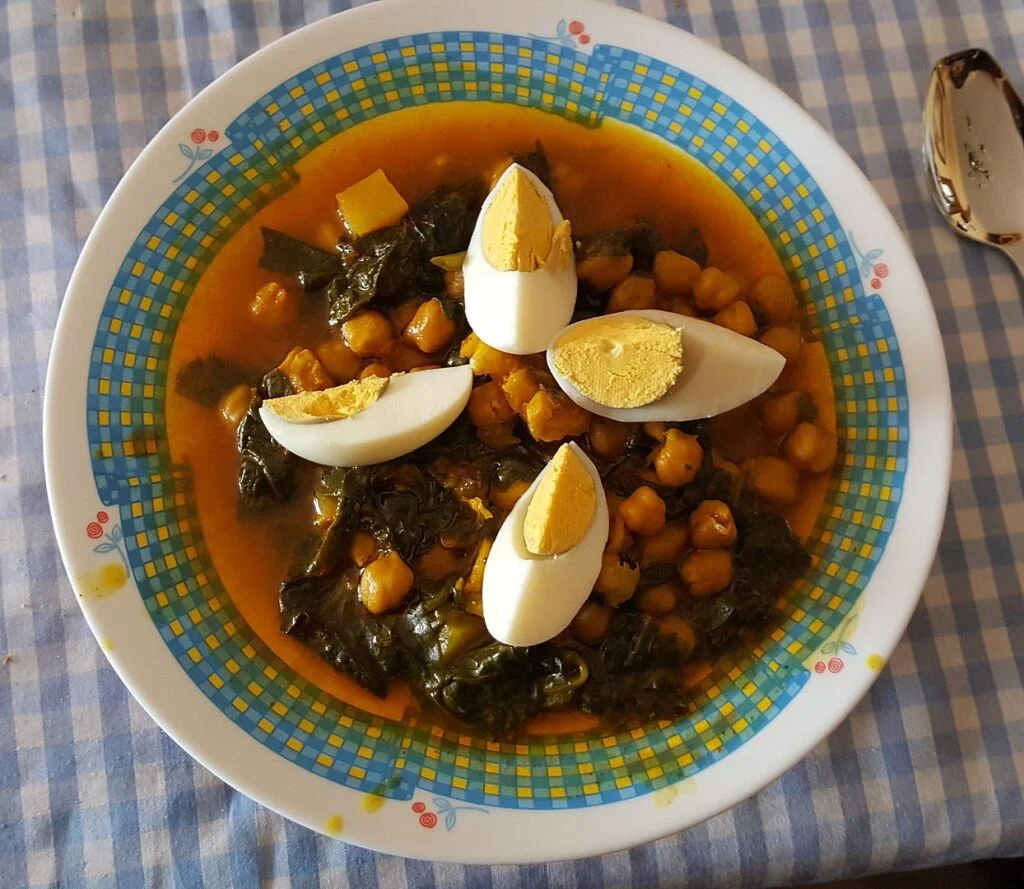
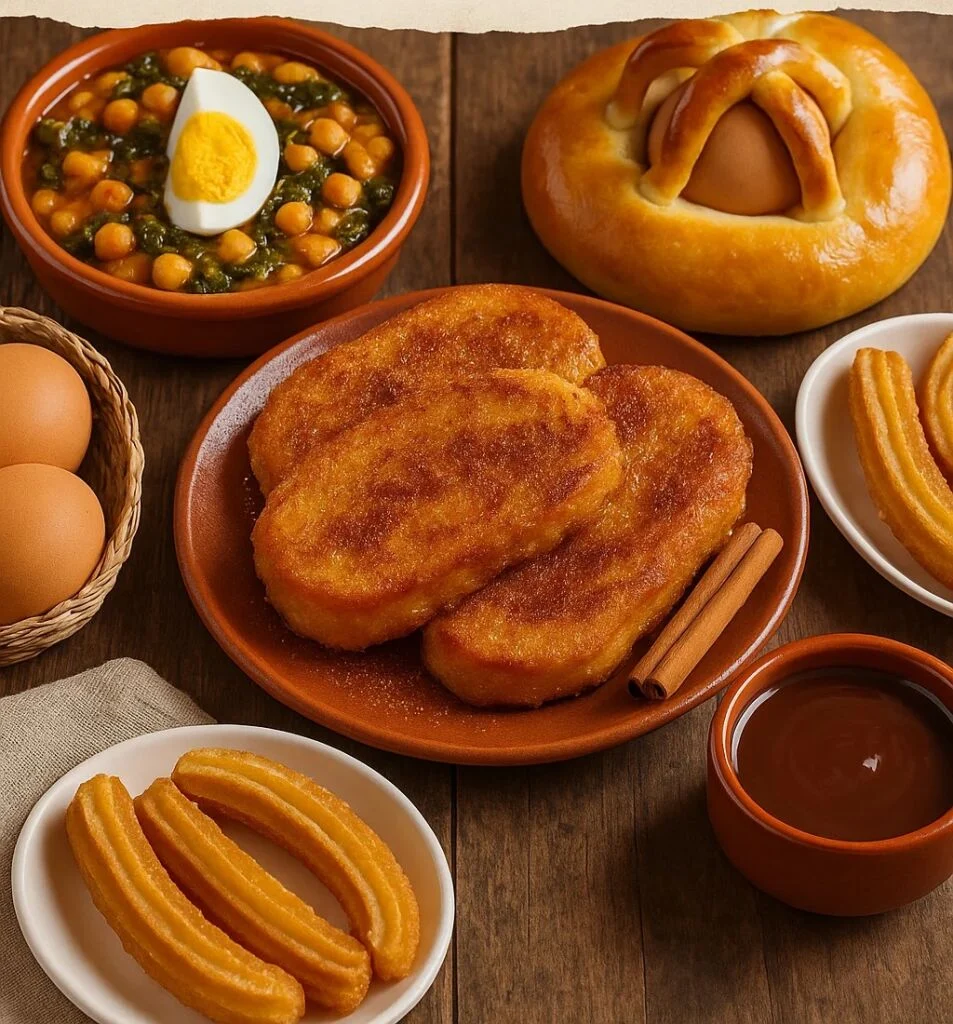
If you try just one Easter food in Spain, make it potaje de vigilia. This nourishing stew is made from cod, chickpeas, and boiled eggs and is a Semana Santa staple nationwide.
The specific birthplace of potaje de vigilia is unclear, but it likely came about as Spaniards tried to veer away from meat-based dishes during Lent. Cafe del Kasco in Toledo, not far from Madrid, is a fantastic place to try it.
Torrijas
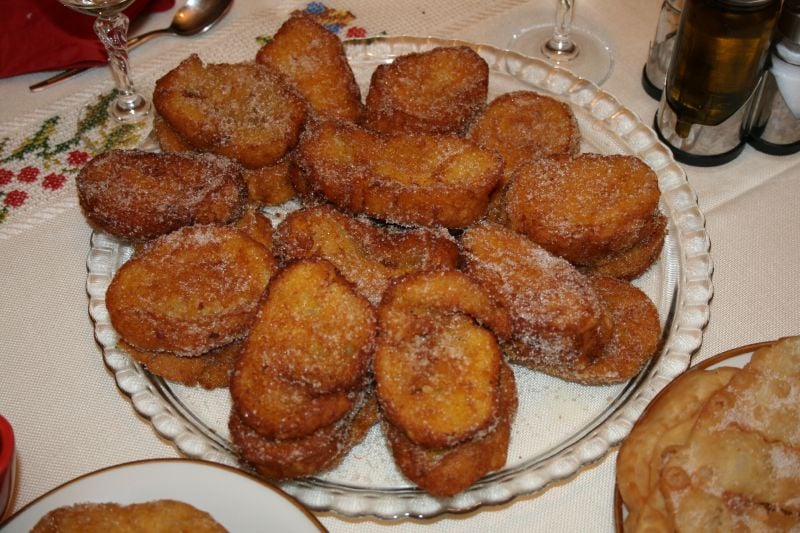
Torrijas was the Easter dessert I was most eager to sample, as it’s essentially a Spanish take on French toast! Sometimes, the bread is soaked in wine, but it’s usually dipped in milk and egg before getting fried in olive oil and dusted with cinnamon.
These Andalusian goodies came about in the medieval era when locals tried to use up stale bread, and the team at Aparicio in Malaga prepare some particularly tasty varieties.
Carolyn, our operations manager in Madrid says:
“Growing up, I would help my mother and grandmother make Torrijas every Easter. It started as a simple tradition where I would be in charge of coating them in sugar, but over the years I’ve refined the recipe, adding my own twist – serving them warm with a scoop of ice cream for an extra indulgent touch!”
Hornazo
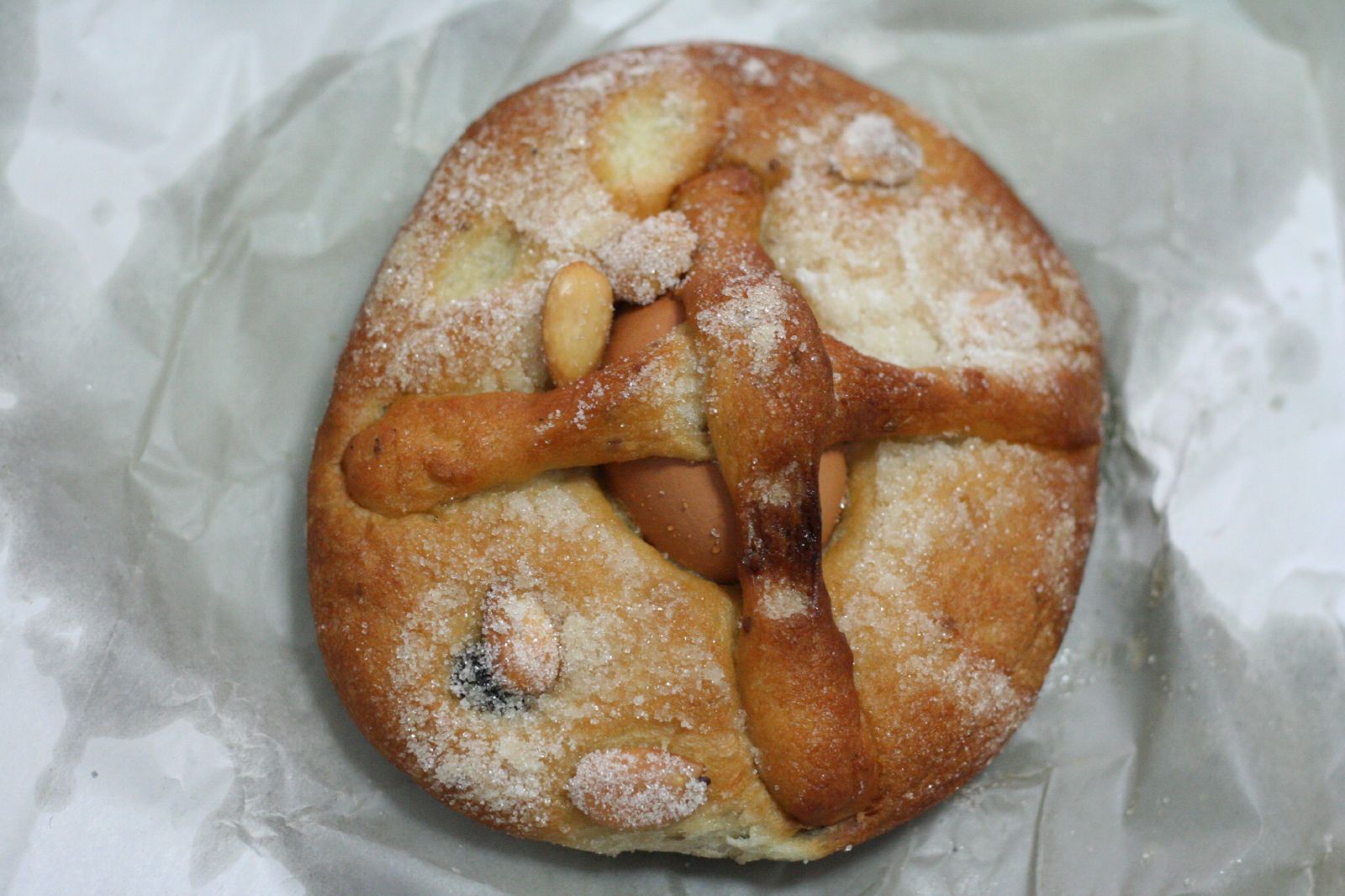
Hornazo is a meat-lover dream, as this satisfying pie is typically filled with pork loin, chorizo, and boiled eggs. While sweet alternatives exist, the savory version is the most renowned of the two.
The dish traces its roots to Salamanca in the Castile and León region. In the past, hornazo was enjoyed as a celebratory snack during Lunes de Aguas, on the first Monday after Lent. If you find yourself in the city, you have to check out the goods at Pastelería La Hornazería.
Mona de Pascua
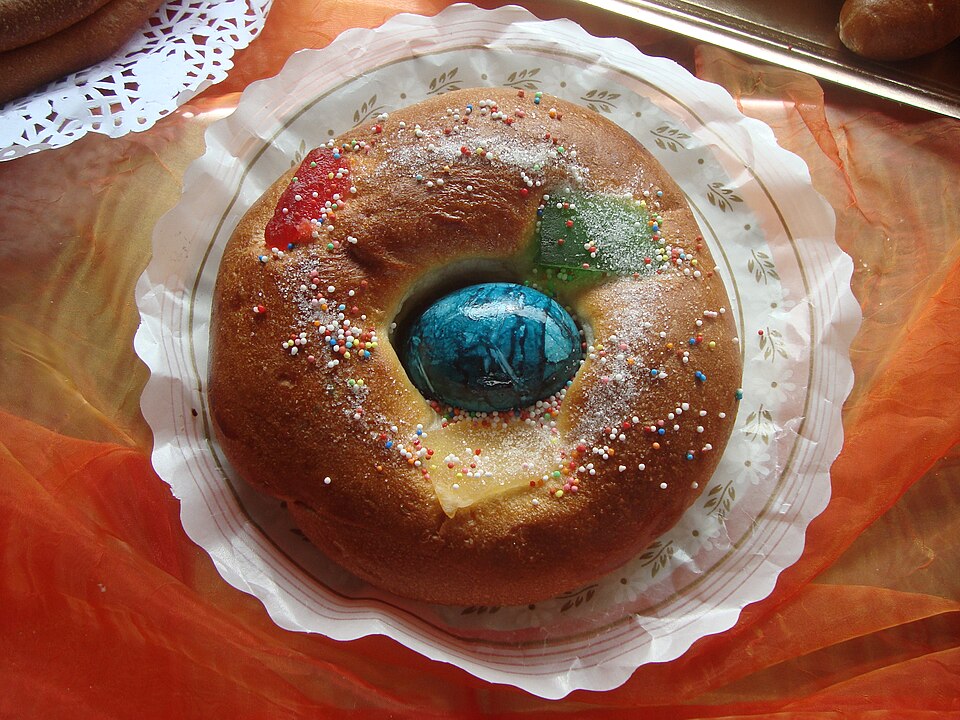
There tends to be quite a lot of symbolism in Easter foods in Spain, and one of the best examples of this is Mona de Pascua. This round brioche cake is an Easter Sunday and Monday specialty, usually topped with boiled eggs to represent new life.
Catalonia is synonymous with this delightful dessert and Lyndsy, our Barcelona food tour guide says,
“Dating back to the 15th century, this Easter treat has nothing to do with monkeys (Monos) and everything to do with all the sweet ingredients catholics can not eat during the month of Lent. They would save the eggs to make a sweet round cake with a hole in the middle symbolizing rebirth. Traditionally they decorate it with hard-boiled eggs to eat on Easter Sunday and end the Lent season, welcoming Spring.
“The Godparents of a child are meant to give a Mona to their godchild to end their gastronomic fasting. Bakeries display elaborately decorated Monas covered in chocolate eggs, chicks and bunnies to celebrate Spring. If your mona includes a hardboiled egg in the middle, it’s quite traditional to ‘crack’ them on the forehead of your family members or friends… preferably by surprise!”
Those of you planning to spend Easter in Barcelona will love the varieties of this cake at Escribà.
Sopa de Ajo
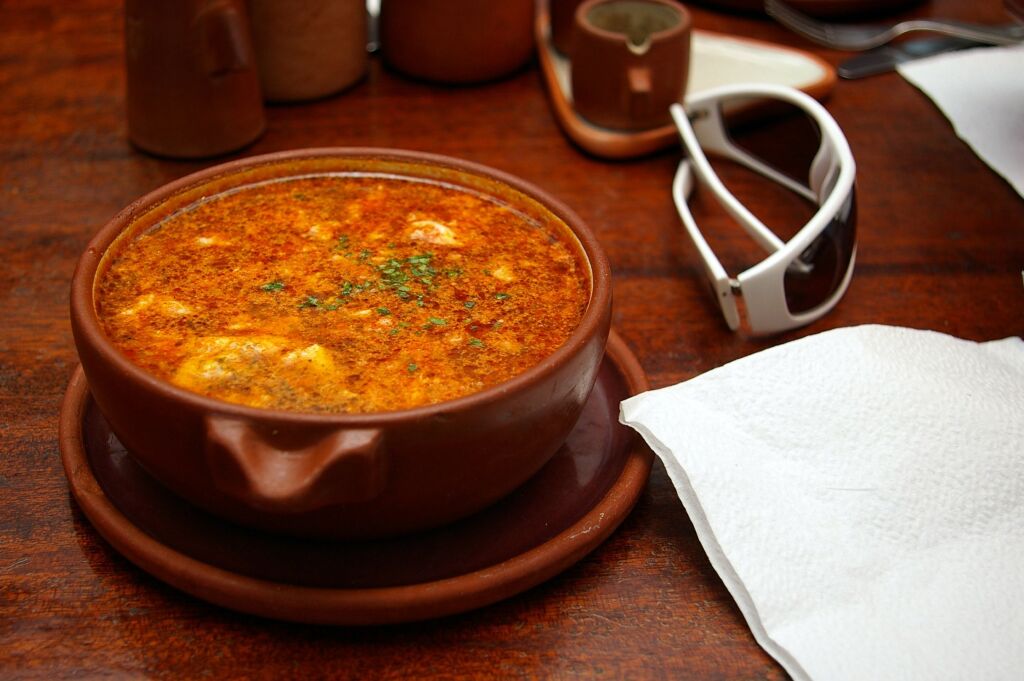
Easter food in Spain isn’t just about the sweet stuff, and sopa de ajo proves that the Spanish are just as talented at preparing savory options. It’s a simple garlic soup made from chicken broth, paprika, and stale bread, and in some cases, eggs or ham are added.
Despite starting out as a peasant dish, sopa de ajo later became an Easter favorite in Madrid and Castile and León. I sampled it for the first time in Sobrino de Botín and couldn’t recommend it enough!
Bueñelos
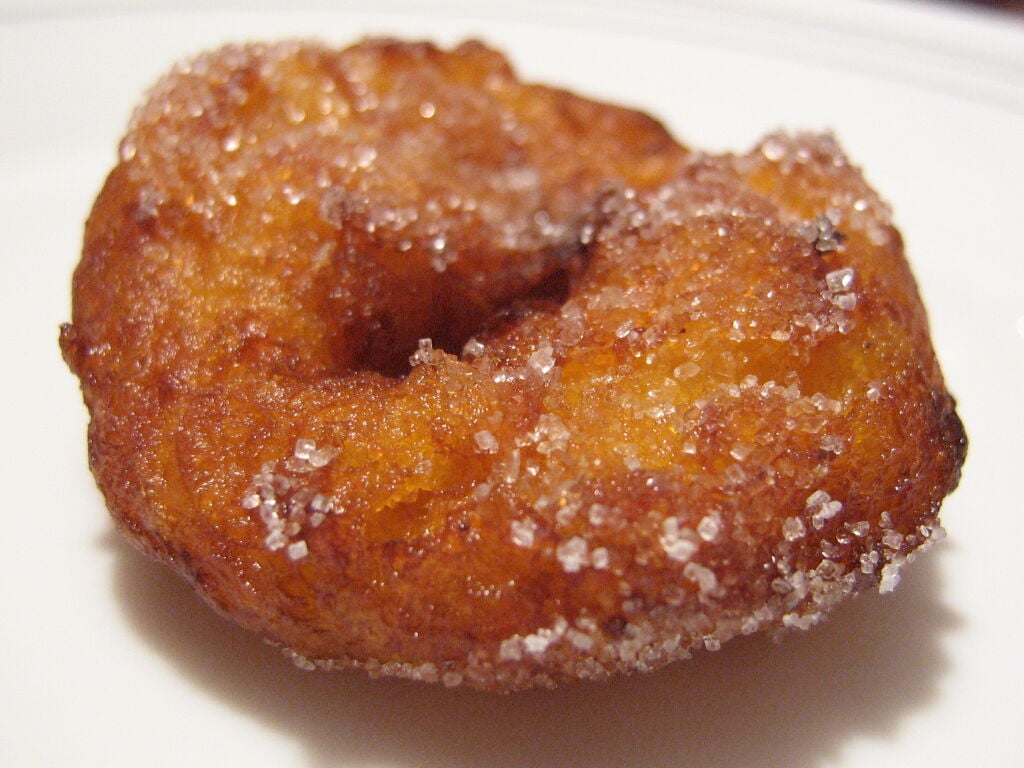
Bueñelos are Spanish-style fritters. Flour, butter, eggs, and milk are combined to form a light dough that’s then fried and sometimes filled with a saccharine filling of cream, chocolate, or custard.
They came about as a result of Moorish influences in Andalusia, and I managed to secure some at Bellas Durmientes in Malaga.
Regional Easter Food Highlights
Some Easter foods in Spain are favourites in almost every corner of the country, while others are particularly popular in specific regions. Below are some regional Easter specialties to look out for, depending on which part of Spain you find yourself in during Semana Santa 2026.
Madrid / Castile and León: Sopa de ajo, bartolillos (small cream-filled pastries), and hornazo. Madrid’s confiterías go all-out for Easter, with torrijas and bartolillos displayed in shop windows from mid-March. Salamanca celebrates Lunes de Aguas (April 13 in 2026) with hornazo feasts by the river.
Catalonia: Mona de Pascua and escudella i carn d’olla (a hearty meat and vegetable stew). Barcelona bakeries compete to create the most elaborate mona cakes, with modern versions featuring chocolate sculptures that can be true works of art. Easter Monday is a public holiday here.
Valencia: Bacalao (salt cod dishes) and panquemao (a sweet Easter bread similar to brioche, scented with orange blossom and anise). Easter Monday is also a public holiday in Valencia.
Andalusia: Torrijas, buñuelos, and pestiños (honey-glazed pastries). Seville and Málaga are the epicentres of Semana Santa processions, and street food stalls selling torrijas and churros line procession routes throughout the week.
Basque Country: Bacalao al pil pil (cod in olive oil and garlic emulsion) and pastel vasco (a custard-filled pastry). Easter Monday is a public holiday in the Basque Country, making it a long weekend destination.
Practical Tips for Semana Santa in Spain (2026)
A few things worth knowing if you’re visiting Spain over Easter 2026:
Restaurant closures: Many restaurants close on Good Friday (April 3), especially outside major tourist areas. Easter Sunday can also be quiet. Book ahead for popular spots, particularly in Seville and Madrid.
Procession schedules: In cities like Seville and Málaga, processions can block streets for hours. This is part of the charm, but plan meal times around them. Local tourist offices and apps publish daily procession routes and times.
Regional differences matter: Easter Monday is only a public holiday in Catalonia, Valencia, the Basque Country, the Balearic Islands, and Cantabria. In Madrid and Andalusia, it’s a normal working day. Maundy Thursday (April 2) is a holiday in most regions but not all — check your specific destination.
Book accommodation early: Seville during Semana Santa is one of Spain’s most popular travel periods. Hotels fill up months in advance and prices spike significantly.
Conclusion
There’s never a bad time to visit Spain, as the food is exceptional no matter when you arrive! That said, sampling the Easter food in Spain is especially exciting, allowing you to experience sumptuous fare that’s almost impossible to find throughout the rest of the year.
Sources
Eating Europe. (n.d.). Madrid food tours & culinary experiences. https://www.eatingeurope.com/madrid/
Money Tourism. (2024, April 5). 16.8% increase in Easter 2025 bookings – Spain and Portugal in the top positions. https://money-tourism.gr/en/16-8-increase-in-easter-2025-bookings-spain-and-portugal-in-the-top-positions/
Tripadvisor. (n.d.). Cafe Del Kasco, Toledo. https://www.tripadvisor.ie/Restaurant_Review-g187489-d4039151-Reviews-Cafe_Del_Kasco-Toledo_Province_of_Toledo_Castile_La_Mancha.html
Facebook. (n.d.). Confitería Aparicio. https://www.facebook.com/p/Confiter%C3%ADa-Aparicio-100059128663902/
Tripadvisor. (n.d.). Escribà, Barcelona. https://www.tripadvisor.ie/Restaurant_Review-g187497-d2314979-Reviews-Escriba-Barcelona_Catalonia.html
Botín. (n.d.). Sobrino de Botín – The oldest restaurant in the world. https://botin.es/en/
bellasdurmientes_cafeteria. (n.d.). [Profile]. Instagram. https://www.instagram.com/bellasdurmientes_cafeteria/?hl=en