Most travellers arrive in Florence expecting pasta on every corner, and technically they find it. But ask what pasta Florence is actually known for and the answer is more interesting than the question suggests, because Tuscany is not really a pasta region at all. It is a bread region, and once you understand that, every menu in the city starts to make a different kind of sense.
This is a guide to pasta in Florence for the traveller who wants the story as much as the plate: the two shapes that genuinely belong to Tuscany, what handmade actually means when a kitchen says it, and where Florentines go when they want a proper primo.
Why Is Pasta’s Place in Florence a Little Unusual?
Think of the dishes Tuscany is famous for: ribollita, panzanella, pappa al pomodoro. Every one of them is built on bread. This is a cuisine shaped by cucina povera, the resourceful peasant cooking that let nothing go to waste, and in Tuscany the thing not being wasted was usually yesterday’s unsalted loaf. Pasta was never the headline act here the way it is in Bologna or Rome. We covered this bread first logic in our guide to traditional Florentine dishes, and it applies to the pasta course too.
What pasta is in Florence is the primo: a first course, one act in a longer meal, followed by a secondo of meat or fish. Portions are sized accordingly and sauces are matched to shapes with a logic refined over generations. Grasp that structure and you will order better than the vast majority of visitors, who treat a primo as a main course and wonder why the plate looks modest.
Which Pasta Shapes Belong to Tuscany?
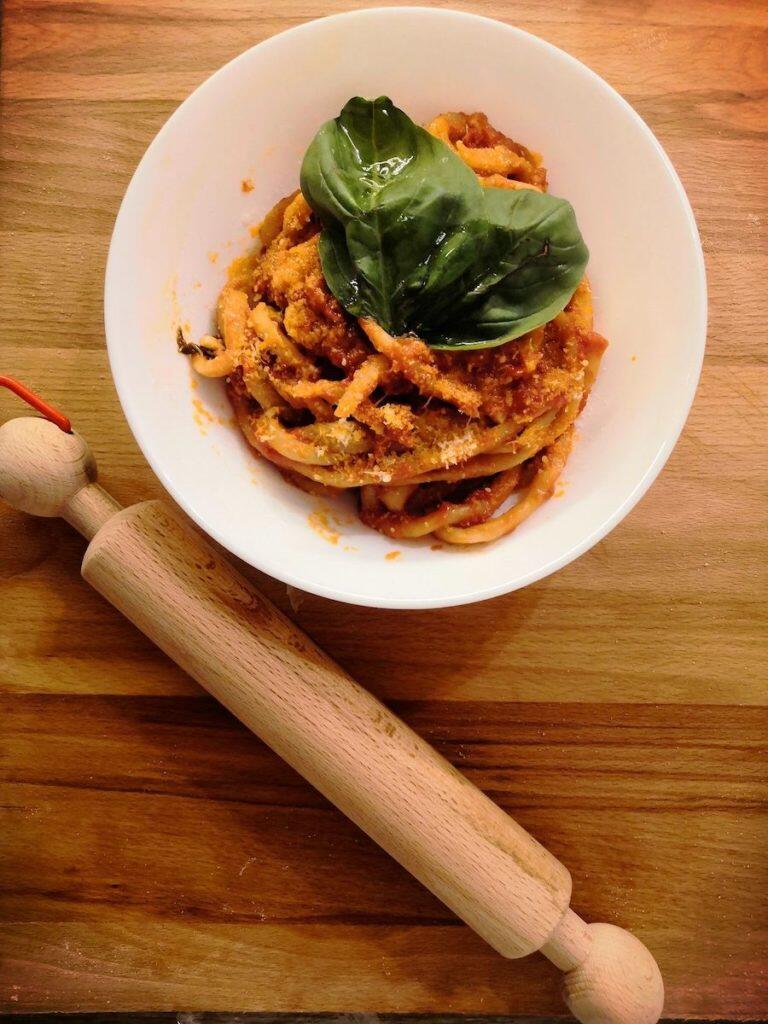
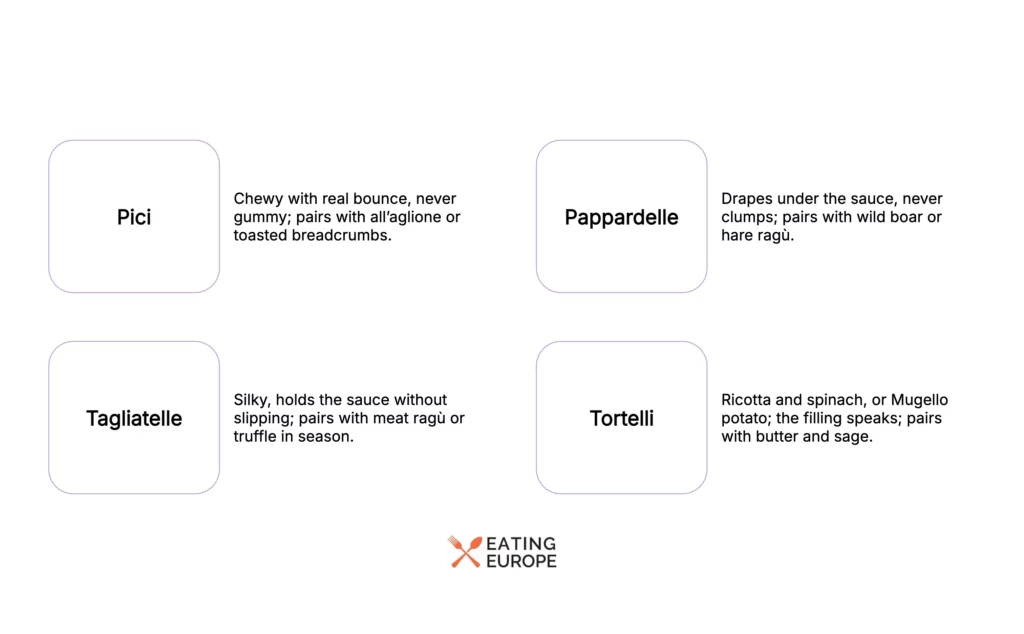
Two, principally, and they could hardly be more different. Pici are thick ropes of pasta rolled by hand from nothing but flour and water, no egg, a legacy of southern Tuscan kitchens that could not spare one. A good pici has real bounce, a satisfying chew that ordinary spaghetti never manages, and it is traditionally dressed simply: all’aglione, with a garlic heavy tomato sauce, or con le briciole, with toasted breadcrumbs standing in for cheese that peasant kitchens also could not spare.
Pappardelle are the aristocrats of the pair: wide, silky ribbons of egg pasta, built broad for one purpose, which is carrying the weight of Tuscany’s game ragùs. Pappardelle al cinghiale, with slow braised wild boar, is the plate we would point any curious eater to first. The width is not decoration. A narrow noodle drowns under a sauce that dense, while pappardelle drape and hold it. Every classic pairing in Tuscany works this way: the shape is an engineering answer to the sauce.
What Does Handmade Actually Mean?
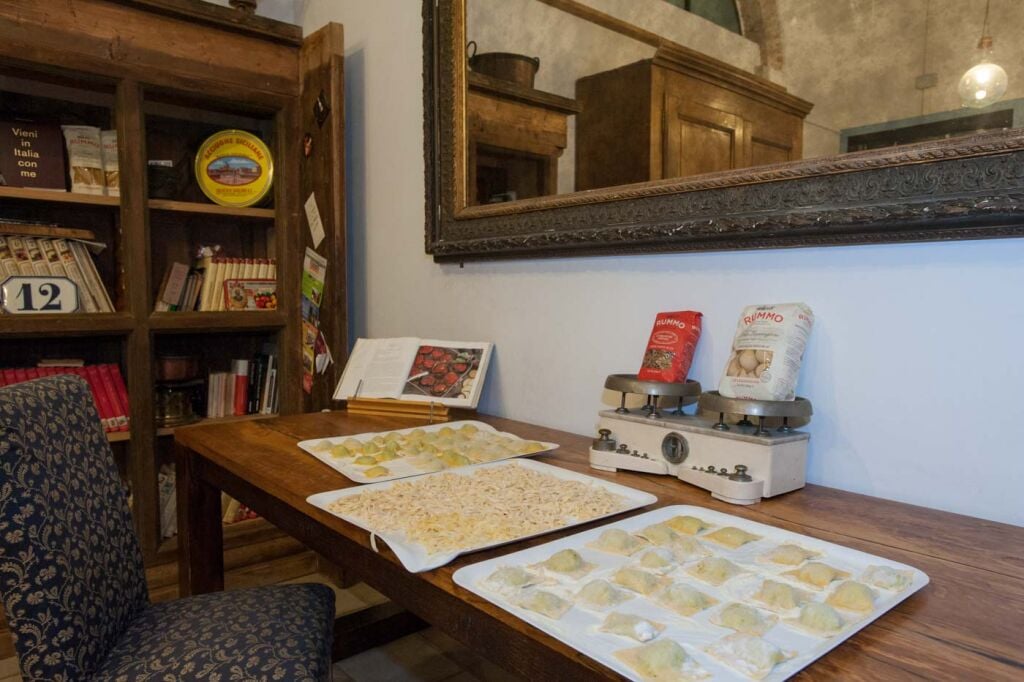
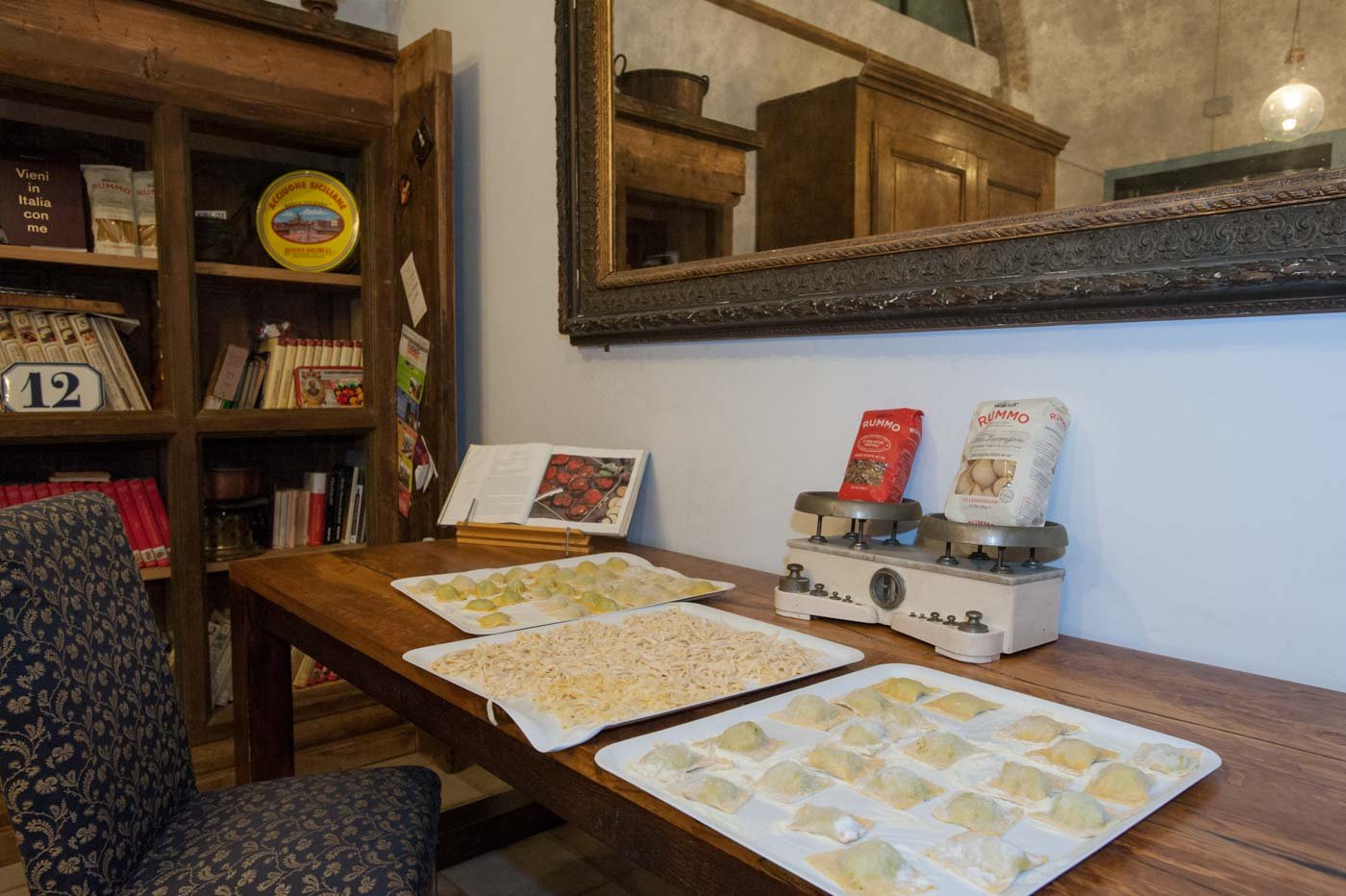
Fresh pasta and dried pasta are not a quality ranking, whatever the menus imply. They are different products for different jobs. Dried semolina pasta, extruded and firm, is what you want under an oily or spicy sauce. Fresh egg pasta, the sfoglia tradition of rolled dough, is what tagliatelle, pappardelle and stuffed tortelli are made from, and when it is rolled that morning you can taste the difference.
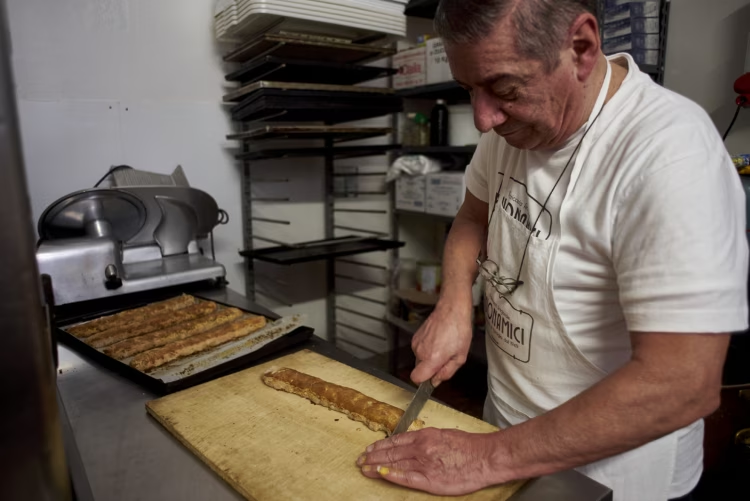
Look for the tells. Hand rolled pasta has slightly irregular edges and a faintly porous surface that grips sauce instead of shedding it, and its bite is tender with just enough resistance, never slick or bouncy in the manner of a factory sheet. In Florence you can still watch this work happen. The fresh pasta counters on the ground floor of the Mercato Centrale roll and cut through the morning, and a handful of family pasta shops, of which more below, have been doing it daily for decades.
Where Do Florentines Actually Eat Pasta?
The signals of a serious pasta kitchen are the same everywhere in the city: a short menu, sauces that change with the season, and pasta listed where it belongs, under the primi. Here is where we would send you. Trattoria Mario, beside the Mercato Centrale, has fed market workers since 1953 and does a pappardelle al ragù with no interest in fashion: lunch only, cash only, shared tables, worth every minute of the queue. Near the Ponte Vecchio, Trattoria Cammillo has been rolling seasonal fresh pasta since 1945 in a dining room that half of Florence seems to pass through.
For the reward that takes a little travelling, La Boutique della Pasta Fresca in the Le Cure neighbourhood began life as a pasta maker’s shop and added a few lunch tables almost as an afterthought. It is outside the historic centre, open for lunch only, and the pasta is as fresh as it is possible to serve. And on the Mercato Centrale ground floor, the made to order pasta counters turn out plates for €6 to €8 that embarrass restaurants charging triple. If you are exploring the markets anyway, our Sant’Ambrogio market guide pairs naturally with a pasta lunch.
One honest word about the places you may have seen online, where fresh pasta is tossed in a hollowed parmesan wheel at your table. Locals are not in those queues, and neither is anyone whose interest is the pasta rather than the video of it. If cheesy, buttery pasta is what you are after, order it from a kitchen that makes it for the plate, not the phone.
| This is exactly the kind of knowledge our guides love handing over in person, plate by plate. Join one of our Florence food tours and you will taste the difference a morning’s sfoglia makes, with someone beside you who can tell you whose hands rolled it. |
Order Like You Know the Story
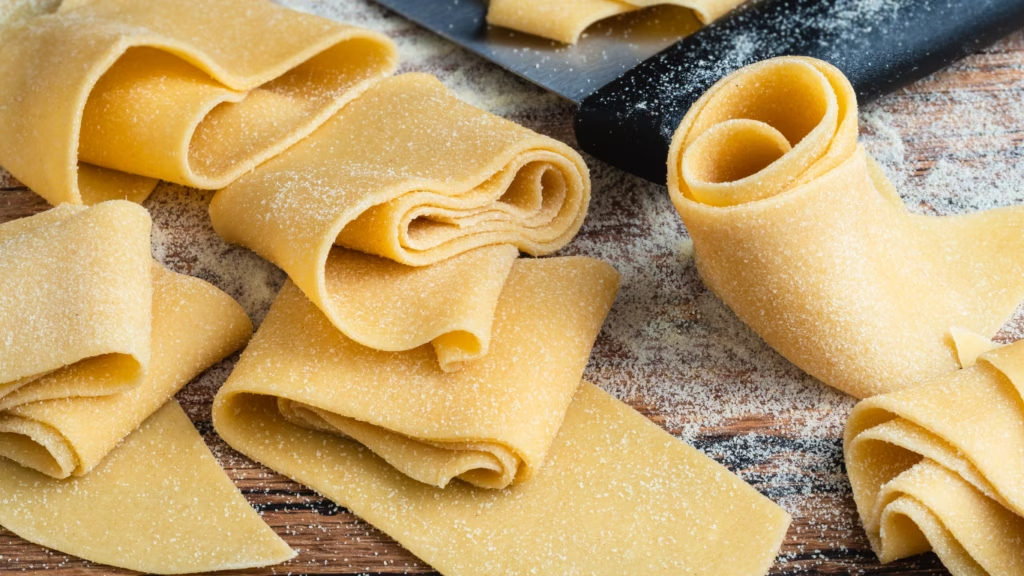 Three questions unlock any pasta menu in Florence: what is the shape, what is the sauce, and whose hands made it. Ask them and pici stops being an unfamiliar word and becomes the obvious order, pappardelle al cinghiale becomes the plate you plan a day around, and the primo takes its proper place in the rhythm of a Tuscan meal.
That fluency is the whole point of eating here. And it travels: it will serve you at every trattoria in Tuscany, long after this trip.
Frequently Asked Questions
What pasta is Florence actually known for?
Pici and pappardelle. Pici are thick, hand rolled ropes made without egg, usually served all’aglione. Pappardelle are wide egg ribbons made for game ragùs, above all pappardelle al cinghiale, wild boar.
Is fresh pasta better than dried?
Neither is better; they do different jobs. Fresh egg pasta suits rich ragùs and stuffed shapes, while dried semolina pasta holds its bite under oily and spicy sauces. A kitchen that serves both, each in its right place, is a kitchen that knows what it is doing.
Where can I watch pasta being made in Florence?
The fresh pasta counters on the ground floor of the Mercato Centrale roll and cut through the morning, and La Boutique della Pasta Fresca in Le Cure is a working pasta shop with lunch tables. Both let you watch the sfoglia work up close.
Can I try traditional Tuscan pasta on your food tours?
Yes. Fresh pasta features across our Florence food tours, alongside the market stops and the stories behind the plates. It is the easiest way to taste several of the shapes in this article in a single afternoon.
How We Choose the Places We Recommend
We run food tours in Florence every day, and the recommendations in this guide come from the same place our tour stops do: our guides’ own tables. Every trattoria and counter named here is somewhere our team eats by choice, visited and re visited, most recently in summer 2026. No restaurant has paid to appear and none can. We favour kitchens that make their pasta daily, change their sauces with the season, and treat the primo with the respect the tradition deserves. When a place slips, we remove it, because a guide is only as good as its last recommendation. If your experience differs from ours, we want to hear about it. Come taste the difference a morning’s sfoglia makes. Join us on a Florence food tour and eat the city’s pasta story plate by plate.
Sources
Eating Europe. (n.d.). Florence food tours. https://www.eatingeurope.com/florence/
Eating Europe. (n.d.). Traditional Florentine dishes. https://www.eatingeurope.com/blog/traditional-florentine-dishes/
Eating Europe. (n.d.). Sant’Ambrogio market vs Mercato Centrale. https://www.eatingeurope.com/blog/florence-santambrogio-market-vs-mercato-centrale/

Florence Sunset® Food & Wine Tour
An unforgettable evening filled with wines, fresh pasta, cocktails and an exclusive wine cellar experience.
- Daily
- 3.5 Hours
- Small Group
Florence Food & Local Flavors Tour
An intimate culinary experience through Oltrarno, among Tuscan flavors and legendary local hosts
- Mon-Sat
- 3 Hours
- Small Group
Tuscany Truffle Hunt: A Culinary Adventure
A gourmet culinary adventure with a multi-course meal in the Tuscan countryside.
- 5 Hours
- Small Group