
The cuisine of San Sebastián tells a story of tradition, innovation, and deep cultural pride with every bite. In this complete guide we’ll take a look at the beating heart of Basque cuisine, the relationship with the sea and the bounty of the land, as well as how the local chefs honor the food culture.
From the bustling pintxo bars of the Parte Vieja to the refined flavors of iconic local dishes like bacalao al pil-pil and txangurro. Whether you’re sampling skewered delights at a family-run bar or savoring seafood fresh from the Bay of Biscay, the food of San Sabastian and the Basque Country needs to be a part of your next Spanish food tour.
Traditional Dishes of San Sebastian
Basque cuisine is filled with iconic and traditional foods that help define San Sebastián’s culinary identity. This includes bacalao and spider crab dishes that reflect the Basque relationship with the sea.
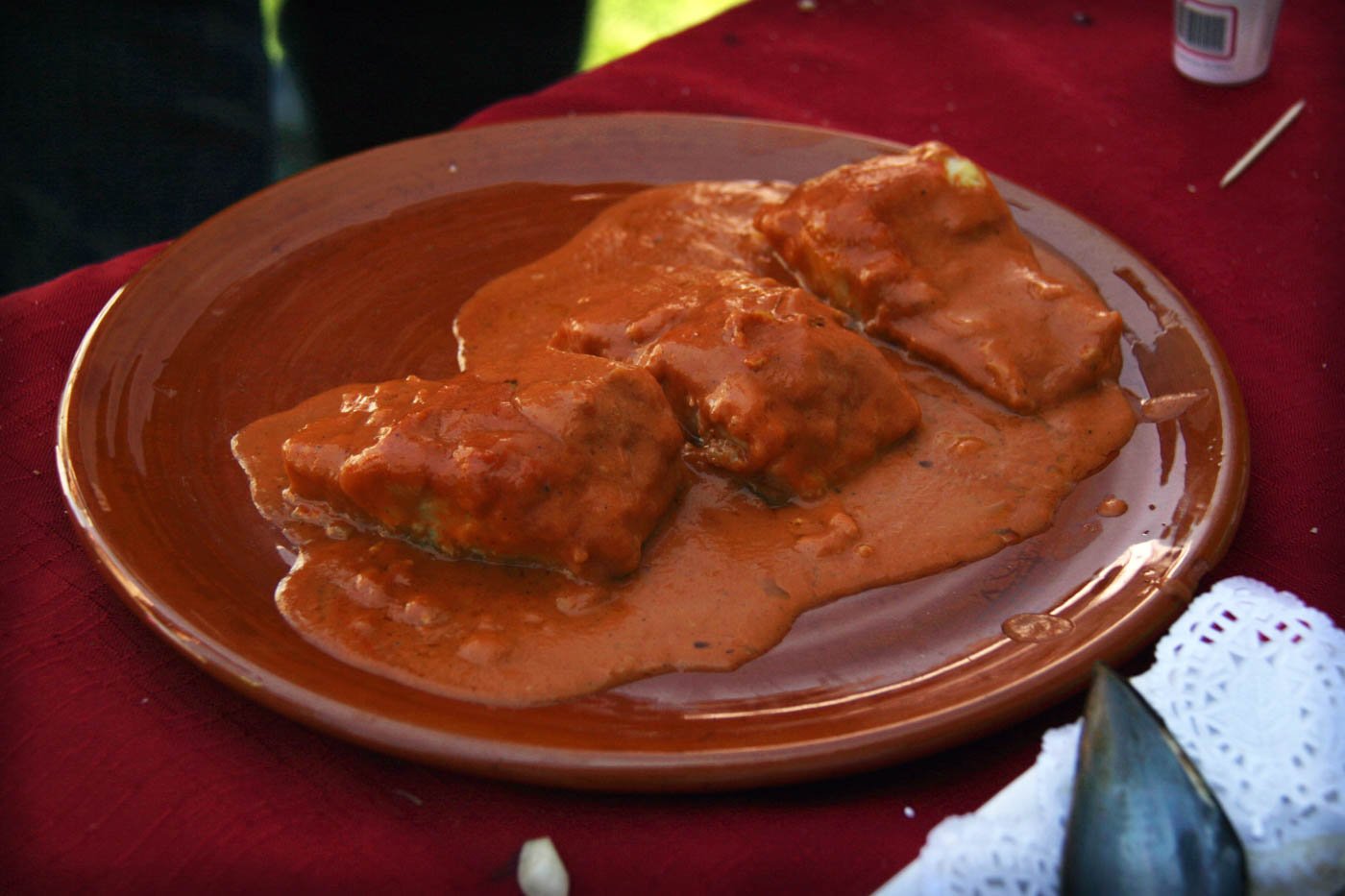
Photo credit: Wikimedia Commons licensed under Attribution-ShareAlike 3.0 Unported (no changes made)
Bacalao a la Vizcaína is a beloved salt cod dish that’s slow-cooked in a bold sauce of tomatoes, red peppers, garlic, and olive oil. It’s a taste of home Basque comfort, that’s worth trying at least once if you see it on a menu.
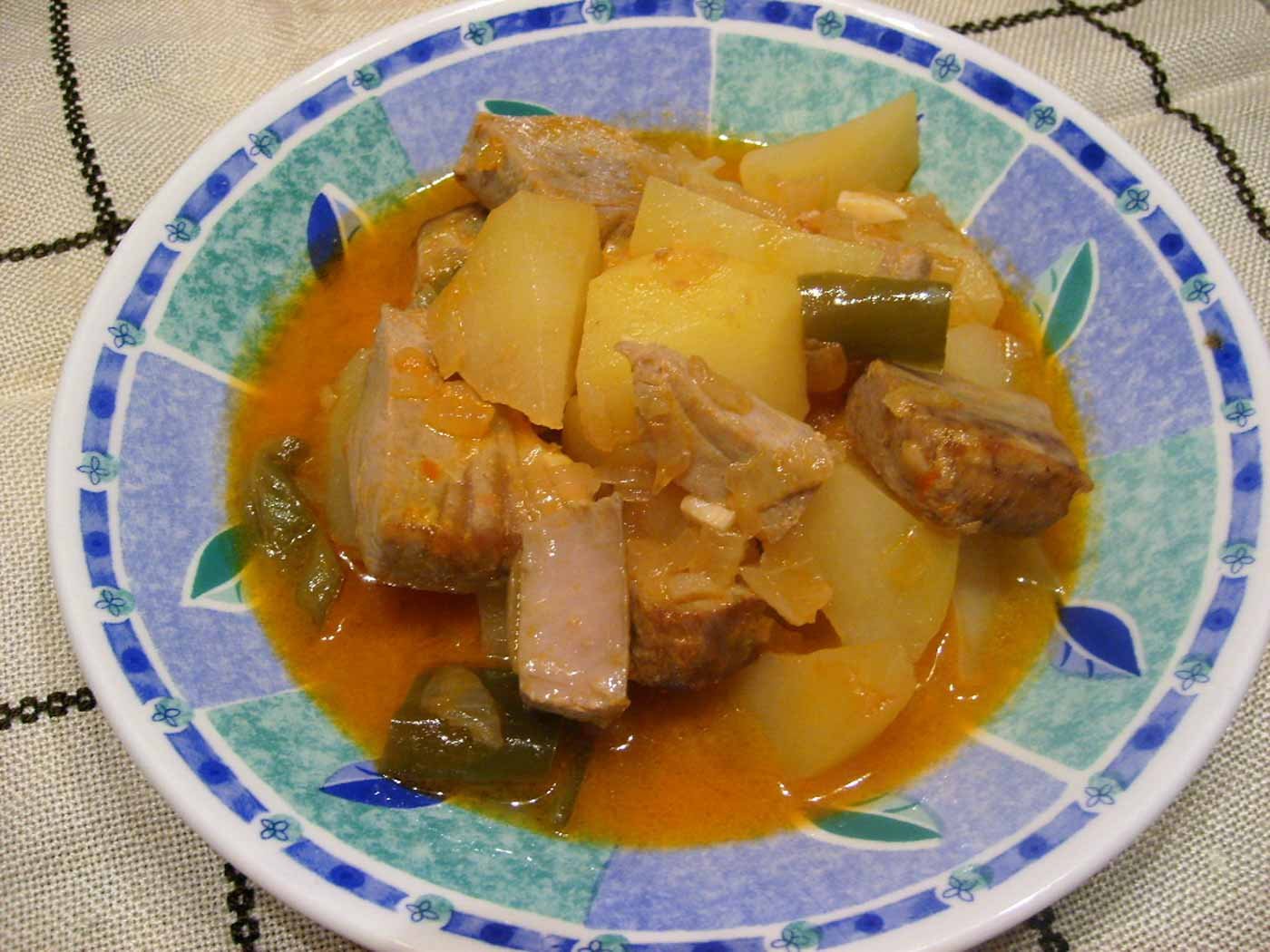
Photo credit: Wikimedia Commons licensed under Attribution-ShareAlike 2.5 Generic (no changes made)
Marmitako is a fisherman’s stew made from chunks of fresh tuna with potatoes, onions, and smoky paprika, simmered to perfection in a rich broth. It’s sort of the Basque version of tuna chowder.
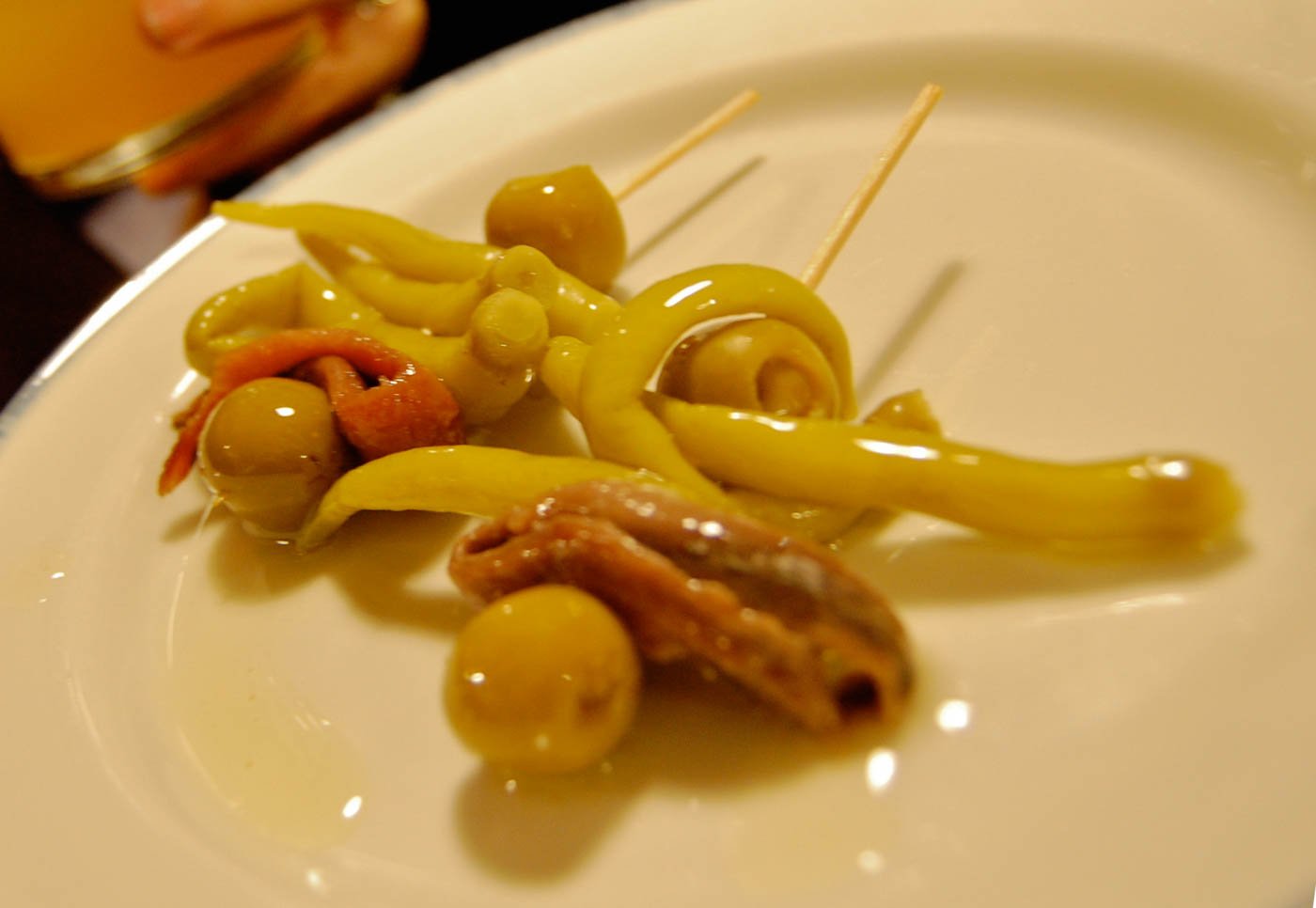
Photo credit: Wikimedia Commons licensed under Attribution-ShareAlike 2.0 Generic (no changes made)
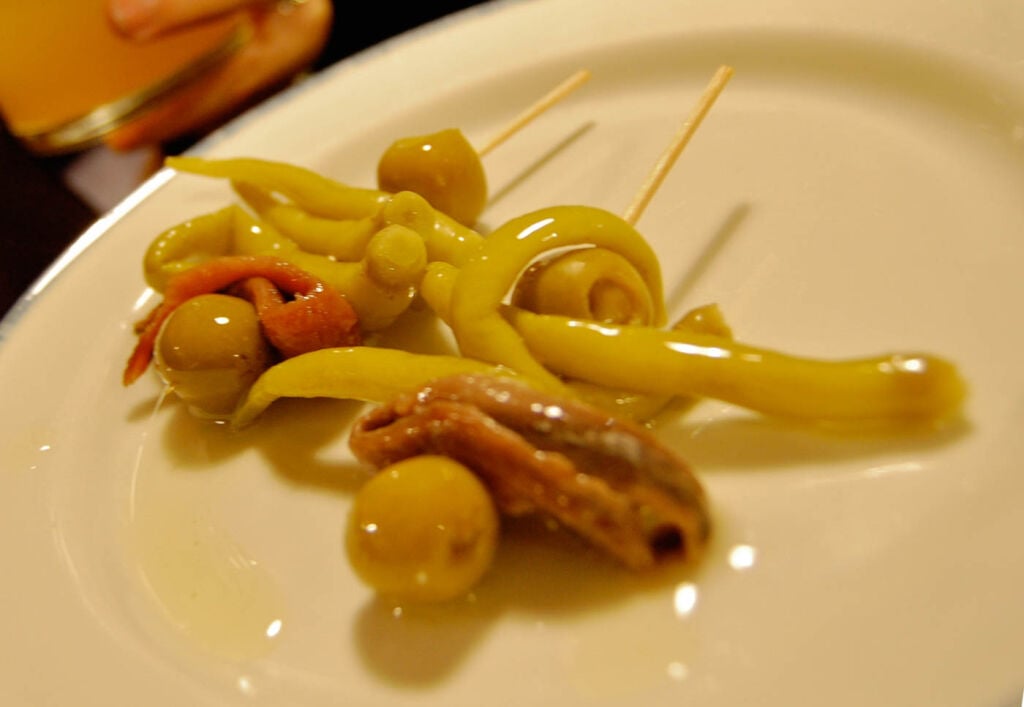
Gilda is a classic pintxo. It’s a skewered bite of anchovy, green olive, and pickled pepper. It’s a salty, spicy explosion of flavor, named after the sultry 1940s film character, that goes perfectly with a cold beer.
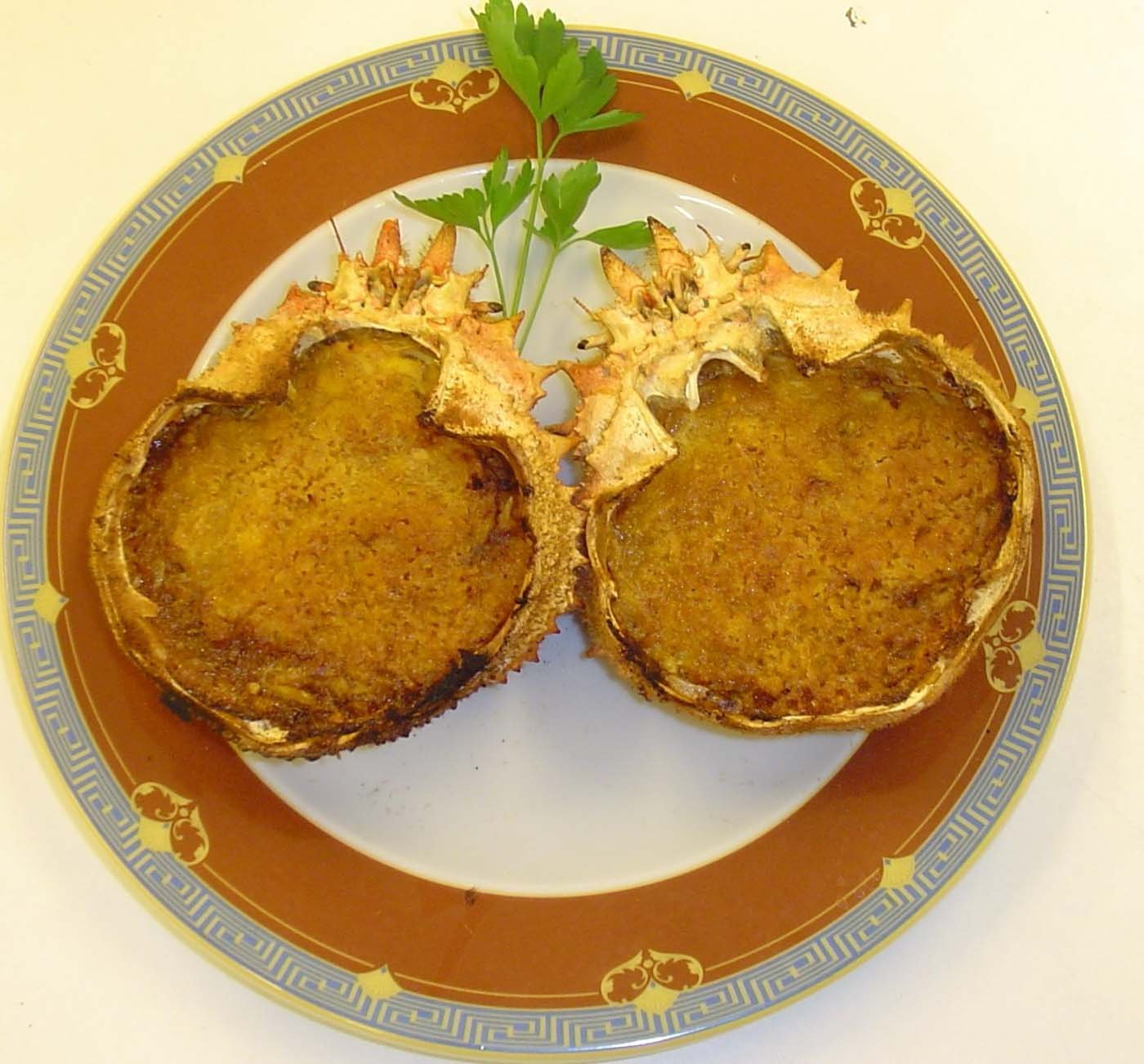
Photo credit: Wikimedia Commons licensed under Attribution-ShareAlike 4.0 International (no changes made)
Txangurro is a luxurious seafood delicacy of the Basque coast. It’s made from fresh-caught spider crab meat baked in its shell with onion, tomato, and brandy — rich, savory, and totally unique.
Pintxo Culture in San Sebastian
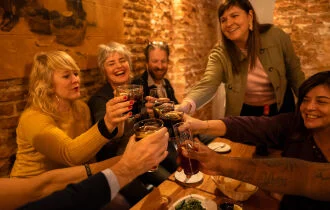
Pintxo culture is at the heart of San Sebastián’s cuisine and an integral part of the social scene of Basque culture. Yet these are more than just little tapas-like skewers, they’re a vibrant tradition rooted in community, creativity, and casual bar-hopping.
While it might have started out as simple snacks served with drinks, pintxos have evolved into intricate bites. While the classic Gilda is everywhere, there are tons of bars and restaurants with pintxos featuring ingredients like jamón, anchovies, peppers, seafood, prawns, grilled octopus and even foie gras.
If you want to eat pintxos like a local, stand at the bar, scan the counter for cold pintxos, and check the chalkboard for hot specials made to order. A true pintxo crawl means wandering through neighborhoods, sampling just one or two bites at each spot and savoring both the flavors and the atmosphere.
Food Markets and Shopping in San Sebastian
San Sebastián’s food markets are a sensory celebration of Basque culinary traditions, aromas, and classical ingredients. You’ll find everything from glistening fresh seafood to piles of cured meats, seasonal produce, and wheels of aged cheese.
The Mercado de la Bretxa in the Old Town is a must-visit, with its historic setting and a wide variety of vendors selling local produce, jamón ibérico, and fish straight from the Bay of Biscay. Upstairs, you’ll find gourmet shops and delis where chefs and locals alike stock up on premium ingredients.
San Sabastian also has tons of specialty shops tucked into the side streets where you can pick up artisan Idiazabal cheese, anchovies from Getaria, or txakoli wine. Many shops offer tastings, and vendors are typically happy to share tips or background on the products they sell.
Sweets and Desserts of San Sebastian
San Sebastián’s sweet offerings are just as iconic as its savory dishes, with desserts that reflect both Basque tradition and local indulgent flavors.
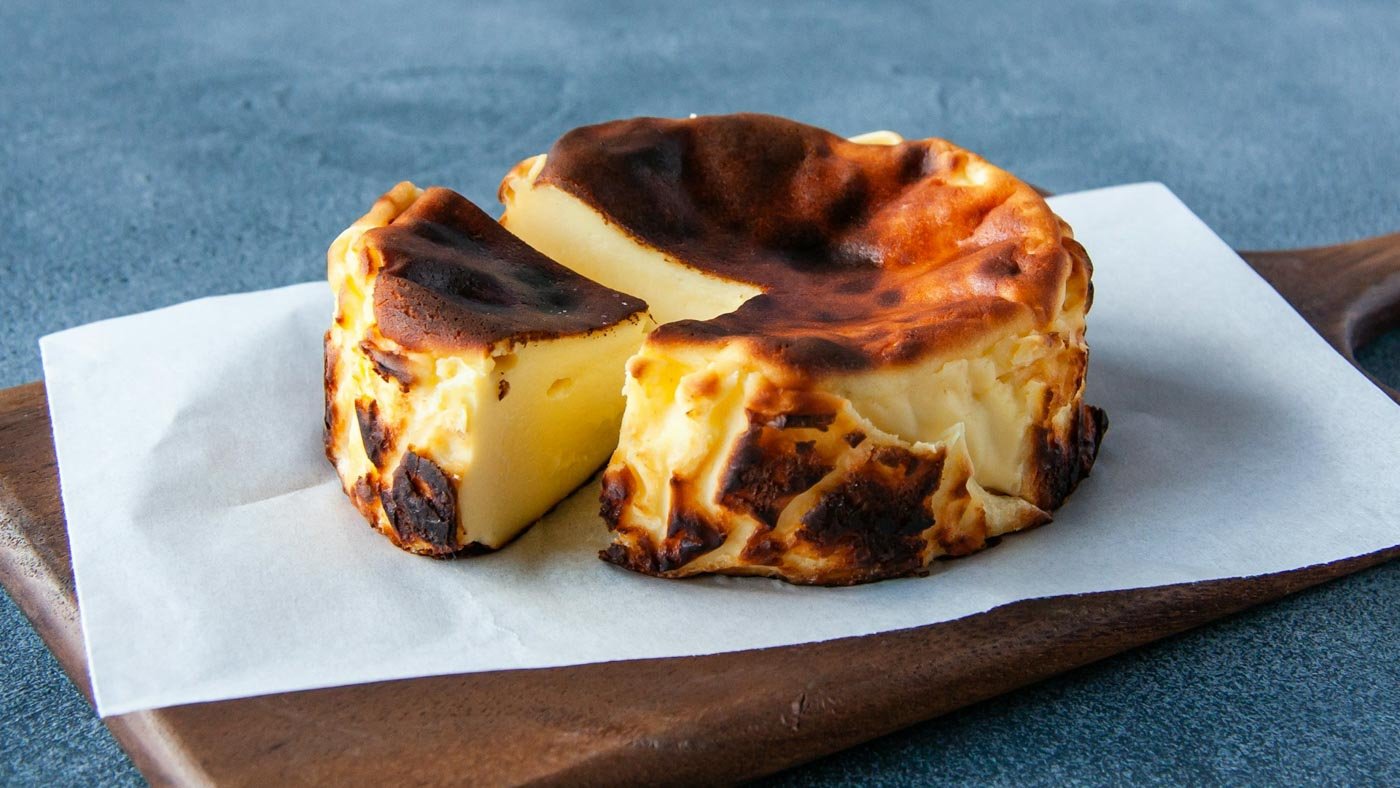
Basque Cheesecake (Tarta de queso) might look burned at first glance, but the caramelized top and creamy, custard-like center, make this crustless dessert unforgettable. It’s something you have to try at least once if not multiple times on a San Sabastian vacation.
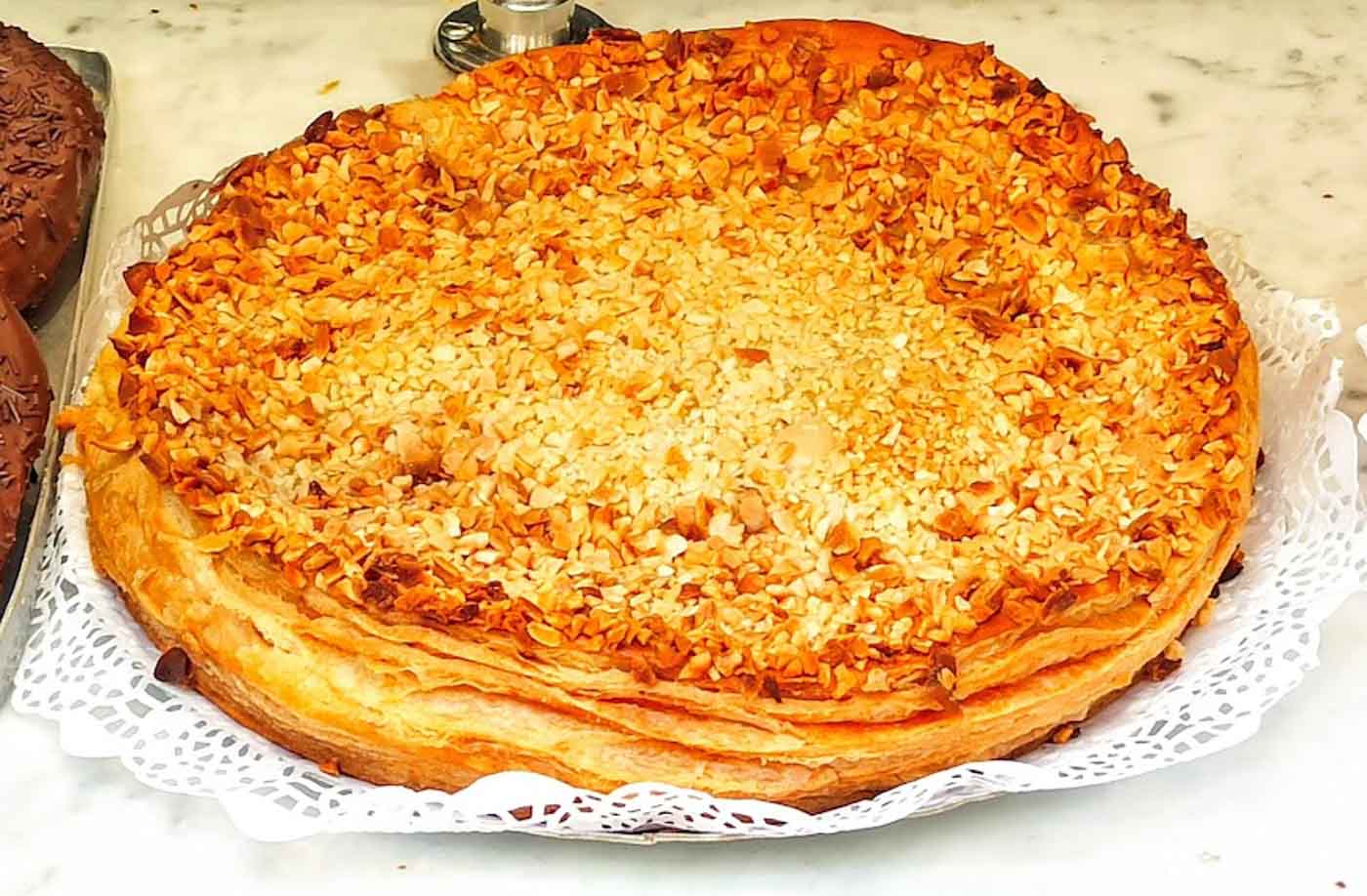
Photo credit: Wikimedia Commons licensed under Attribution-ShareAlike 4.0 International (no changes made)
Pantxineta is a flaky puff pastry filled with silky custard and topped with toasted almonds. It’s often served warm and dusted with powdered sugar and pairs perfectly with café con leche.
San Sebastián’s family-run bakeries also serve a luscious array of seasonal fruit-filled tarts and buttery pastelitos that change with the region’s harvests.
Local Drinks and Beverages in San Sebastian
One of the things I love about San Sabastian is that they have their own Basque cider, drinks and beverages that stand apart from much of the rest of Spain.
Txakoli is a slightly sparkling, dry white wine that is crisp and refreshing, often poured from a height to enhance its effervescence.
Basque cider is tart and lightly fizzy, Basque cider is traditionally enjoyed in cider houses and pairs beautifully with hearty local fare.
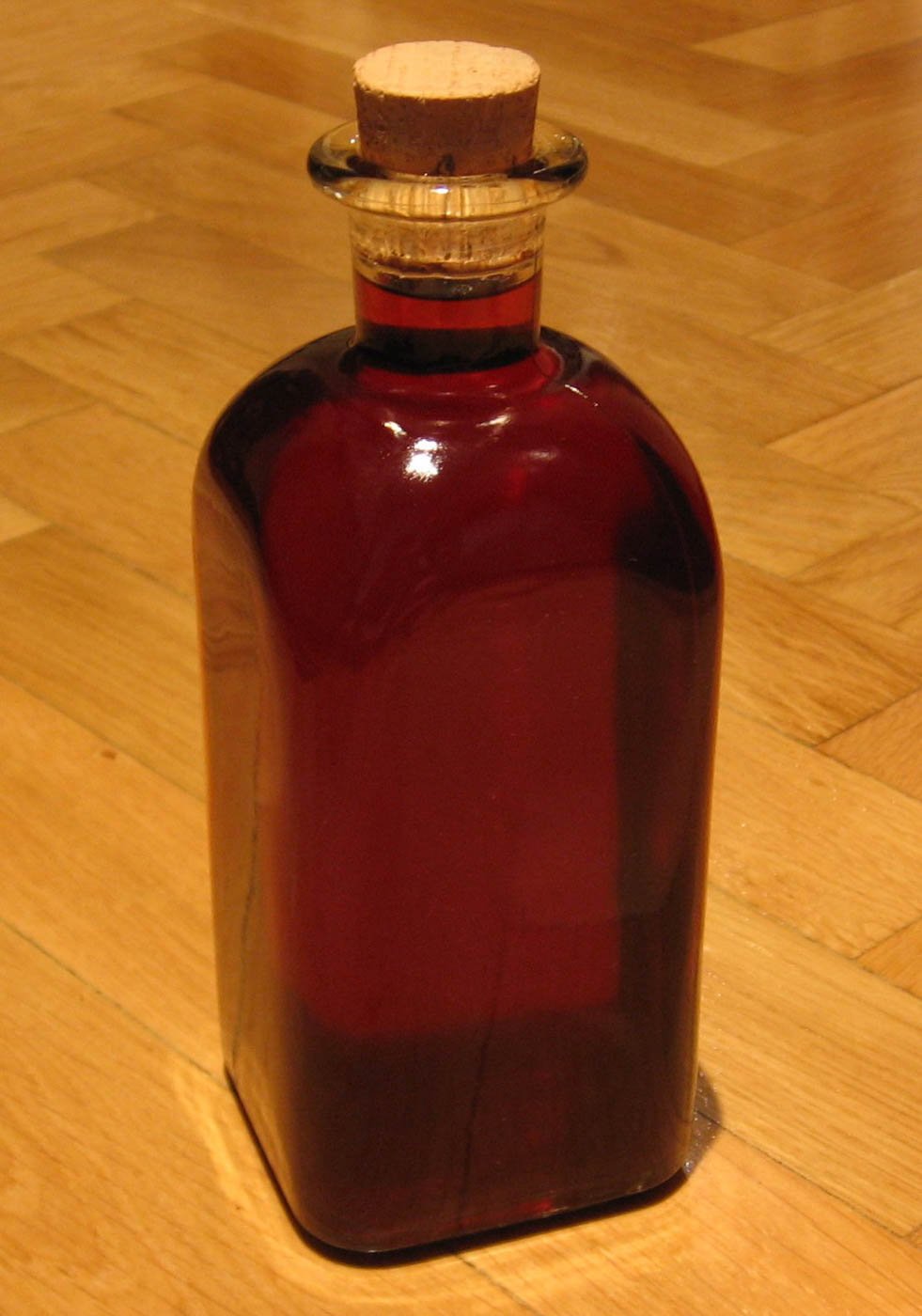
Photo credit: Wikimedia Commons licensed under Attribution-ShareAlike 3.0 Unported (no changes made)
Patxaran is a sweet, ruby-colored digestif made from sloe berries and anise. It’s typically more of an after-dinner drink in the Basque Country.
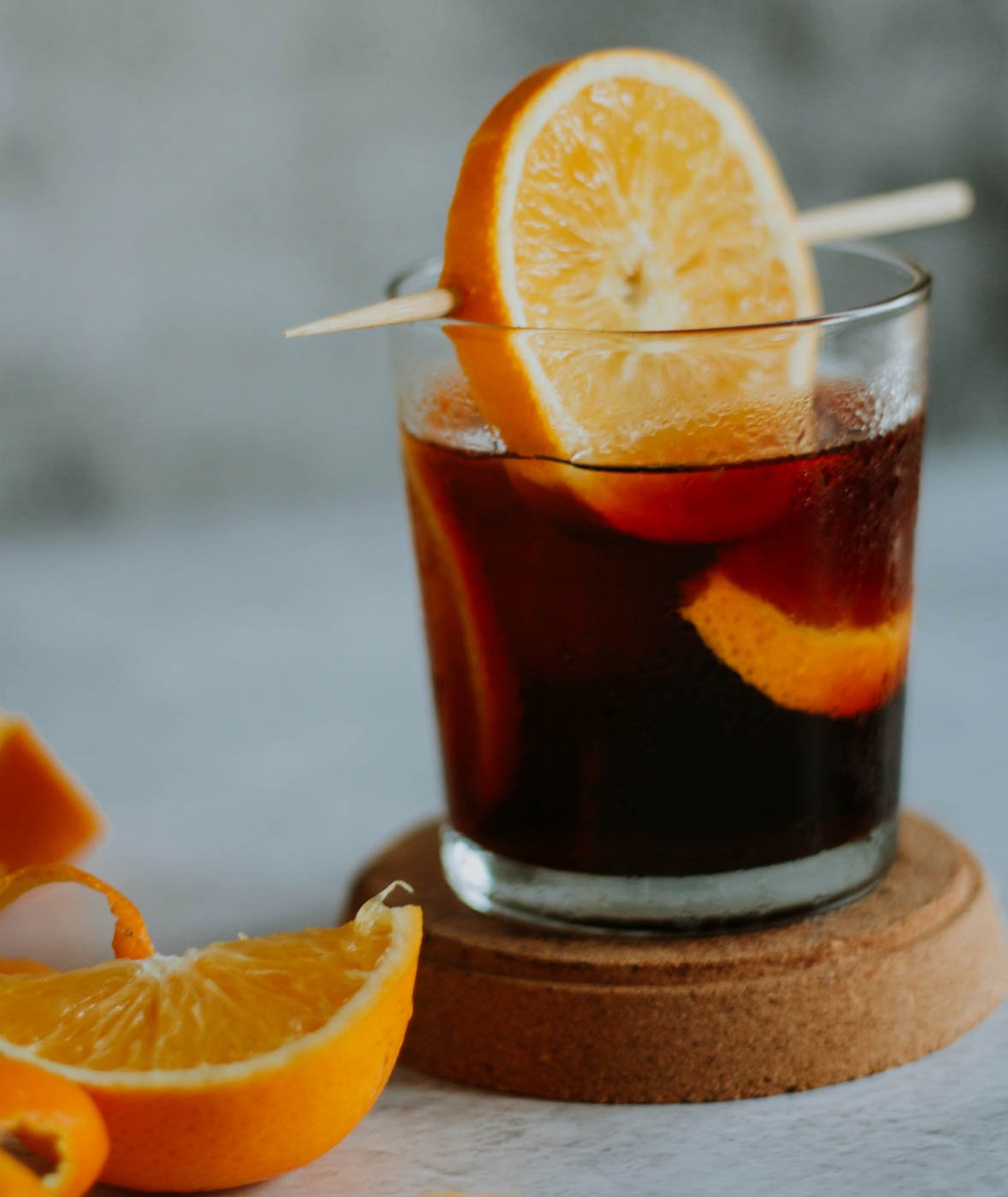
Vermouth is sipped in San Sebastian as an aromatic and bittersweet aperitif. It’s often taken before meals and served over ice with an orange slice.
Dining Tips and Practical Information for San Sebastian
Dining in San Sebastian is a feast for all the senses. To find the best cafés and restaurants, it’s best to look beyond the tourist-packed streets. Instead look for where the locals go, like no-frills pintxo bars in Parte Vieja (Old Town) and Gros. Keep an eye out for family-run taverns and time-honored institutions often boast the most authentic experiences, so keep an eye out for hand-written menus and a proudly Basque atmosphere.
If you’re trying to be mindful of your budget, pintxos are typically affordable at around €2–€4 each. Tipping is appreciated but not expected, and rounding up the bill or leaving a euro or two for good service is customary.
For sit-down meals at popular restaurants during high season, reservations are wise. Especially for supper. Locals tend to dine later, around 9 PM, so arriving early can also help you snag a table.
Final Thoughts: Savoring San Sebastian’s Food
San Sebastian’s food scene is a journey into the heart of Basque culture that celebrates local flavors and the region’s close relationship with the sea. From bustling pintxo bars to time-honored traditional dishes, San Sabastian invites you to slow down, savor the flavors, and connect with the community on your Spanish food tour.
Sources:
https://www.cclabretxa.com/
https://www.eatingeurope.com/spain/

- Daily
- 3.5 Hours
- Small Group