
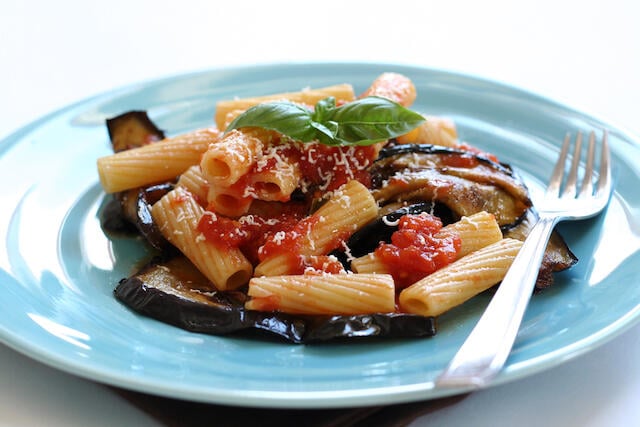
Italian cuisine is arguably the most famous on the planet. It’s so vast, with each region renowned for its own specialties. Think of creamy servings of risotto alla Milanese from Lombardy or cheesy margherita pizzas from Campania.
It’s one thing to try Italian food in your home country, but sampling it in Il Bel Paese is another experience. Between seeing the cooking methods with your own eyes and the amazing flavors, immersing yourself in Italy’s gastronomy scene will stay with you forever.
Since moving to Italy in 2009, I’ve tried all kinds of Italian dishes, from the classics to lesser-known delights. In this post, I’ve compiled what I would consider the best foods in Italy you must try when you get here. Trust me, there’s something in here for all tastes!
Italian Food Culture: What You Need to Know First
Before diving into the dishes themselves, it’s worth understanding how Italians actually relate to food — because it changes everything about the experience.
In Italy, food is not just sustenance. It’s a daily ritual, a source of regional pride, and a reason to slow down. Italians don’t rush meals. The midday break can stretch to two hours. Sunday lunch is a multi-generational event that starts at 1pm and ends when someone finally moves to make coffee. This isn’t indulgence — it’s culture.
Another thing that surprises most visitors: Italian food is intensely regional. A Neapolitan will tell you that the carbonara they serve in Rome isn’t really how it should be made. A Roman will insist that Neapolitan pizza is too thick. The cuisine is not one thing — it’s hundreds of highly local traditions, and the best meals you’ll eat are almost always tied to a specific place.
The golden rule: always eat the local dish in the place it comes from. Order carbonara in Rome, pizza in Naples, risotto in Milan, bistecca in Florence. A restaurant in Turin serving Neapolitan-style pizza will almost always disappoint — not because they’re bad, but because the ingredients and tradition aren’t there.
How an Italian Meal Is Structured
The traditional Italian meal has a clear structure that most visitors don’t fully understand — and once you understand it, every dish makes more sense. You don’t have to eat all six courses, but knowing where each dish sits helps you order intelligently.
The aperitivo is a pre-dinner drink — typically a Spritz, Negroni, or Prosecco — often served with small snacks. It’s the social warm-up before eating begins. The antipasto (“before the meal”) is your appetizer: charcuterie, bruschetta, fried vegetables, cured fish. The primo is the first plate — always pasta, risotto, or soup. No meat. The secondo is the main — meat, fish, or poultry. The contorno is a side dish of vegetables, usually ordered separately. And the dolce is dessert: gelato, tiramisu, cannoli, panna cotta.
With each dish below, I’ve noted exactly where it sits in this structure so you can plan your meal accordingly.
Aperitivo (Pre-dinner drink)
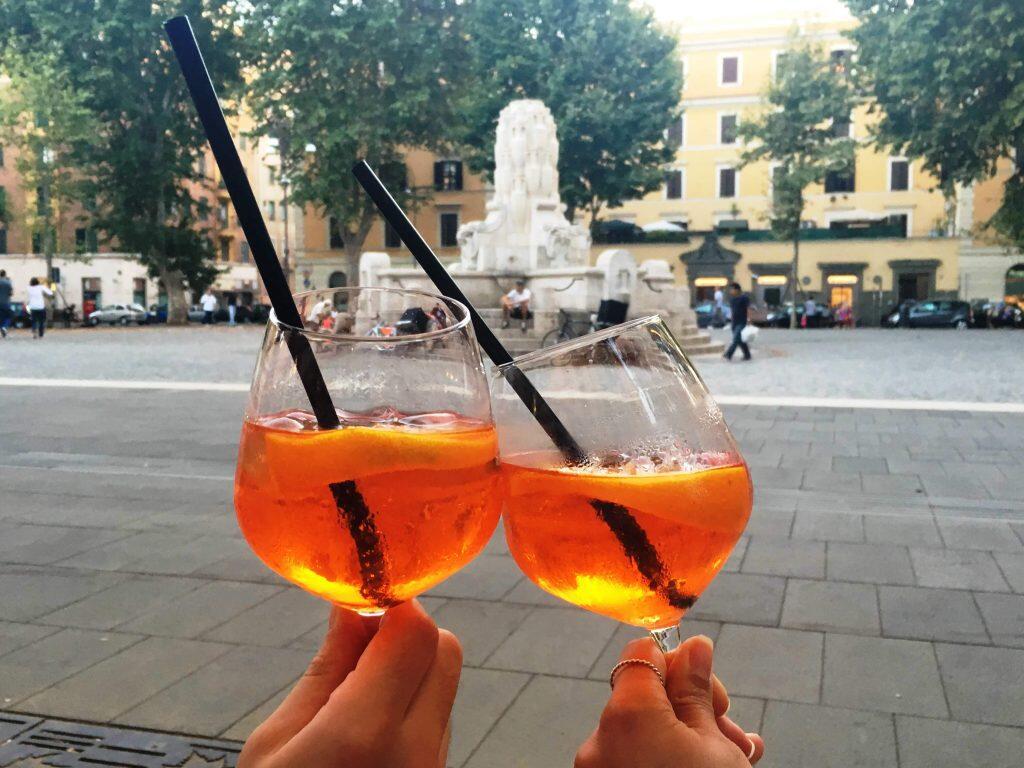
Aperol Spritz
Before the food even starts, Italians gather for an aperitivo — a ritual that is as much about socializing as it is about drinking. And no drink defines the modern Italian aperitivo more than the Aperol Spritz.
Origin of the Aperol Spritz
The Spritz has roots in the Veneto region, dating back to the Austrian occupation of northeastern Italy in the 19th century. Austrian soldiers found local wine too strong and asked bartenders to add a splash (spritzen, in German) of water. Over time, water was replaced with soda water and then Prosecco, and the bitter orange liqueur Aperol — invented in Padua in 1919 — became the standard mixer. Today, it’s served everywhere from Venice to Palermo, though Venetians will tell you theirs is still the best.
How to say it
Spritz Aperol in Italian is pronounced (spritz) (a-peh-rol)
Key Ingredients
- Prosecco
- Aperol
- Soda water
- Ice
- Slice of orange
- Green olive (optional)
How Aperol Spritz Tastes
The Aperol Spritz is bright, lightly bitter, and refreshing — far less boozy than a Negroni. The Aperol brings a bittersweet orange flavour, the Prosecco adds fizz and a touch of sweetness, and the soda water keeps it light. It’s the perfect warm-up drink before a long Italian meal.
Where to Enjoy an Aperol Spritz
Venice is the spiritual home of the Spritz. Bacaro Jazz in the San Marco area is one of my favourite spots — arrive around 6:30pm, order a Spritz, and watch the locals do exactly the same thing. In every Italian city, the happy hour (they actually use this term) runs from about 6–9pm, and many bars serve free snacks alongside the drinks.
Negroni
If the Aperol Spritz is Italy’s most popular aperitivo, the Negroni is its most respected. Born in Florence, loved everywhere — this is the drink that serious drinkers order when they want something with real character.
Origin of the Negroni
The Negroni was born in Florence in 1919. The story goes that Count Camillo Negroni walked into Caffè Casoni and asked the bartender — Fosco Scarselli — to strengthen his usual Americano by replacing the soda water with gin. Scarselli obliged, garnished it with an orange slice instead of the customary lemon, and a legend was born. The Negroni family liked it so much they started producing the ingredients commercially, and the drink spread across Italy from there.

How to say it
Negroni in Italian is pronounced (neh-GROH-nee)
Key Ingredients
- Gin
- Campari
- Sweet red vermouth
- Ice
- Orange peel (to garnish)
How a Negroni Tastes
Equal parts gin, Campari, and sweet vermouth — stirred, never shaken, served over a large ice cube with a twist of orange peel. The Negroni is bitter, strong, and complex. The Campari brings a herbal bitterness, the vermouth adds sweetness and depth, and the gin provides the backbone. It’s an acquired taste for some, but once it clicks it becomes the only aperitivo you want.
Where to Drink a Negroni
Florence is the only answer — and within Florence, La Ménagère on Via de’ Ginori is one of the most atmospheric places in the city to have one. What started as a historic Florentine home-goods store in 1896 is now a sprawling concept space — bar, restaurant, flower shop, and live music venue all under one roof. The central bar area is the place for aperitivo, and the Negronis here are excellent. Order one, find a spot in one of the beautiful interconnecting rooms, and let the evening unfold.
Limoncello
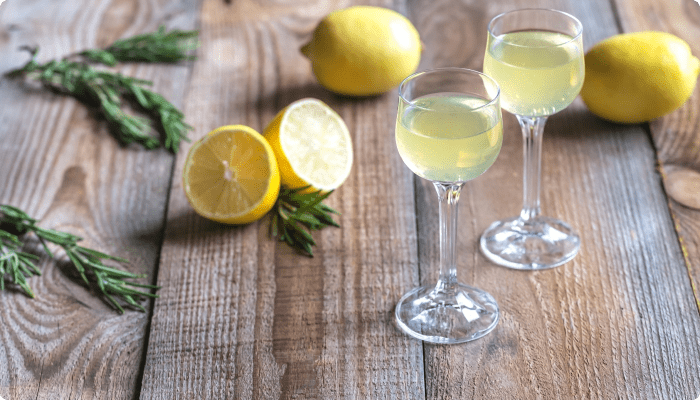
There’s arguably no Italian drink that can compare with the many extraordinary wines, but that’s not to say you can’t enjoy a little limoncello now and again.
Origins of Limoncello
This lemon-flavored liqueur dates back to the 20th century and to one specific hotel owner in Capri.
Legend has it that Maria Antonia Farac made the most of the many lemons in her garden, turning the citrus fruit into a tantalizing alcoholic beverage. In the 1980s, Maria’s relatives decided to use the decades-old recipe to produce bottles of this now-legendary liqueur.
How to say it
Limoncello in Italian is pronounced (lee-mon-cheh-loh)
Key Ingredients
- Lemon
- Vodka
- Sugar or sugar syrup
- Water
How Limoncello Tastes
The bittersweet and refreshing flavors of limoncello are something I’ll never tire of, as they strike the delicate balance between tart and sugary.
Where To Drink Limoncello
I can’t say I’ve had too many lackluster limoncellos in my time, but the shot I had in Da Paolino near Marina Grande in Capri was among the most memorable.
The abundance of lemon trees in the dining area set the scene, and the complimentary limoncello was much-needed after a multi-course feast.
It was delightfully crisp and piquant, with a hint of punchy vodka seeping through the sour lemon flavors.
Da Paolino (€€€) – Via Palazzo a Mare, 11, 80076 Capri NA, Italy – Open every day from 7:30 pm to 11:30 pm
Antipasto (Starter)
Caponata
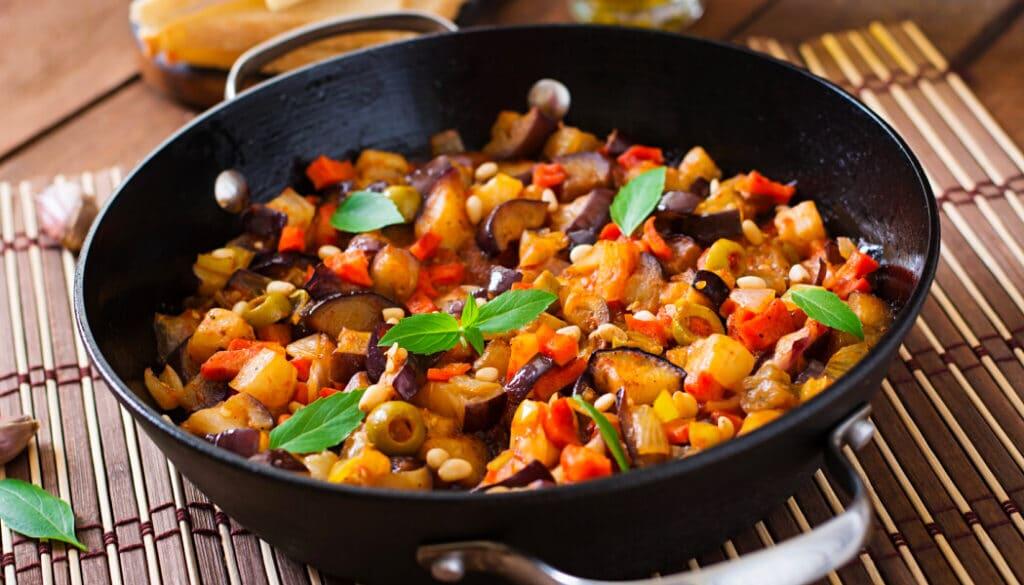
I couldn’t choose a dish better than caponata. It epitomizes true Italian recipes: olive oil and vegetables, filled with tomato sauce, and could pack you for a week.
Origins of Caponata
Caponata is a dish that originates in Sicily. Its meaning translates to “dish made up of various things,” and that it is!
Although caponata is eaten with fish or pasta today, it was hugely popular among the lower class back in the day. They used to make it with extra aubergine, green olives, and capers and soak it in a sauce called “agrodolce,” (sweet and sour). This is a dish you can try on one of our Palermo food tours.
How to say it
Caponata in Italian is pronounced (ca-poh-na-ta)
Key Ingredients
- Eggplant
- Yellow onion
- Red bell pepper
- Celery sticks
- Olives
- Capers
- Raisins
- Honey
- Red pepper flakes
- Vinegar
- White wine
- Parsley
How Caponata Tastes
If I were to sum up the tastes of caponata in three words, it would be sweet (honey), sour (vinegar), and savory (olives).
Where To Eat Caponata
Ristorante Nangalarruni, in the picturesque town of Castelbuono, knows how to cook up a good caponata. I love this restaurant, especially for the lovely family-oriented atmosphere.
My caponata came with a vegetable souffle in tomato sauce and ricotta cheese; it was divine, and the nuttiness of the ricotta paired perfectly with the mild sweetness from the eggplant and tomato sauce.
Ristorante Nangalarruni (€€) – Cortile Ventimiglia, 5, 90013 Castelbuono PA, Italy – Every day, 12:30 pm to 2:30 pm and 7:30 pm to 11:00 pm
Wines That Can Be Paired With Caponata
I enjoy caponata with a glass of Etna Rosso, a red wine made near Mount Etna.
The red fruit and acidy flavors from the Nerello Mascalese grape adjust the sweet and sour tang of the dish. Also, the earthy hints mix with the eggplant’s richness.
Carciofi Alla Giudia
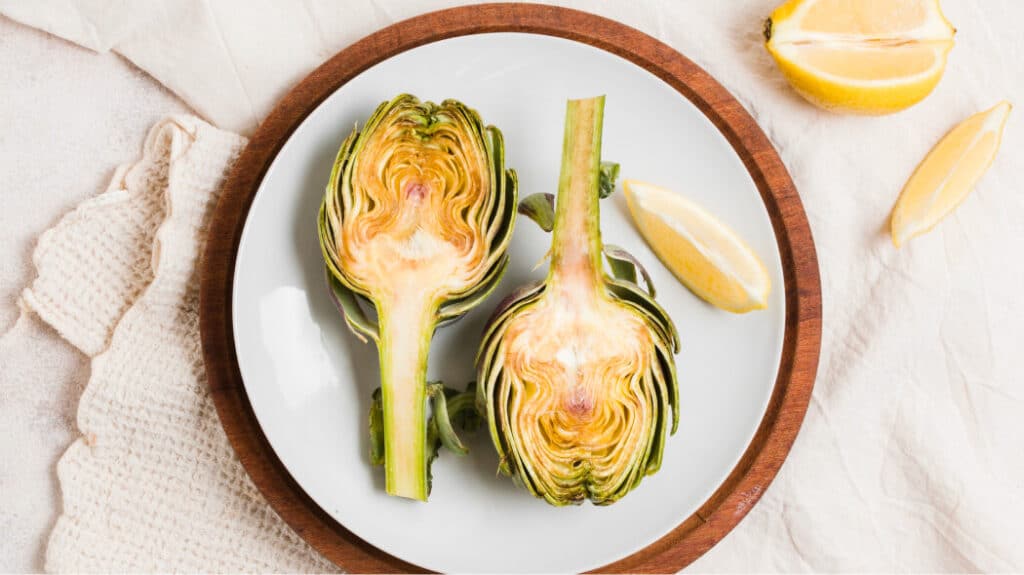
Carciofi alla giudia is arguably the most famous dish from the Roman Jewish community in Italy.
Origin Of Carciofi Alla Giudia
Carciofi alla giudia was found in the Jewish Ghettos in Rome. This area existed during the Papal Rule, between 1555 to 1870. It was a gated community and often got flooded. The living conditions were pretty awful.
In a location close by, a bunch of artichokes were growing, so the Jewish community decided to fry them with oil in line with their kosher beliefs. Today, it’s known as Carciofi alla giudia.
How to say it
Carciofi Alla Giudia in Italian is pronounced (car-cho-fii) (a-lah) (juu-dee-ah)
Key Ingredients
- Artichokes
- Extra virgin olive oil
- Kosher salt
- Chopped lemons
How Carciofi Alla Giudia Tastes
Carciofi Alla Giudia, for me, tastes bitter, as do all artichokes, but because they’re fried, the bitterness isn’t as strong. There’s an earthy taste to them. They absorb a lot of the oil they’re cooked in, intensifying the flavor.
Where To Eat Carciofi Alla Giudia
Since Rome is home to the original Carciofi Alla Giudia recipe, you’ll want to try them there. My recommendation is Da Enzo al 29, a tiny typical family Roman trattoria down the street from the Ponte Palatino.
On some of our Rome food tours, we take everyone to try Da Enzo al 29’s mouthwatering carciofi alla giudia. Crispy with a golden-like texture and tender on the inside, their recipe tops anything else I’ve ever tried in the capital.
While carciofi alla giudia can be quite bitter sometimes, the way they salt them here balances out the bitterness to perfection. The servers here are always more than happy to cut you a slice of lemon, too, so it adds a zesty side to the flavor profile.
Da Enzo al 29 (€€€) – Via dei Vascellari, 29, 00153 Roma RM, Italy – Monday to Friday, 12:15 pm to 3:00 pm and 7:00 pm to 11:00 pm, Saturday, 9:00 am to 3:00 pm and 7:00 pm to 11:00 pm, and closed on Sunday
Wines That Can Be Paired With Carciofi Alla Giudia
A flavorful rose like Cerasuolo d’Abruzzo Hedòs 2021 pairs so well with all types of artichokes as it melds fruity softness with a touch of acidity, which mellows out the bitter notes of the artichokes.
Vitello Tonnato
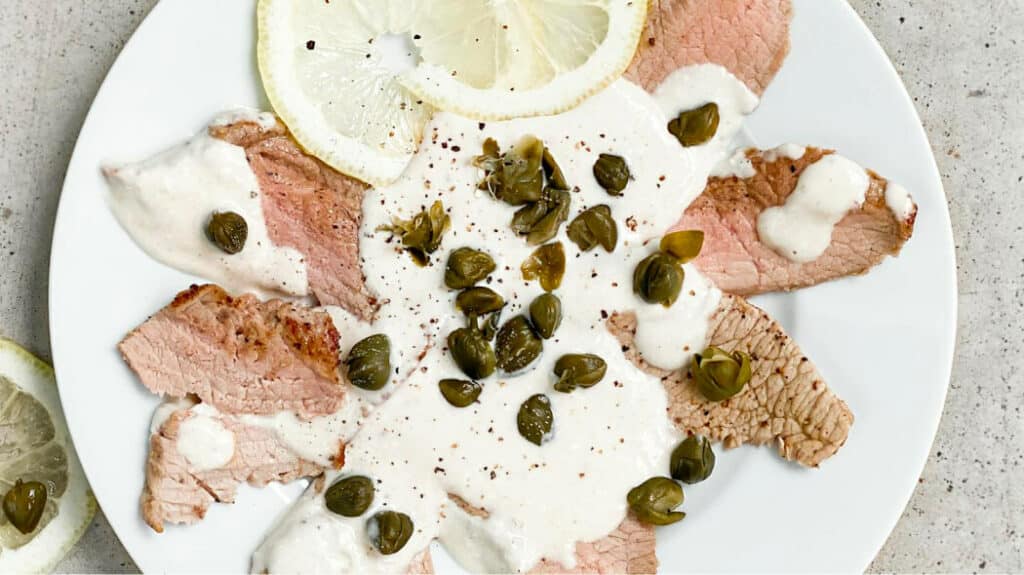
Next up, I have something a little different from the other dishes I have mentioned: a cold-served plate called Vitello Tonnato.
Origin Of Vitello Tonnato
Vitello tonnato’s story can be traced back to the 18th century in the northwest Italian region of Piedmont. It was made mainly by the lower class, with leftover meats they could pull together to make the best possible recipe.
While different versions of vitello tonnato can be found today, the original recipe contained a unique flavored sauce formed with anchovies and oil.
How to say it
Vitello tonnato in Italian is pronounced (viit-eh-loh) (toh-nn-ato)
Key Ingredients
- Olive oil
- Veal
- Sea salt
- Rocket leaves
- Eggs
- Anchovy fillets
- Capers
- White wine vinegar
- Tinned tuna
How Vitello Tonnato Tastes
While you might think the veal in this dish takes up much of the flavor, that’s untrue. The tuna sauce has the strongest taste; it gives it a savory and light tangy tinge, and the capers give it a piquant kick.
Where To Eat Vitello Tonnato
There are plenty of cities in northwest Italy where you can try vitello tonnato, but my favorite is Turin because it’s home to one of my favorite restaurants, Antiche Sere.
The vitello tonnato I had in Antiche Sere was amazing; between the saltiness from the fresh anchovies and the richness of the veal, I loved it.
Antiche Sere (€€€) – Via Cenischia, 9, 10139 Torino TO, Italy – Monday to Saturday, 7:00 pm to 12:00 am

Wines That Can Be Paired With Vitello Tonnato
Most people who order vitello tonnato as an appetizer will enjoy a glass of Prosecco with it, as the bubbles pair nicely with the capers.
Supplì
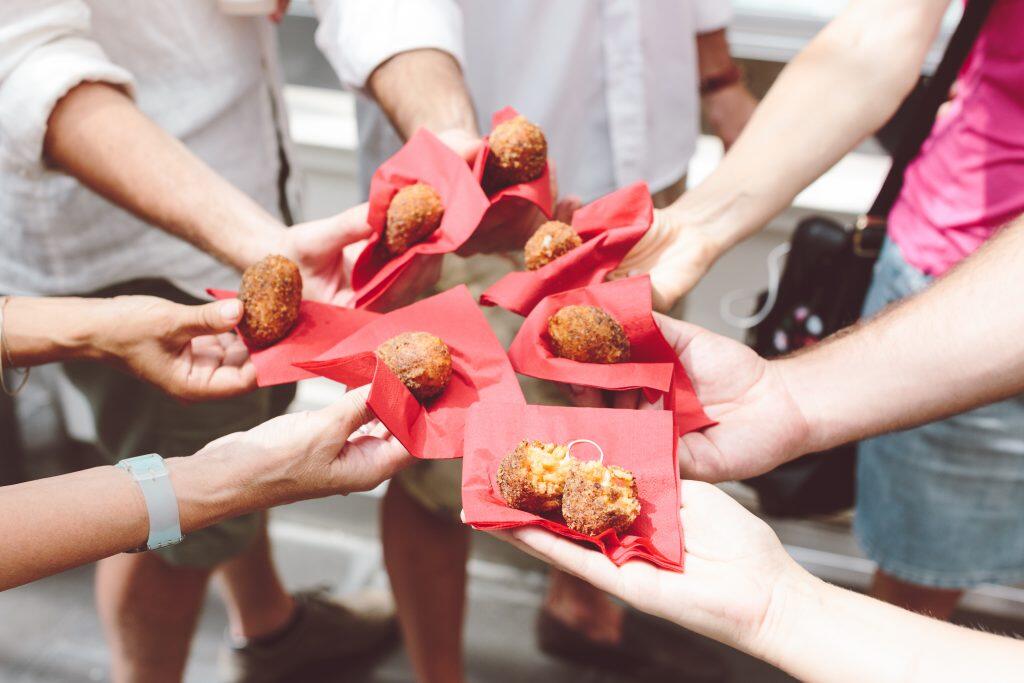
If arancini is Sicily’s gift to the world, supplì is Rome’s answer. These fried risotto rice balls are smaller, more oblong, and entirely Roman — and they’re absolutely addictive.
Origin of Supplì
Supplì have been part of Roman street food culture since the 19th century. The name is thought to derive from the French word surprise, a nod to the melted mozzarella hidden inside each ball. When you pull the supplì apart and the cheese stretches between the two halves, Romans call it supplì al telefono — “telephone-style” — because the string of cheese resembles an old telephone cord.
How to say it
Supplì in Italian is pronounced (soo-PLEE)
Key Ingredients
- Arborio rice
- Tomato sauce (ragù)
- Mozzarella
- Eggs
- Breadcrumbs
- Pecorino Romano
- Sunflower oil (for frying)
How Supplì Taste
The exterior is crispy and golden. The interior is soft, tomatoey rice with a pocket of molten mozzarella at the centre. They’re rich, deeply savoury, and filling. Eat them hot — the cheese sets quickly and you’ll miss the best part.
Where to Eat Supplì
Supplì Roma near the Campo de’ Fiori is the benchmark. There’s usually a queue, and it moves fast. Get two — you’ll regret getting only one.
Wines That Can Be Paired With Supplì
Arancini
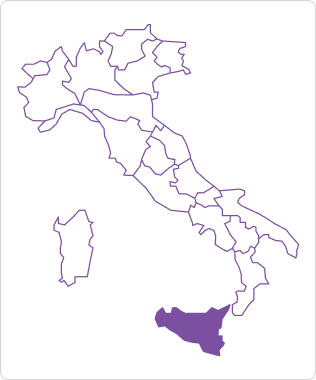
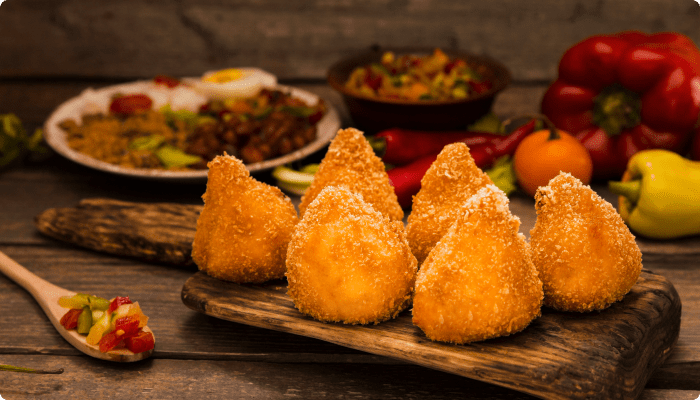
Few Italian street foods are as iconic as Sicily’s arancini, and these deep-fried rice balls should be on every foodie’s bucket list.
Origins of Arancini
Sicily spent several decades under Arab rule, and it was during this time that rice was first introduced to the island.
Locals experimented with rice throughout the 10th century to find new and exciting ways to utilize this neutral-tasting grain. Over time, the rice was molded into balls and mixed with an assortment of other ingredients to form what would soon be known as arancini!
How to say it
Arancini in Italian is pronounced (ah-rahn-chee-nee)
Key Ingredients
- Rice
- Ground meat
- Tomatoes
- Peas or other vegetables (optional)
- Mozzarella or various cheeses (optional)
- Garlic
- Stock
- Eggs
- Breadcrumbs
How Arancini Tastes
Arancini can vary in flavor depending on what ingredients are used. Opt for the classic fillings, and you’ll be greeted by a crunchy exterior and blend of savory beef, fragrant mozzarella, and zesty tomatoes tucked inside.
Where To Eat Arancini
I Cuochini in Politeama – Libertà in Palermo has been serving heavenly arancini for almost 200 years, and it’s still one of the most in-demand spots in the city.
The arancini here are huge, meaning a few pieces could easily substitute a meal. As such, I suggest arriving hungry!
In the center was a mish-mash of juicy beef and bright tomatoes, surrounded by fluffy saffron rice and a golden breadcrumb crust.
I Cuochini (€) – Via Ruggiero Settimo, 68, 90139 Palermo PA, Italy – Open every Monday to Saturday from 8:30 am to 2:30 pm, closed every Sunday

Wines That Can Be Paired With Arancini
Light wines like Pinot Grigio are usually my first choice when I’m indulging in arancini.
The crispy breadcrumbs and densely packed center can be super filling, and the floral apple notes of the wine provide an invigorating contrast.
Parmigiano Reggiano
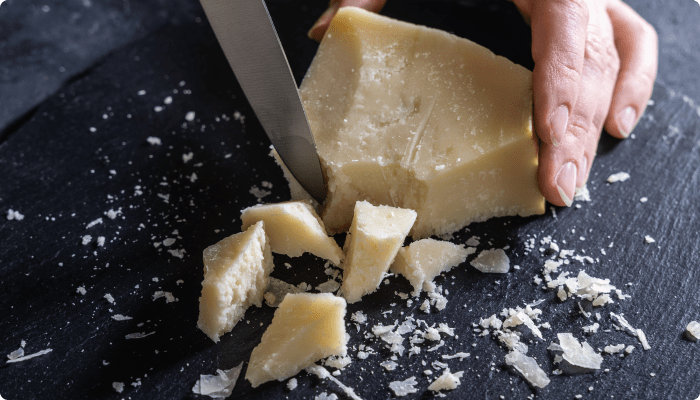
This hard, aged cheese serves a multitude of purposes in Italian cuisine and can instantly boost the flavor of a dish. Just one wheel of the Parmigiano Reggiano, known as the king of Italian cheeses, requires some 600 liters of milk!
Origins of Parmigiano Reggiano
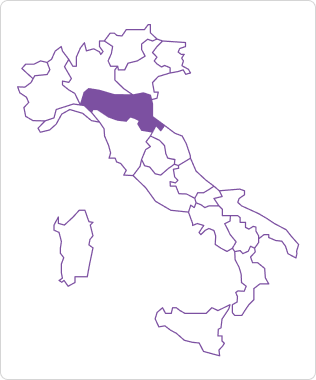
We have Benedictine monks in the Reggio Emilia region to thank for Parmigiano Reggiano, also called parmesan.
As the story goes, the monks were producing more milk than they could consume, and as they experimented with preservation techniques, they developed parmesan.
How to say it
Parmigiano Reggiano in Italian is pronounced (par-mee-jah-noh)(reh-jah-noh)
Key Ingredients
- Unpasteurized cow's milk
How Parmigiano Reggiano Tastes
The beauty of Parmigiano Reggiano is in its complexity. It’s commonly described as sharp in taste, but you’ll also notice hints of roasted nuts, fruits, and salt shining through.
Where To Eat Parmigiano Reggiano
Trastevere in Rome has some stellar cheese stores, but Antica Caciara is where I generally get my fix in recent times.
The knowledge and super friendly staff are fountains of knowledge regarding all things cheese. I’ve yet to buy a block of Parmigiano Reggiano here that wasn’t sublime in both flavor and texture.
On my first visit, the staff allowed me to sample a sliver of the Parmigiano Reggiano I was interested in. Needless to say, the granular consistency and vivid, fruity tones have kept me coming back ever since.
Antica Caciara (€€) – Open every Monday to Friday from 8:00 am to 2:00 pm and from 4:00 pm to 7:30 pm, Saturday from 8:00 am to 7:30 pm, closed every Sunday
Wines That Can Be Paired With Parmigiano Reggiano
Cabernet Sauvignon is my wine of choice whenever I’m feasting on some Parmigiano Reggiano.
The pungency of this cheese requires a wine with plenty of bite. I love how the mix of vanilla, pepper, and blackberry notes highlights the savory tones of the parmesan.
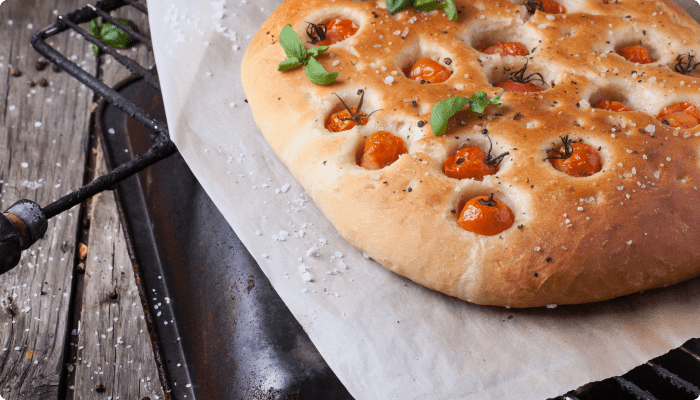
Focaccia
Few Italian breads have a reputation like focaccia. Made from just a handful of ingredients, focaccia proves the most straightforward combinations are often the best.
Origins of Focaccia
It’s difficult to pinpoint how focaccia came to be, as this style of bread has been around for several thousands of years. Some say it was crafted by the Etruscans, while others give credit to the Ancient Greeks.
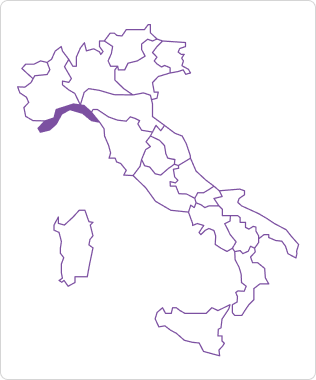
Focaccia’s origins may be up for debate, yet it’s cemented itself as an adaptable and integral part of Italian cuisine, particularly in the Liguria region.
How to say it
Focaccia in Italian is pronounced (foh-kah-chah)
- Flour
- Yeast
- Oil
- Water
- Salt
How Focaccia Tastes
I’ll never tire of the crisp outer layer of focaccia and how it contrasts with the chewy texture lying in the center. It has all the mild flavors needed to create the perfect bread, but the addition of herby olive oil enhances every bite.
Where To Eat Focaccia
Forno Campo de ‘Fiori is one of those spots that I’ll just never tire of. Situated, you guessed it, right by Campo de ‘Fiori in Rome, it’s a must for all things baked.
I’ve been raving about the focaccia sandwiches here for years, my top pick being the prosciutto and fior di latte panini.
The focaccia was lightly salted and had the most divine doughy texture. Even with a generous serving of smokey prosciutto and milky fior di latte, the focaccia was what really won me over.
Forno Campo de ‘Fiori (€) – Campo de’ Fiori, 22, 00186 Roma RM, Italy – Open every Monday to Saturday from 8:00 am to 2:30 pm and from 4:30 pm to 7:30 pm, closed every Sunday
Wines That Can Be Paired With Focaccia
Whatever you’re pairing your focaccia with can determine which wines work best, but I’m rather fond of a Sauvignon Blanc.
The herbaceous nature of the wine is especially appetizing for rosemary-infused focaccia. If the bread is on the saltier side, the zingy grapefruit and pineapple notes perfectly balance the flavors.
Primo (First Plate)
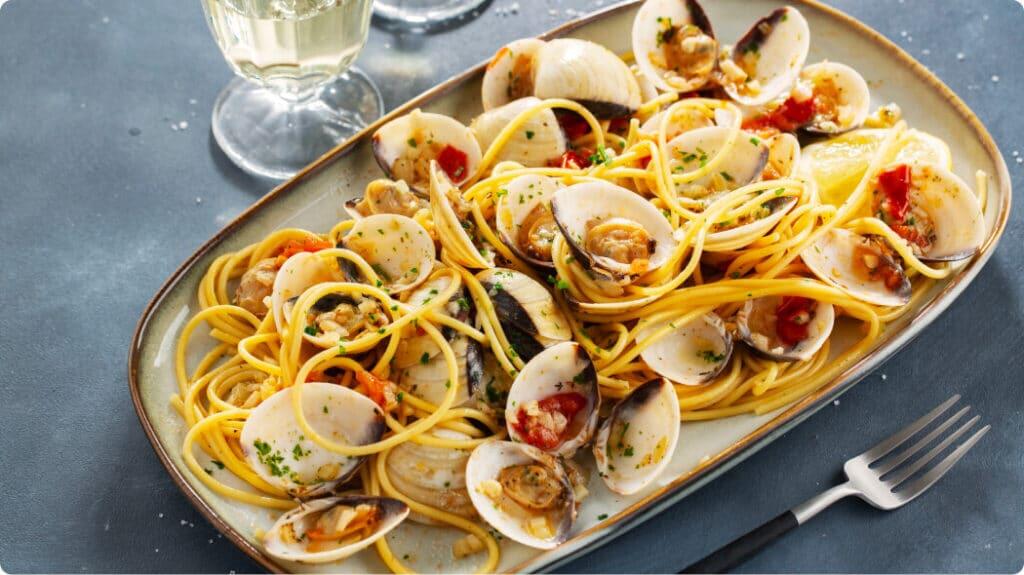
Spaghetti With Clams
Spaghetti with clams is one Italian dish that I’ll never get tired of. As you can tell, the main ingredients of this one are fresh spaghetti, clams, and an added touch of garlic.
Origin Of Spaghetti With Clams
Originating in Naples, spaghetti with clams gained popularity through the Campania region, especially the coastal areas, since many small clams called vongola verace can be found there.
Spaghetti with clams is commonly known as spaghetti alle vongole. It dates back to the 18th century and was first recorded in the Duke of Buonvicino’s book, Cucina Teorico-pratica.
How to say it
Spaghetti and clams in Italian is pronounced (Spa-geh-tii) (a-leh) (von-goh-leh).
Key Ingredients
- Spaghetti
- Clams
- Salt
- Extra virgin olive oil
- Garlic cloves
- Italian parsley
- Red chili pepper (optional)
How Spaghetti With Clams Taste
I don’t think you have to love seafood to like spaghetti and clams. Yes, it’s a bit briny, but nowhere near as strong as other seafood. The sautéed garlic eliminates much of the fishy taste and balances out the sweetness from the clams.
Where To Eat Spaghetti With Clams
As long as you’re by the Naples seaside, you’re guaranteed a solid serving of spaghetti and clams.
There’s a lovely osteria I always go to called Osteria Da Antonio with views of Castel Nuovo fortress that has unbelievable spaghetti and clams. The chewy el dente pasta is amazing, the parsley adds a lovely herbaceous flavor to it, and the lemon on the side lifts the taste.
Osteria Da Antonio (€€) – Via Agostino Depretis, 143, 80100 Napoli NA, Italy – Every day, 12:30 pm to 3:30 pm and 6:30 pm to 11:30 pm
Wines That Can Be Paired With Spaghetti with Clams
I love to have a well-rounded white wine with spaghetti and clams, something like an Irpinia Falanghina Demetra 2017 Antico Castello. It complements shellfish-based dishes because of its floral aromas and lovely balance.
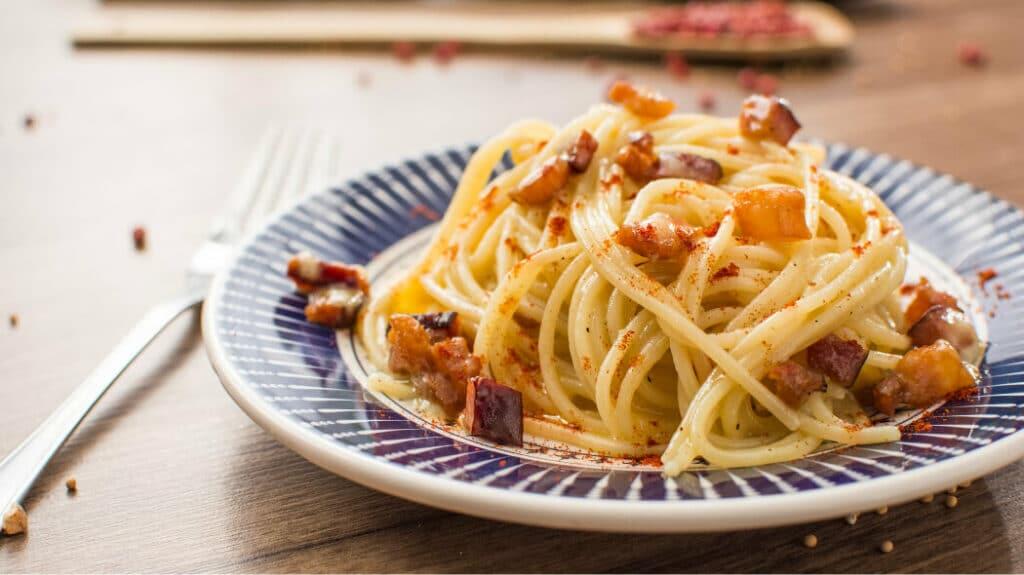
Carbonara
A dish from the Italian cuisine that needs no introduction, carbonara is one pasta recipe everyone loves.
Origin of Carbonara
Carbonara is known to come from Rome, as it’s often linked with the 1944 Allied liberation of Rome. It’s said that soldiers from the USA used to bring their bacon and eggs to Italian restaurants to add some flavor to the limited recipes.
Now, Neapolitans will tell you that carbonara comes from the Campania region as they think that the recipe was based on the dish called pasta cacio e uova, which has similar ingredients.
How to say it
Carbonara in Italian is pronounced (car-boh-na-ra).
Key Ingredients
- Spaghetti
- Cubed guanciale
- Whole eggs
- Grated pecorino romano or Parmesan cheese
- Black pepper
How Carbonara Tastes
There’s a common misconception that carbonara has an overpowering eggy taste; this is false.
If I were to characterize the taste of carbonara, I would say it has a cheesy, savory, and salty taste with an umami aftertaste and a spicy kick from the black pepper.
Where To Eat Carbonara
Carbonara in Rome knocks the ball out of the park, especially at one of my favorite restaurants, Borghiciana Pastificio Artigianale.
The cheese and eggs gave their dish a creamy texture and eggy undertones, and the chef sprinkled chopped bacon all over the top; I was afraid to even touch the plate when it was dropped on the table. It looked that good.
Borghiciana Pastificio Artigianale (€€) – Borgo Pio, 186, 00193 Roma RM, Italy – Monday, 11:45 am to 10:30 pm, Tuesday, Friday, and Saturday, 11:40 am to 10:30 pm, Sunday, 11:40 to 6:30 pm, closed on Wednesday
Wines That Can Be Paired With Carbonara
I tend to order a fruity wine with my carbonara, like a red, such as Bardolino 2020. This red wine is quite dry with medium tannins and has a medium acidity level.
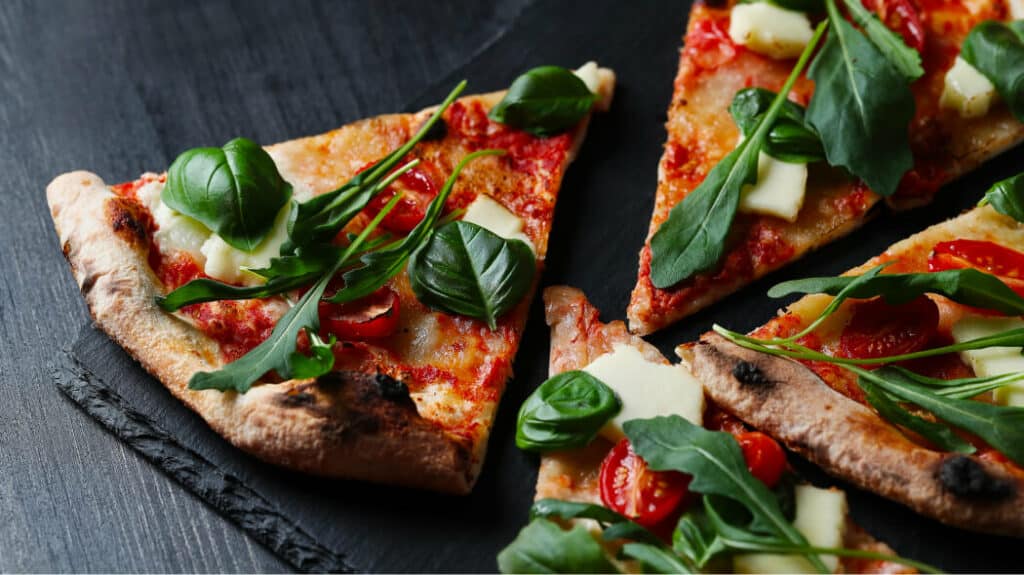
Pizza
It’s not a list of Italian foods without mentioning pizza, a dish with a flat base of dough covered in tomato sauce, cheese, and all kinds of toppings catered to the consumer’s taste.
Origin Of Pizza
Pizza was born in the city of Naples. In the 1700s and 1800s, this was where a lot of the lower class lived; Neapolitans were in dire need of the cheapest food they could get their hands on, so they came up with the idea of pizza. And of course, we offer you authentic Neapolitan pizza on our Naples food tour.
How to say it
Pizza in Italian is pronounced (pii-tsa)
Key Ingredients
- Flour
- Yeast
- Salt
- Water
- Olive oil
- Tomato sauce
- Cheese (optional)
- Toppings like veggies, meats and other sauces
How Pizza Tastes
Pizza will taste differently depending on what toppings you get on it, but for this explanation, I’ll stick to a margherita.
Margherita pizzas have crispy dough, which is chewy on the inside; the tomato sauce gives the flavor profile a tanginess with some acidity. The melted cheese will soak into the tomato sauce, giving it a creamy edge with a gooey texture.
Where To Eat Pizza
I always say that you can’t get better pizza than in Naples; it’s unbelievably delicious there. If you happen to go there, try the pizza at L’Antica Pizzeria da Michele.
I ordered the marinara, and all I can say is wow, the blend of the rich sliced garlic and sweet tomato sauce was heavenly, and the way the thin crust broke in my mouth with every bite was tantalizing.
L’Antica Pizzeria da Michele (€) – Via Cesare Sersale, 1, 80139 Napoli NA, Italy – Every day, 11:00 am to 11:00 pm
Wines That Can Be Paired With Pizza
If you’re going to order a Margherita, a tasty pinot noir like Pinot Nero Riserva Trattmann 2019 will pair perfectly with your cheesy slices. If I were to define its flavors, I would say it’s mildly spiced with some cacao-like undertones and very light on the palate.
Lasagna
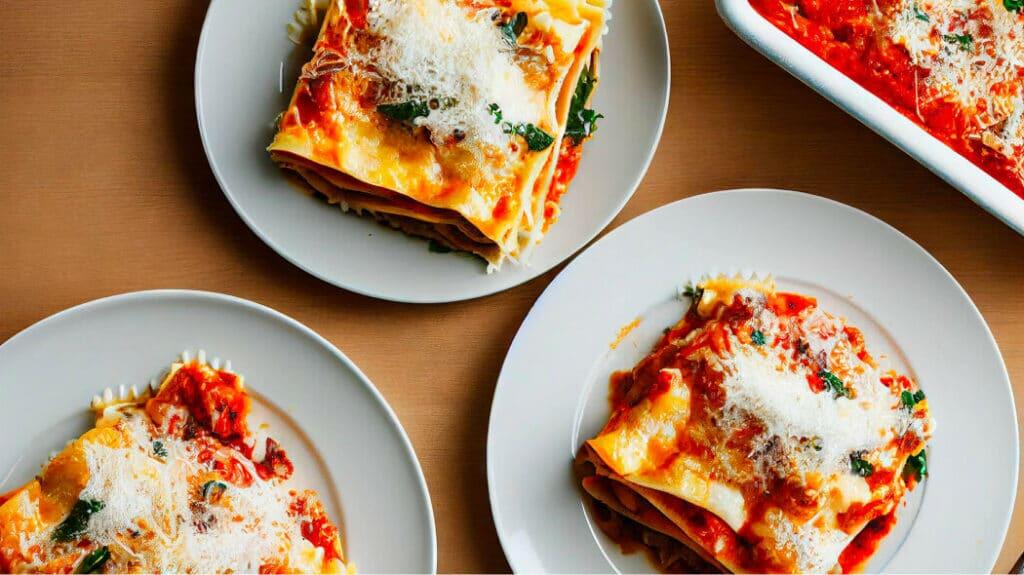
I’ll finish my list of the best foods you must try in Italy on a high note with lasagna, one of the oldest pasta dishes ever to be made.
Origin Of Lasagna
Lasagna is another one of Naples’ great inventions that dates back to the Middle Ages. The first recipe was actually found in an English cookbook, but it didn’t include some of the ingredients of the version made in Naples.
How to say it
Lasagna in Italian is pronounced (la-za-nya)
Key Ingredients
- Lasagne noodles
- Sausage or ground beef
- Onion
- Garlic
- Crushed tomatoes
- Sugar
- Parsley
- Parmesan, ricotta, and mozzarella
- Egg
How Lasagna Tastes
When I say lasagna is like a rollercoaster of flavors, I’m not lying. It’s a hearty dish with a tangy richness from the tomato sauce, a creaminess from the three cheeses, and a strong, juicy, umami flavor from the meats used.
Where To Eat Lasagna
Compared to some of the other regional dishes I have spoken about, lasagna is good wherever you go. But since I stuck to cities where they’re from, I’ll do the same for Lasagna with Naples.
There’s a gorgeous little spot in Naples called Cala la Pasta, which only serves lasagna on Sundays, and it tastes sensational. I still dream about the way the lasagna sheets soaked up all the sauce and the garlic and onion infusion throughout the dish.
Cala la Pasta (€) – Via dei Tribunali, 179/180, 80139 Napoli NA, Italy – Monday, 11:00 am to 11:00 pm, closed Tuesday, Wednesday to Sunday, 11:15 am to 11:00 pm
Wines That Can Be Paired With Lasagna
There are lots of wines you can pair with lasagna, but I would suggest you order a glass of red Barbera, something like a Vietti Barbera d’Asti Tre Vigne 2021.
The flavors of this wine are of mineral and vanilla notes. I find it to be a medium-bodied wine with a dry texture with soft tannins, Resulting in a harmonious flavor.
Pasta e Patate
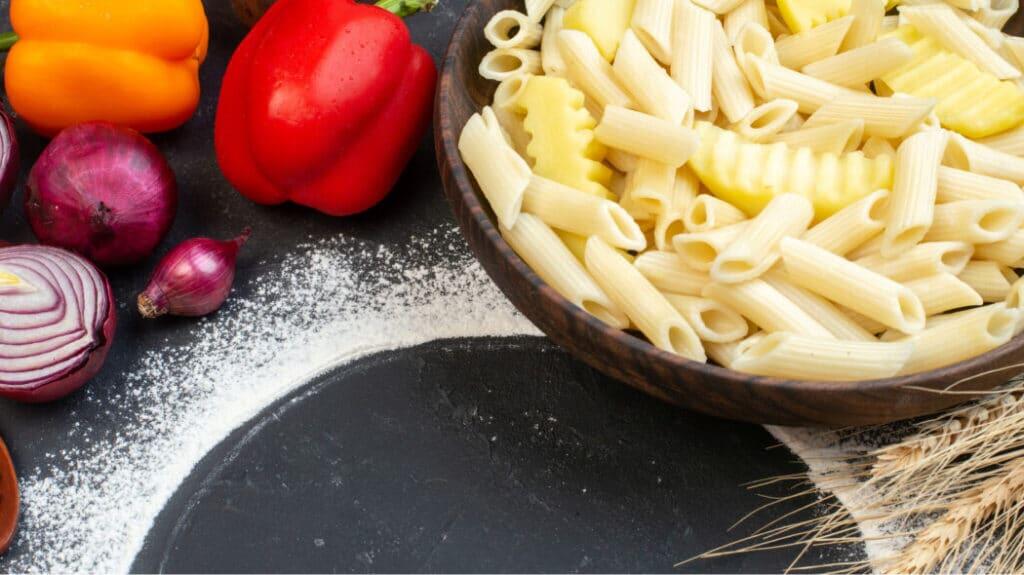
Pasta e patate is a Neapolitan classic that will have you yearning for more after you try it.
Origin Of Pasta e Patate
Dating back to the 16th century in Naples, pasta e patate comes from when the country was under the domain of the Bourbons.
Special ingredients such as potatoes and vegetables were incredibly cheap to ship from America, so locals would order them in to make unique recipes. One of those that they came up with included pasta e patate.
How to say it
Pasta e patate in Italian is pronounced (pa-sta) (eh) (pa-taa-teh)
Key Ingredients
- Potatoes
- Pasta
- Carrots
- Cellary
- Onions
- Tomatoes
- Salt and pepper
- Parsley (optional)
- Provola cheese
How Pasta e Patate Tastes
Pasta e patate is a savory dish that often has a thick broth with a strong tomato flavor that gives the sauce a distinct sweetness. When the smoky-flavored provola cheese is sprinkled on top, it gives the pasta and potatoes a creamy edge; I really wish everybody in the world could taste that.
I like to put some pepper on top of my pasta e patate as it adds a light, spicy, and woody aftertaste.
Where To Eat Pasta e Patate
One of the tastiest pasta e patates I tried was at the Trattoria da Nennella in Naples. Before I talk about the food, the vibe here is unmatched; I couldn’t get enough of the bubbliness from the staff, and the upbeat Italian music made me want to dance the night away.
Prepare yourself for a hugely heavy portion of pasta e patate. I found it very creamy and a little salty, but wow, the texture of the pasta was phenomenal; the chewiness was just to my preference.
Trattoria da Nennella (€) – Piazza Carità, 22, 80134 Napoli NA, Italy – 12:00 pm to 3:00 pm and 7:00 pm to 11:00 pm
Wines That Can Be Paired With Pasta e Patate
I think a flavorful red wine would pair well with Pasta e Patate because it has a high level of acidity, which would complement the pasta and potatoes. Plus, the fruity taste of herbs and fruits would add some unique character to the dish.
Risotto alla Milanese
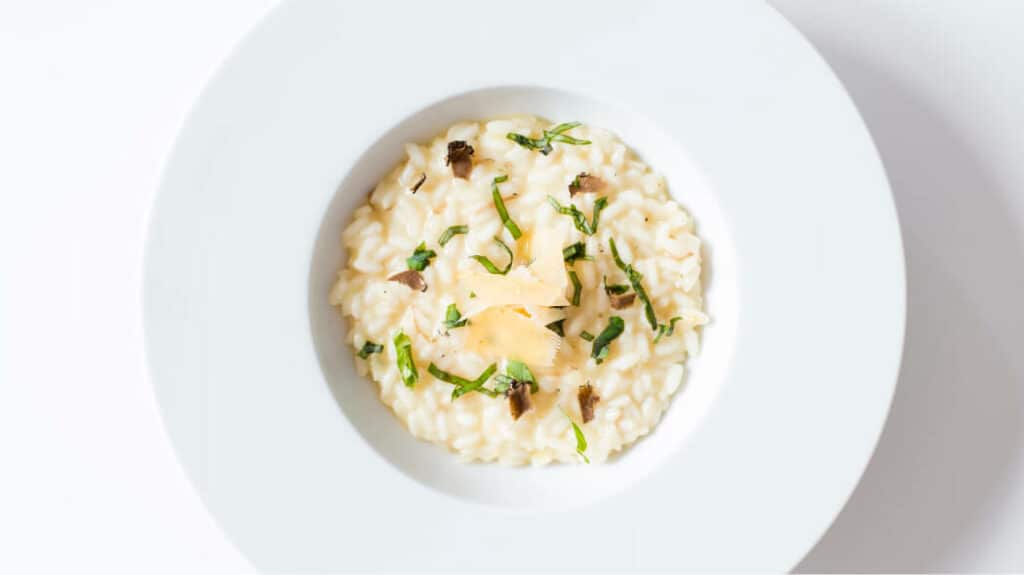
When it comes to Italian rice dishes, a dish like risotto alla milanese wins it for me.
Origins Of Risotto Alla Milanese
There are various stories of where risotto alla milanese comes from, but its first official documentation was in Giovanni Felice Luraschi’s cookbook that was released in 1829 called Nuovo Cuoco Milanese Economico.
Another story suggests that the recipe came from the glazier of Milan’s cathedral called, Valerio Diependale, who was working on the Duomo during the 16th century.
How to say it
Risotto alla Milanese In Italian is pronounced (rii-zo-tt-oh) (a-lah) (mii-la-neh-zeh)
Key Ingredients
- Arborio rice
- Unsalted butter
- Beef stock
- Parmesan
- Salt
- White wine
- Saffron powder
- Onion
- Beef marrow
How Risotto Alla Milanese Tastes
There’s one flavor from risotto alla Milanese that stands out to me, and that’s the bitterness and floral taste of the saffron. You’ll also notice a nuttiness from the rice and a light salty tinge from the parmesan.
Where To Eat Risotto Alla Milanese
As you can tell, the name risotto alla Milanese really gives this one away. The northern Italian city of Milan is the birthplace of this dish, so you’re guaranteed a good serving in most restaurants, but especially on our Milan food tour.
One place I can’t recommend enough for their risotto alla Milanese is Osteria Conchetta. You can see the chefs making it tableside in the cheese wheel; it tasted absolutely divine, from the saffrony rice to the sweet, sauteed onions.
Osteria Conchetta (€€) – Via Conchetta, 8, 20136 Milano MI, Italy – Tuesday to Friday, 7:00 pm to 11:30 pm, Saturday and Sunday, 12:30 pm to 2:30 pm and 7:30 pm to 11:30 pm, closed on Mondays
Wines That Can Be Paired With Risotto Alla Milanese
A tasty Pinot Bianco pairs beautifully with risotto alla Milanese because of its gentle flavors, and it has a nice balanced body to complement the risotto.
Cacio e Pepe
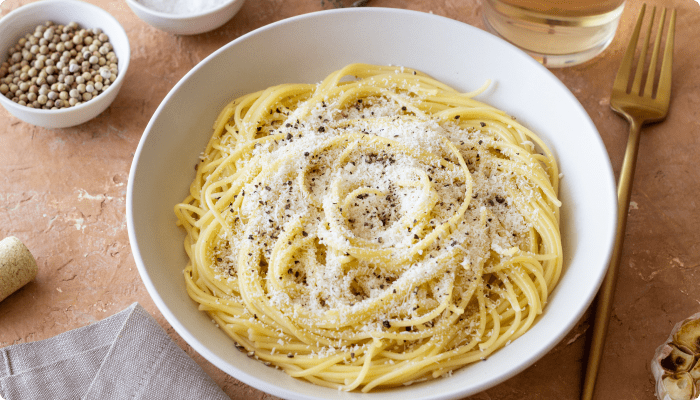
With a name that translates directly to cheese and pepper, cacio e pepe is pretty self-explanatory. This pasta-based Roman classic is among my all-time favorite dishes, yet it’s remarkably simplistic.
Origins of Cacio e Pepe
Cacio e pepe, in some form, has been around since the days of Ancient Rome, at a time when shepherds would add fresh sheep’s milk to their pasta.
While pasta was initially reserved for the upper class, it slowly began to become produced in larger quantities, making it accessible for all walks of life. As a result, cacio e pepe grew into a preferred dish for many Romans.
How to say it
Cacio e Pepe in Italian is pronounced (kah-choh)(eh)(peh-peh)
Key Ingredients
- Spaghetti or tonnarelli
- Pepper
- Pecorino Romano
- Salt
How Cacio e Pepe Tastes
Tangy pecorino, fiery pepper, and firm spaghetti come together to create this simple but oh-so-satisfying dish.
Where To Eat Cacio e Pepe
Had it not been for a friend’s recommendation, I never would have had the pleasure of sampling the cacio e pepe at Da Felice in Rome’s Testaccio district.
On the surface, Da Felice is your run-of-the-mill Roman restaurant, but the cacio e pepe here is nothing short of sensational. I have to give these guys bonus points for their presentation techniques, as it’s plated up right beside the table.
There was just the right amount of every ingredient, allowing each component to shine through. The flavors from the silky pasta and grassy pecorino took center stage, and the pepper gave it a touch of heat.
Da Felice (€€) – Via Mastro Giorgio, 29, 00153 Roma RM, Italy – Open every day from 12:30 pm to 3:30 pm and from 7:00 pm to 11:30 pm
Wines That Can Be Paired With Cacio e Pepe
The key to finding a suitable wine for cacio e pepe is to stick to fresh, light wines that accentuate the dish’s flavors while also offsetting its richness.
That’s why I think a young Fiano goes so well with cacio e pepe. This Campania wine has notes of melon, hazelnut, pine, and honey, which work with the dish’s creamy consistency while simultaneously cleansing the palate.
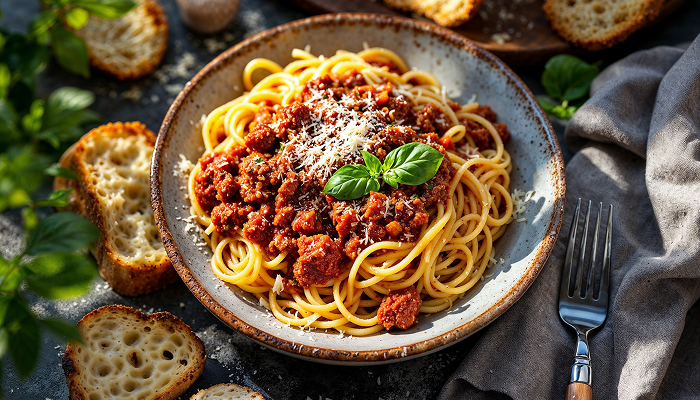
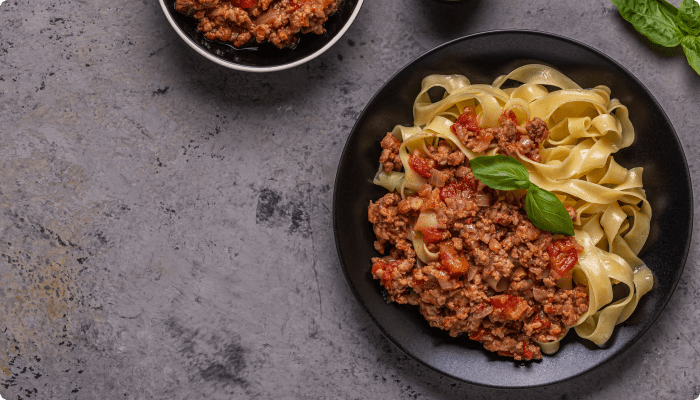
Ragù alla Bolognese
Ragù alla bolognese, which many of us know as bolognese sauce, is an Italian favorite that’s established itself in every corner of the globe.
Origins of Ragù alla Bolognese
While it may be a disappointment to some, spaghetti bolognese doesn’t quite exist. Luckily, ragù alla bolognese is even better than its international variations.
Thought to be based on a similar style dish from France, ragù alla bolognese was born in Bologna but initially was free of tomatoes. By the 20th century, this lip-smacking sauce drew close to the kind we now know and love.
How to say it
Ragù alla bolognese in Italian is pronounced (rah-goo)(ah-lah)(boh-loh-nyeh-zeh)
Key Ingredients
- Ground beef, veal, or pork
- Pancetta
- Tomato paste
- Carrots
- Celery
- Onions
- Red wine
- Milk
How Ragù alla Bolognese Tastes
The diversity of flavors from ragù alla bolognese never ceases to amaze me. When done right, expect a fusion of beefy, nourishing, sweet, and acidic notes that work exceptionally well together.
Where To Eat Ragù alla Bolognese
I only have good things to say about all the ragù alla bolognese I’ve tried in Bologna, but there’s something special about Anna Maria Trattoria near Bologna Theater.
Having heard the sauce here is cooked and carefully watched for eight hours, I knew I was in for some powerful, concentrated flavors.
The beef juices permeated every aspect of the dish, teaming with the berry-like wine and mild vegetables to partner with the firm tagliatelle.
Anna Maria Trattoria (€€€) – Via delle Belle Arti, 17/a, 40126 Bologna BO, Italy – Closed every Monday, open every Tuesday to Sunday from 12:30 pm to 3:00 pm and from 7:30 pm to 11:00 pm
Wines That Can Be Paired With Ragù alla Bolognese
I can never say no to a Chianti Classico, especially when it accompanies a mouthwatering serving of ragù alla bolognese.
While the Chianti’s acidity refines the flavor of the meat, the touch of spice and herbs combines beautifully with the sauce’s medley of vegetables.
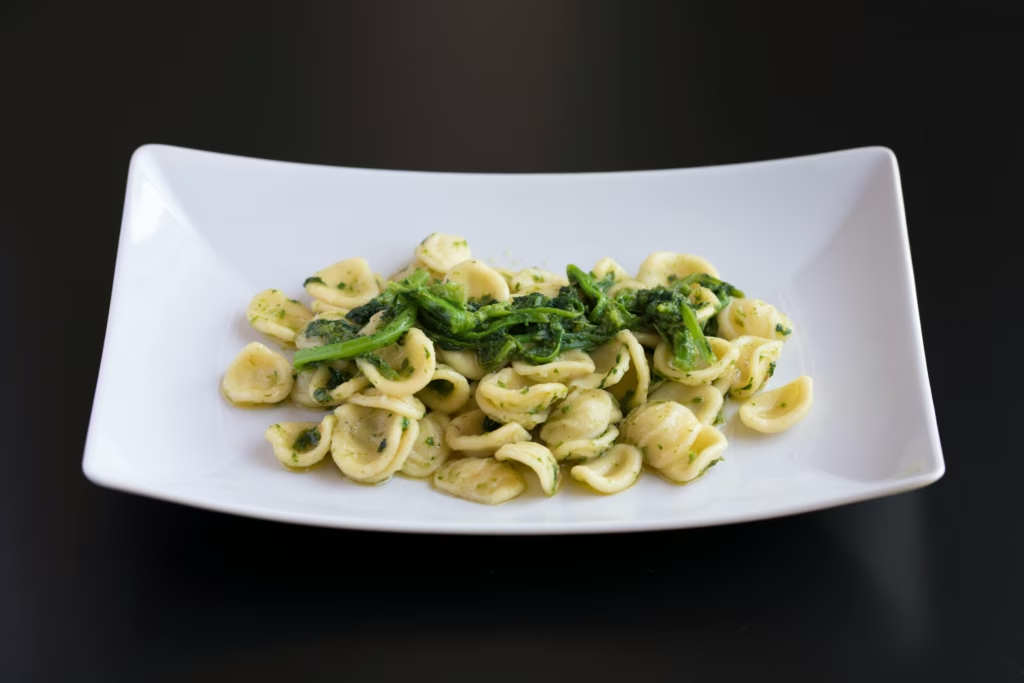
Orecchiette
Puglia’s signature pasta has a shape and character unlike anything else in Italy. These little ear-shaped pasta pieces are one of the most distinctive regional dishes in the country.
Origin of Orecchiette
Orecchiette — literally “little ears” — have been made in Puglia for centuries. In Bari’s old quarter, you can still find older women sitting outside their front doors, rolling and shaping the pasta by hand on wooden boards. It’s one of the most remarkable food traditions in Italy, and an entirely free spectacle that visitors often stumble upon in Strada dell’Arco Basso.
How to say it
Orecchiette in Italian is pronounced (oh-reh-KYEH-teh)
Key Ingredients
- Semolina flour
- Water
- Cime di rapa (turnip tops)
- Anchovies
- Garlic
- Olive oil
- Chilli flakes
How Orecchiette Tastes
The classic preparation — orecchiette alle cime di rapa — pairs the pasta with bitter sautéed turnip tops, anchovies, and garlic. The bitterness of the greens contrasts with the savouriness of the anchovies. The pasta itself is dense and chewy, with a rough texture that holds the sauce beautifully.
Where to Eat Orecchiette
The only answer is Bari. Walk through the old city, find the pasta-making ladies, buy a bag of fresh orecchiette for a euro or two, then take it to a nearby trattoria and ask them to prepare it. Trattoria Pugliese in Bari also does a superb version.
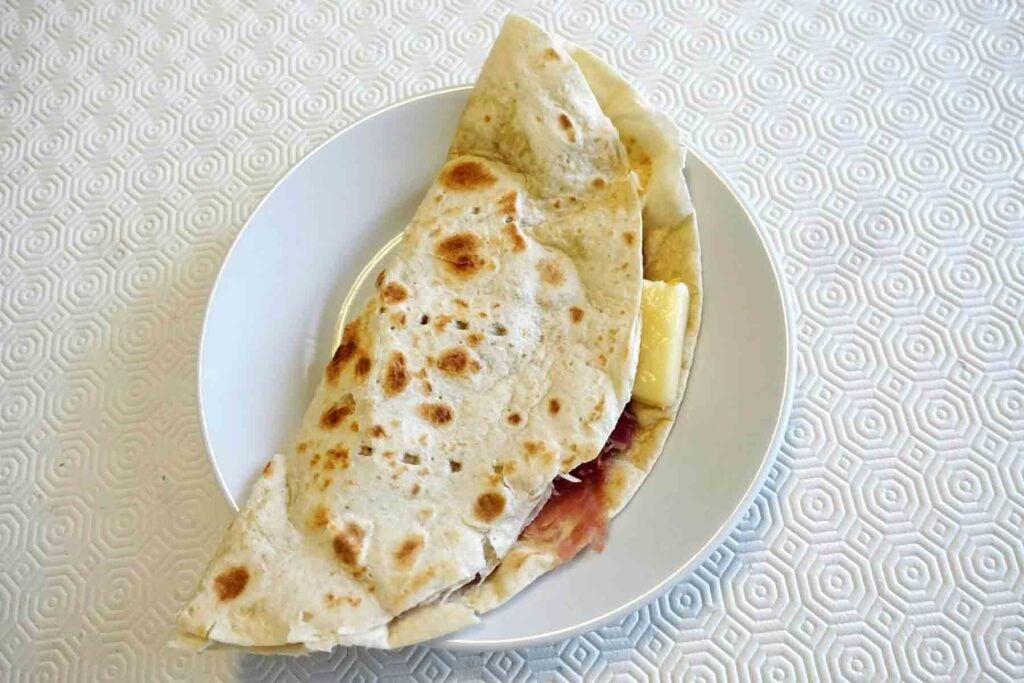
Piadina
Emilia-Romagna’s flatbread is one of Italy’s great overlooked street foods — and one of the simplest pleasures you’ll find on any trip through the region.
Origin of Piadina
Piadina romagnola has Protected Geographical Indication status — it can only officially bear the name if it’s made in Romagna. It’s a flatbread made from flour, lard, salt, and a leavening agent, cooked on a cast-iron griddle called a testo. Best eaten within minutes of coming off the heat, while it’s still soft and pliable.
How to say it
Piadina in Italian is pronounced (pya-DEE-na)
Key Ingredients
- White flour
- Lard or olive oil
- Salt
- Baking soda
- Water or milk
- Squacquerone cheese
- Rucola
- Prosciutto di Parma
How Piadina Tastes
A good piadina is soft, slightly charred, and warm — the perfect vessel for whatever filling you choose. The classic combination is squacquerone (a soft, creamy local cheese), prosciutto, and rocket. The saltiness of the prosciutto, the richness of the cheese, and the peppery bite of the rocket is one of the great simple combinations in Italian food.
Where to Eat Piadina
Look for piadinerie — dedicated piadina kiosks — in Rimini, Ravenna, and Forlì. La Piadina del Melarancio in Rimini is consistently excellent.
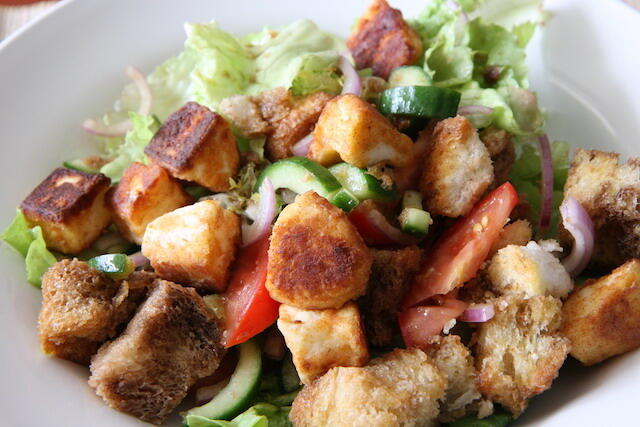
Panzanella
Panzanella is Tuscany’s brilliant answer to stale bread — a rustic summer salad that somehow becomes more than the sum of its parts
Origin of Panzanella
Panzanella dates back to at least the 16th century in Tuscany. It was peasant food — a way to use up bread that had gone hard. The bread is soaked in water (or sometimes vinegar), then combined with ripe summer tomatoes, red onion, basil, and olive oil. It’s a dish that only works in summer when tomatoes are extraordinary.
How to say it
Panzanella in Italian is pronounced (pan-za-NEL-la)
Key Ingredients
- Stale Tuscan bread
- Ripe tomatoes
- Red onion
- Fresh basil
- Cucumbers
- Red wine vinegar
- Salt
- Extra virgin olive oil
How Panzanella Tastes
When panzanella is made right — with exceptional summer tomatoes and good olive oil — it’s extraordinary. The bread soaks up all the tomato juices and olive oil, becoming simultaneously soft and a little chewy. The vinegar and raw onion cut through the richness. It’s bright, acidic, and satisfying.
Where to Eat Panzanella
This is strictly a summer dish. Look for it in Florence or the Tuscan countryside between June and September. Buca Mario in Florence, one of the oldest restaurants in the city, serves a beautiful version.
Secondo (Main Course)
Florentine Steak
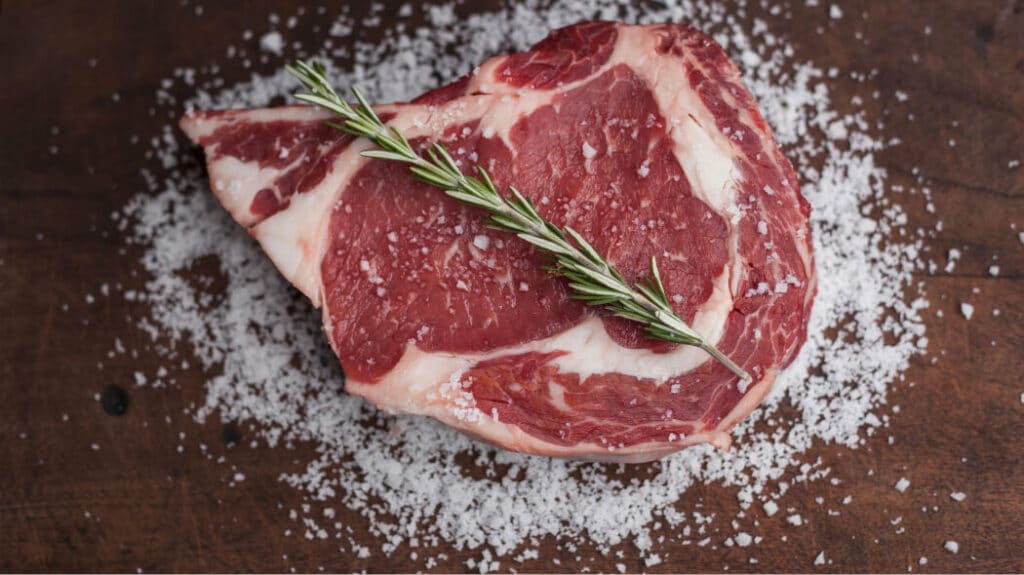
If you’re a meat eater, you’ll want to stick around for this one, bistecca Fiorentina, the city of Florence’s famous steak dish.
Origin Of Bistecca Fiorentina
Bistecca Fiorentina has been putting a smile on people from Fiorentina’s faces since the 1500s. Since meat was such a delicacy back in the day, it would only be eaten on big occasions; one of these was the Night of San Lorenzo.
It has been noted that bistecca Fiorentina was so special because of the particular cut taken from the cow.
How to say it
Bistecca Fiorentina in Italian is pronounced (bis-te-cc-ah) (fior-en-tii-na)
Key Ingredients
- T-bone steak
- Extra virgin olive oil
- Kosher salt
- Ground black pepper
- Fresh rosemary
- Fresh sage
How Bistecca Fiorentina Tastes
The T-bone steak used to make bistecca Fiorentina is charred, which gives it some smokiness, and the salt and pepper added with the juiciness of the meat brings out some incredible natural brash flavors.
Where To Eat Bistecca Fiorentina
There’s no place for Bistecca Fiorentina in Florence quite like Trattoria Dall’Oste. Honestly, when I saw the portion size for the first time, I nearly fell off the chair; it could feed a handful of people.
The beef was so tender, and the explosive flavors from the herbs gave it an almost pine-like taste.
Trattoria Dall’Oste (€€) – Borgo S. Lorenzo, 31, 50121 Firenze FI, Italy – 12:00 pm to 10:30 pm, every day
Wines That Can Be Paired With Bistecca Fiorentina
A famous wine that’s often paired with Bistecca Fiorentina is Chianti Classico, which is filled with soft tannins that aren’t too strong to take over the taste of the beef.
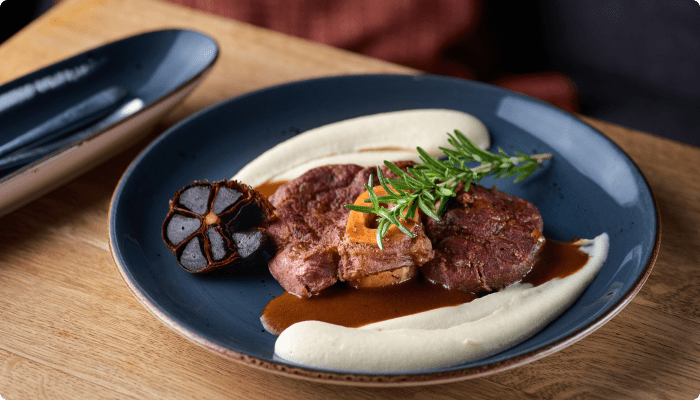
Osso Buco
Few countries do comfort food like the Italians, and osso buco is among the best examples of a wholesome yet wonderfully flavorful dish.
Origins of Osso Buco
Osso buco traces its roots back to the Lombardy region, where it continues to serve as a specialty in countless eateries.
In 19th-century Milan, osso buco became well-liked amongst the nobility. Eventually, it began to spread throughout the country and appeared in several different forms, though the classic recipe still comes out on top in my book!
How to say it
Osso Buco in Italian is pronounced (oh-soh)(boo-koh)
Key Ingredients
- Veal shanks
- Tomatoes
- White wine
- Assorted vegetables (typically carrot, celery, onion, mushroom)
- Flour
- Broth
- Garlic
- Butter
- Lemon zest
How Osso Buco Tastes
The slow-cooked, tender veal in Osso Buco has a delicious but gentle, meaty flavor. As tasty as the meat is on its own, the zingy mix of tomatoes and white wine elevates the dish. At the same time, the soft flavors of the vegetables make each bite feel hearty and comforting.
Where To Eat Osso Buco
Osteria Conchetta sits alongside the Navigli neighborhood in Milan, and it’s where I tried my first osso buco some years ago.
Lombardian cuisine is the focus of the menu here, so it’s an ideal place if you’re looking for an authentic osso buco, which can sometimes be challenging to find. As a word of warning, it’s best to make a reservation here as it’s no longer a hidden gem these days.
I still think about the melt-in-your-mouth veal to this day and how the umami bone marrow flavors soaked into the woodsy mushrooms and tender carrots. At the bottom, there was a base of decadent, dense potato foam.
Osteria Conchetta (€€) – Via Conchetta, 8, 20136 Milano MI, Italy – Closed every Monday, open Tuesday to Friday from 7:00 pm to 11:00 pm, and every Saturday and Sunday from 12:30 pm to 2:30 pm and from 7:30 pm to 11:00 pm
Wines That Can Be Paired With Osso Buco
A dish with so many multifaceted flavors needs a full-bodied wine to hold its own against it, which is why I tend to go for a Barolo.
The Barolo’s signature tar and rose aroma are intense on the nose, while the blend of leathery, truffle, and red fruit flavors add warmth to each mouthful.
Contorno (Side Dish)
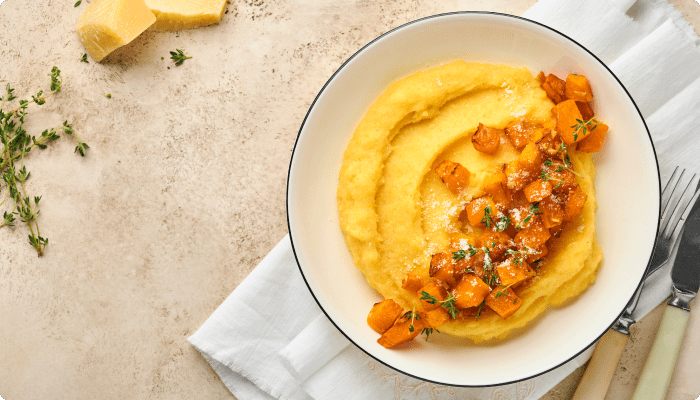
Polenta
Polenta doesn’t quite get the same recognition as pasta and rice-based creations, yet it’s a go-to grain for Italians from north to south.
Origins of Polenta
During the glory days of the Roman Empire, peasants consumed polenta-reminiscent dishes made from spelt almost daily. These days, it’s become a reliable staple that can serve as a base for endless dishes.
Poorer members of society would mix polenta, otherwise known as cornmeal, with boiling water and add anything from beans to vegetables to make a meal.
How to say it
Polenta in Italian is pronounced (poh-lehn-tah)
Key Ingredients
- Ground cornmeal
- Water or stock
How Polenta Tastes
With a hint of butteriness and a soft corn flavor, polenta is a relatively neutral-tasting food that soaks up the flavors of punchier elements of any dish.
Where To Eat Polenta
Directly across the street from the Galleria Colonna Museo e Pinacoteca is Le Lanterne, an elegant but relaxed eatery for old-school Roman fare.
Admittedly, polenta wasn’t on my agenda when I first moved to Rome. However, Le Lanterna opened me up to how sumptuous it can be when prepared with the right ingredients.
I initially had my eye on the polenta with meat but opted for the four-cheese alternative. While the gooey mozzarella and almost nutty parmesan were the stand-out cheeses, the understated flavor of the polenta and smooth texture left me pleasantly surprised.
Le Lanterne (€€€) – Palazzo Colonna, Via della Pilotta, 21A, 00187 Roma RM, Italy – Open every day from 12:00 pm to 11:00 pm
Wines That Can Be Paired With Polenta
The subtle flavors of polenta mean it has the potential to work well with an extensive selection of wines.
My personal favorite is a dry Malvasia Nera. In stark contrast to the polenta, this wine has plum-like flavors deepened by touches of chocolate and spice that add dimension to the dish.
White Truffle of Alba
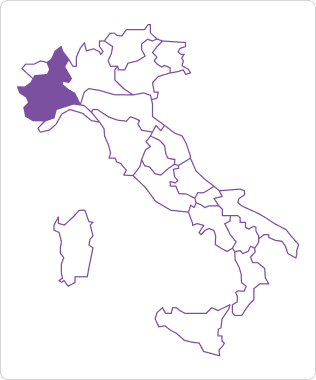
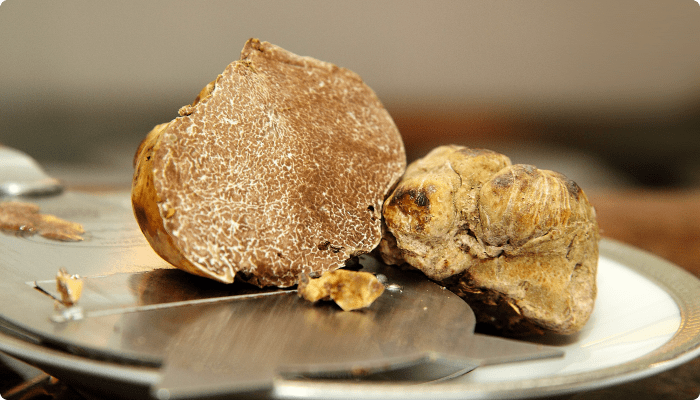
These elusive white truffles are some of the most prized and expensive on the planet and are only in season from October to December.
Origins of White Truffle of Alba
Alba’s acclaimed white truffles have been fascinating foodies for centuries. They’re almost impossible to cultivate, and so are generally only found along the roots of specific trees at certain times of the year.
In the 1920s, Giacomo Morra began sharing tales of these perplexing truffles to the wider world. Some years later, he began organizing the White Truffle Fair, a celebration of these natural wonders that continues to take place annually.
How to say it
White Truffle of Alba in Italian is pronounced (tar-too-foh)(byan-koh)(dahl-bah)
Key Ingredients
- Piedmont white truffle
How White Truffle of Alba Tastes
These white truffles pack a strong punch with a musky, garlic-like aroma and distinctive umami flavor with an almost spicy undertone.
Where To Eat White Truffle of Alba
Enosfizioteca Conterosso is located in the heart of Alba. The sophisticated outdoor terrace here was where I tried these rare white truffles for the first time.
As you’ve probably figured, the truffle dishes here are seasonal, so you’ll need to get here towards the end of the year to get your hands on some. My buddy and I shared the truffle risotto, which was recommended for two.
I’ve always been a big fan of risotto, but the addition of these peppery, forest-like truffles resulted in an unforgettable medley of flavors. It was as if the rustic undertones soaked into every grain of moist rice.
Enosfizioteca Conterosso (€€) – Via Pietrino Belli, 4C, 12051 Alba CN, Italy – Open every day from 12:00 pm to 2:30 pm and from 6:30 pm to 10:00 pm
Wines That Can Be Paired With White Truffle of Alba
I don’t think any wine complements white truffles quite as much as a glass of Brunello di Montalcino.
The soft tannins, persistent finish, and depth of hazelnut and cherry notes make this wine a harmonious match for the rich, oaky truffles.
Tiramisu
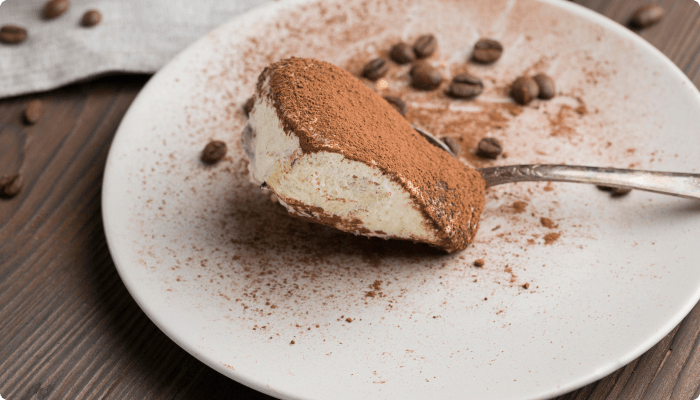
A quintessential Italian dessert that effortlessly blends sweet and bitter flavors, tiramisu is a luxurious yet lightweight confection.
Origins of Tiramisu
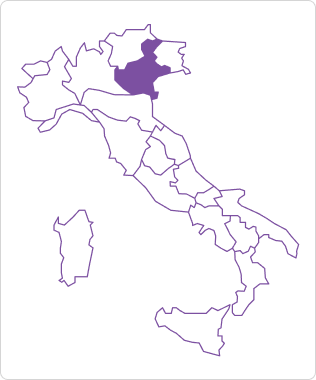
Treviso, a picturesque city in northern Italy, is credited as the birthplace of tiramisu.
While similar dishes came about during the 1800s, it wasn’t until 1970 that tiramisu as we know it was invented. Le Beccherie is the Treviso restaurant that first served this culinary delight, and it’s gone on to become a source of pride for Italians ever since.
How to say it
Tiramisu in Italian is pronounced (tee-rah-mee-soo)
Key Ingredients
- Ladyfingers
- Espresso
- Mascarpone cheese
- Eggs
- Sugar
- Cocoa powder
- Coffee-based liqueur or Marsala wine
How Tiramisu Tastes
Tiramisu has a perfectly balanced mix of tastes and textures. Soaking the ladyfingers in espresso and adding a dusting of cocoa powder introduces bitter flavors to the dish, which are countered by the sugar and mascarpone’s sweetness.
Where To Eat Tiramisu
Le Beccherie near Piazza dei Signori in Treviso is the home of tiramisu, so I don’t think there’s anywhere better to sample it for the first time.
The chef here offers an original tiramisu and an innovative deconstructed alternative. While I can confirm both are exquisite, there’s no denying that the classic version is impossible to beat.
It’s got everything you could possibly desire in a tiramisu: moist ladyfingers bursting with fragrant coffee, silky-smooth yet airy mascarpone, and a delicate hint of chocolate from the cocoa powder.
Le Beccherie (€€€) – P.za G. Ancilotto, 9, 31100 Treviso TV, Italy – Open every Monday and from Wednesday to Sunday from 12:20 pm to 2:15 pm and from 7:20 pm to 10:15 pm, closed every Tuesday
Gelato
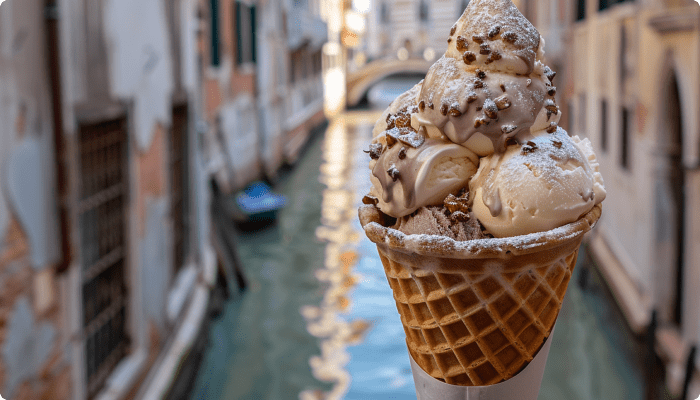
An Italian take on traditional ice cream, gelato has become one of Italy’s most beloved inventions. Whether it’s a sweltering afternoon in the city or a sunny evening along the coast, there’s never a bad time for this frozen treat.
Origins of Gelato
There’s been a continued dispute about the origins of gelato. Many believe it actually came to fruition in Florence, but the Sicilians have played a significant role in creating the delightful gelato we know and love. In fact, Sicilian native Francesco Procopio dei Coltelli developed the first ice cream machine way back in 1686!
Although fake gelato, made using an industrial powder mix, has become more widespread over time, it can’t compete with authentic gelato from a classic gelateria.
How to say it
Gelato in Italian is pronounced (jell-ah-toe)
Key Ingredients
- Milk
- Cream
- Sugar
- Egg yolk
How Gelato Tastes
Gelato comes in a wide selection of flavors. However, no matter what variety I’ve tried, I’ve found quality gelato is indulgent and creamy with more milk-like tones than traditional ice cream.
Where To Eat Gelato
Incredible gelaterias can be found pretty much everywhere in Italy, but on our Palermo food tours, we’ll show you how to decipher between the real deal and fake alternatives. If you try just one spot, make it Dolce Capo in Palermo’s Monte di Pietà neighborhood.
These guys take gelato seriously, using the freshest ingredients. Of all the flavors, the pistachio is the one that I kept finding myself drawn to.
The addition of pistachios added a nutty, earthy element to the luscious gelato. Despite the thick, velvety consistency, the gelato didn’t feel overly heavy.
Dolce Capo (€) – Via dei Candelai, 95/97, 90134 Palermo PA, Italy – Open every Monday and Tuesday from 12:00 pm to 12:00 am, Wednesday, Friday, and Sunday from 11:30 am to 12:00 am, Thursday from 10:30 am to 12:00 am, and every Saturday from 11:30 am to 1:30 am
Italian Food By Region: A Food Map Of Italy
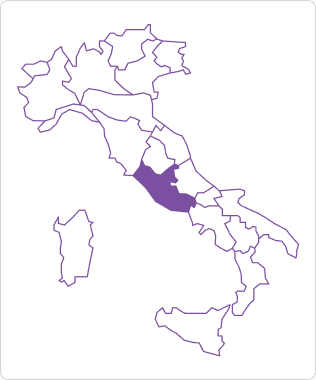
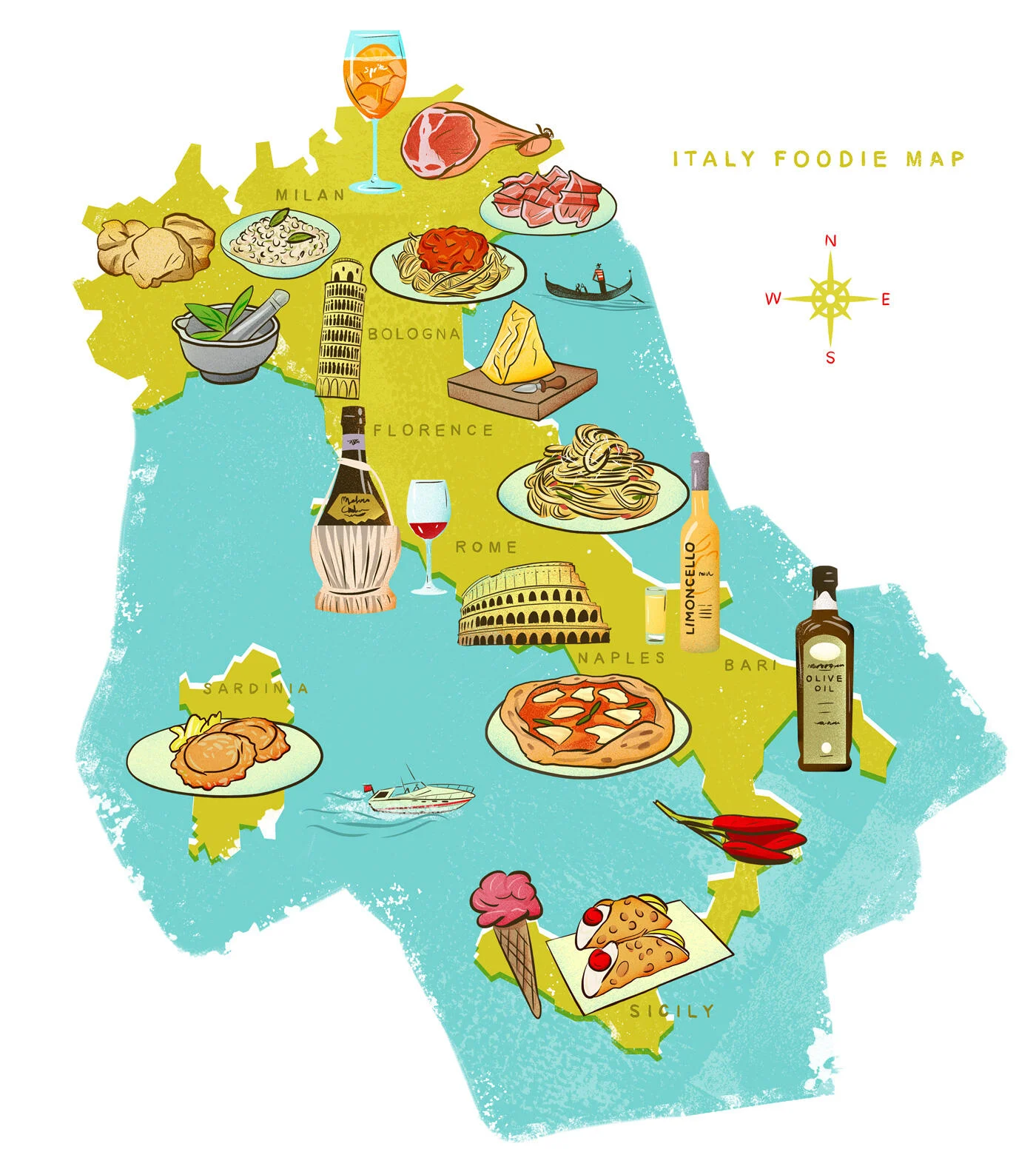
That wraps up my ultimate list of the best foods to try in Italy. While I’ve highlighted 10 must-try dishes, the culinary treasures of Italy are endless. Below, you’ll find a food map of Italy showcasing a even more regional specialties that are worth discovering.
Whether you’re a foodie or just looking to enjoy authentic Italian cuisine, these additional dishes are sure to tempt your taste buds.
The additional foods are:
- Cannoli (Sicily)
- Seadas (Sardinia)
- Pesto Genovese (Genoa, Liguria)
- Spritz (Venice)
- Chianti (Tuscany)
- Extra Virgin Olive Oil (Puglia)
- Red Chili Peppers (Calabria)
Dining Etiquette: Dos & Don’ts in Italy
Italy has strong, unspoken rules around eating. Most visitors unknowingly break several of them. Here’s what you actually need to know before sitting down at a restaurant.
Do
- Order un caffè (espresso) after dessert, not during the meal
- Use bread to mop up sauce — it’s called la scarpetta and Italians love it
- Ask for the bill when you’re ready — it won’t come automatically
- Eat at local hours: lunch 1–3pm, dinner 8pm or later
- Try the menù del giorno (daily set menu) for the best value
- Sample gelato before committing to a flavour
- Drink cappuccino only at breakfast
Don’t
- Order a cappuccino after a meal — Italians find this genuinely puzzling
- Ask for cheese on seafood pasta — it’s considered a culinary crime
- Eat near major tourist attractions if you want quality food
- Add ketchup or extra condiments to dishes
- Expect free tap water — you’ll be charged for bottled water (coperto)
- Rush — linger, enjoy, and let the meal be the purpose of the evening
- Tip heavily — leaving a few euros is generous; a full 20% tip is unusual
One more thing: the bread basket that arrives at the start is not free. Most restaurants charge a small coperto (cover charge) of €1–3 per person. It’s not a scam — it’s just how it works.
Eating Seasonally in Italy
Italians are deeply serious about seasonal eating. The best chefs and home cooks alike build their menus around what is available right now, not what is always available. You’ll notice this in the way menus change dramatically from month to month.
Spring
Artichokes
Asparagus
Fava beans
Peas
New lamb
Wild greens
Strawberries
Summer
Tomatoes
Zucchini flowers
Eggplant
Peaches
Seafood
Basil
Capers
Autumn
White truffles
Porcini
Chestnuts
Pumpkin
Game meats
Figs
New olive oil
Winter
Citrus
Radicchio
Cardoon
Baccalà
Polenta
Lentils
Blood oranges
If a restaurant offers a dish completely out of season — say, fresh porcini mushrooms in July — that’s a red flag. Ask what’s fresh today. The answer will tell you everything about the quality of the kitchen.
Italy Food — Your Questions Answered
What is the most famous food in Italy?
What food should I try first in Italy?
What is Italy’s national dish?
What should I not eat in Italy?
What is the best pasta dish in Italy?
Is Italian food expensive?
What is the best city in Italy for food?
What is Italian food culture like?
What Italian foods can I bring home?
Methodology – How We Chose our Favourite Italian Foods

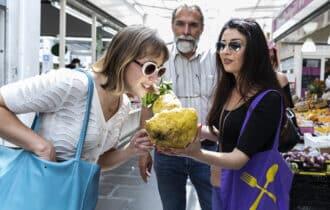
Florence Sunset Food & Wine Tour
An unforgettable evening filled with wines, fresh pasta, cocktails and an exclusive wine cellar experience.
- Daily
- 3.5 Hours
- Small Group
Naples Pizza & Drinks Tour: A Slice of Naples
Explore the thrilling maze of Naples, filled with delicious food, the world's best pizza, grand architecture, timeless history, vibrant folklore, and the warmth of local people.
- Daily
- 3.5 Hours
- Small Group
- Daily
- 3.5 Hours
- Small Group
The Other Side of Florence Food Tour
An intimate culinary experience through Oltrarno, among Tuscan flavors and legendary local hosts
- Mon-Sat
- 3 Hours
- Small Group
Twilight Trastevere Rome Food Tour
Enjoy Trastevere's hottest spots and best kept secrets like a true VIP
- Daily
- 4 Hours
- Small Group

- Mon-Sat
- 3 Hours
- Small Group
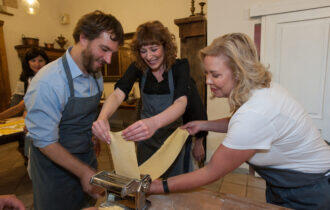
Authentic Florence Pasta-Making Class
Learn to make authentic mouth-watering pasta and other Italian favourites
- 3 Hours
- Small Group


Not Just Another Naples Street Food Tour
Explore the thrilling maze of Naples, filled with delicious food, world's best pizza, grand architecture, timeless history, vibrant folklore, and the warmth of local people.
- Daily
- 3 Hours
- Small Group

Eternal Rome: Jewish Ghetto, Campo de' Fiori and Trastevere
Explore the historic Campo de' Fiori market, tasting unique dishes in the Jewish Ghetto and enjoying VIP access to top restaurants in Trastevere, including a Slow Food Presidium.
- Mon-Sat
- 4 Hours
- Small Group

Eating Milan: Navigli Food & Drinks Tour
Secure your spot at Milan's most exclusive venues
- Daily
- 3.5 Hours
- Small Group

- Wed-Mon
- 3.5 Hours
- Small Group